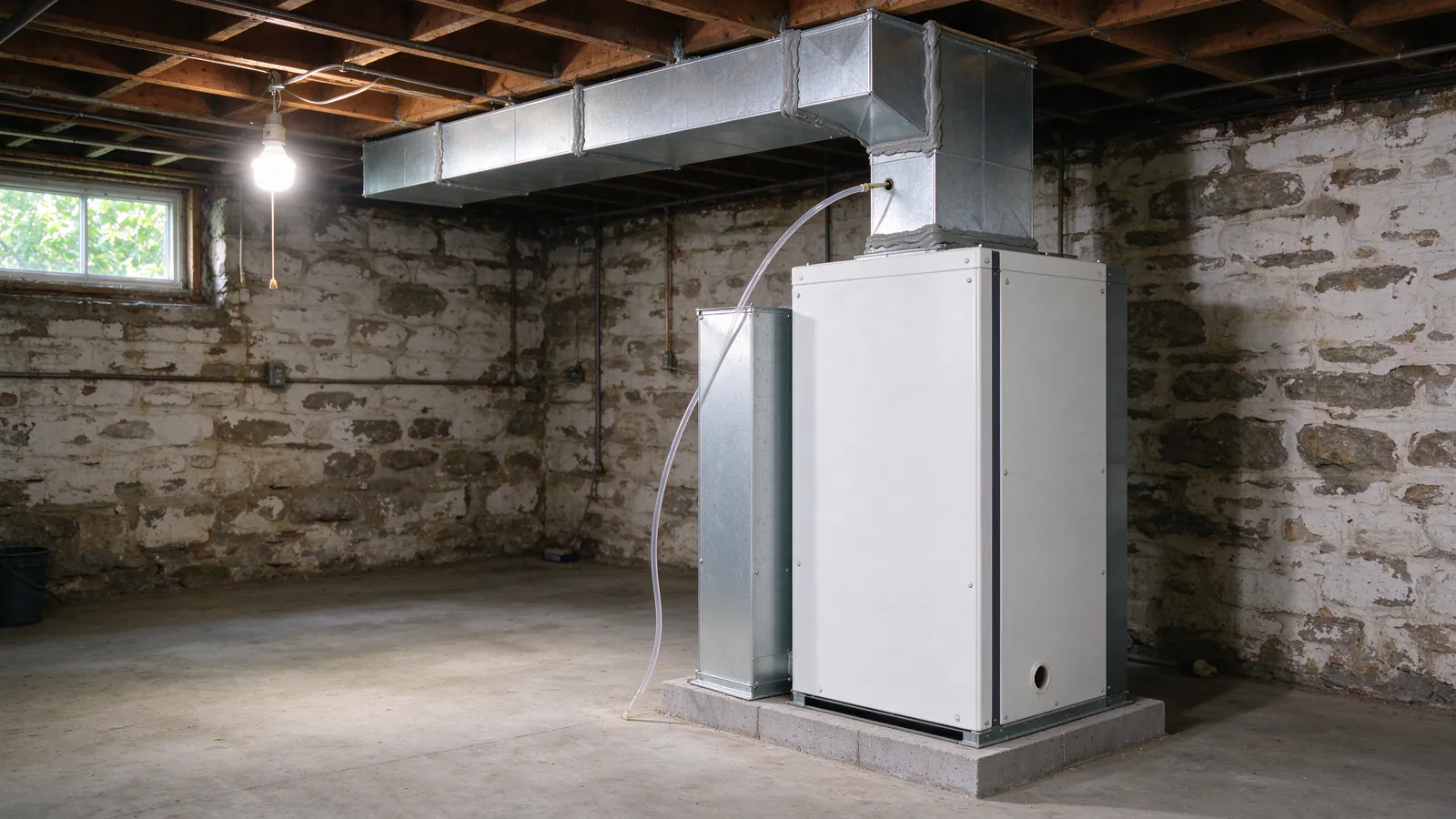
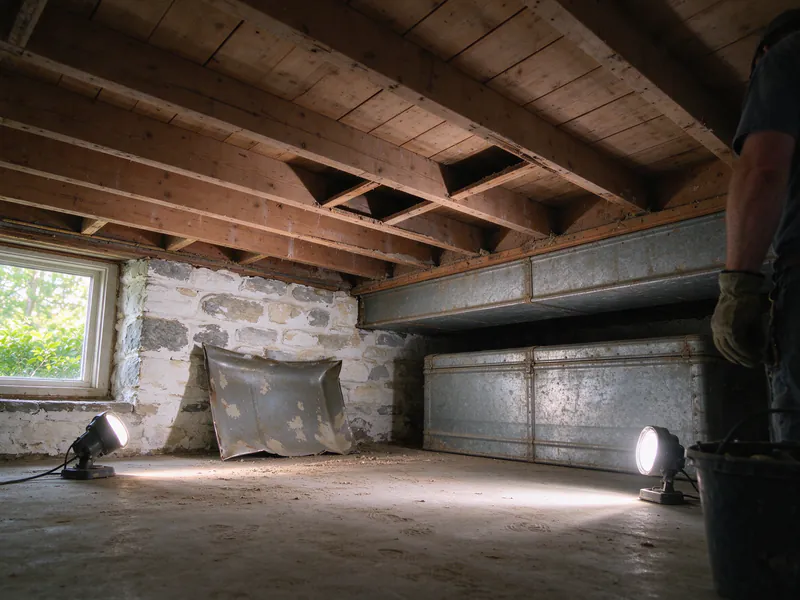
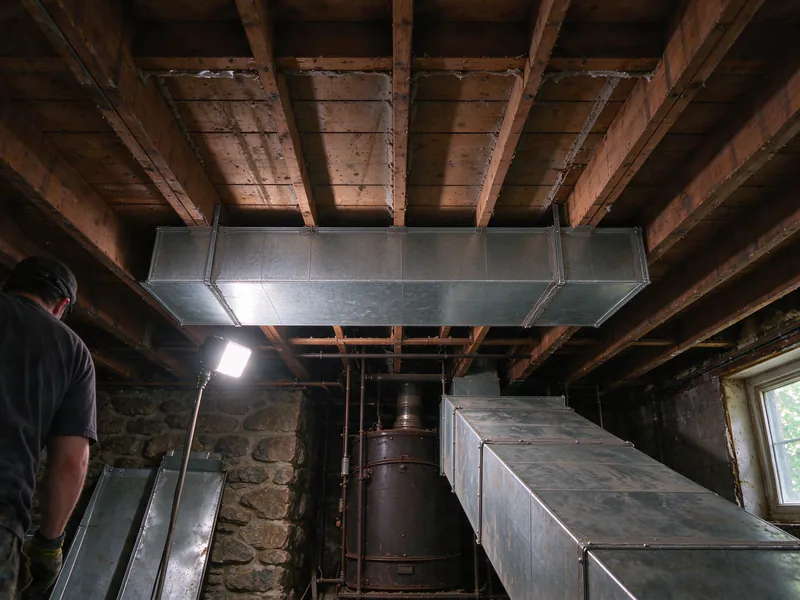
Your furnace ducts were sized for hot, fast air from a burner. A heat pump delivers cooler air in larger volume, so ducts that seemed fine can become the reason a new system feels weak. Clement Boston Heat Pumps tests and fixes heat pump ductwork across Boston and nearby towns, before the new system starts.
We price duct work as its own line on the estimate, from what the static test and inspection find. Returns added, trunks sealed and runs replaced each show up separately.
Can a heat pump use the ducts you already have?
Often, with changes. Whether yours can depends on three things we measure on the first visit: static pressure, return size and leakage.
Why heat pumps are harder on ducts
A gas furnace can send air out at 120°F or more. A heat pump sends it closer to body temperature and makes up the difference with volume, about 350 to 400 cubic feet per minute per ton. Ducts that were marginal for the furnace end up choked.
Equipment and ducts are one decision
A variable-speed blower tolerates a bit more resistance than a fixed-speed one. A right-sized heat pump moves less air than an oversized one, which can let existing ducts work unchanged. We choose the equipment and the duct changes together, from the load calculation.
What we check in the ducts on the first visit
The duct check takes about an hour of the home visit. We test the system running, then follow the ducts from the air handler to the farthest register.
- Static pressure on both sides of the blower, with the filter in place.
- Return area: how many grilles, how big, and whether a panned bay or a closet carries the air back.
- Trunk and takeoffs: open seams, missing end caps, loose collars and crushed runs.
- Register flow in the rooms you say are weak, compared with what their heat loss needs.
- Ducts in unheated space: attic or garage runs, their insulation and their supports.
- The filter rack: a 1-inch filter jammed into a narrow slot can cost a tenth of an inch of static on its own.
Those findings go on the estimate as separate lines, each with the reason it’s there, so you can see which changes the new system depends on and which are worth doing anyway.
Static pressure, in plain words
Static pressure is how hard the blower pushes against the ducts, filter and coil. We read it with a manometer on the supply and return sides of the air handler, in inches of water column.
Many residential air handlers are rated for 0.5 inch of total external static. Above that, a variable-speed blower ramps up to hold airflow, gets louder and draws more power, then runs out of room. A reading of 0.8 or 0.9 inch means the ducts are choking the system.
What a high reading causes
- Whistling registers and a loud air handler.
- Weak flow in the rooms farthest from the unit.
- An indoor coil that ices in summer.
- A heat pump that trips on high pressure during winter heating.
- Higher bills from blower power and backup strips.
Returns: where the air comes back
A house with one return grille for the whole system, often a panned joist bay in the basement ceiling, starves a heat pump of air. Supply only works as well as the return lets it.
We size returns for the new system’s airflow at a face velocity low enough to stay quiet. That can mean a second return upstairs through a closet chase, a larger filter grille, or a panned bay rebuilt in sheet metal. Closed bedroom doors need a way back too: a jumper duct or transfer grille.
Leaks and how we seal them
Leaky ducts lose air to the basement, the attic or the wall cavities. In a basement some of that heat still reaches the house; in an attic it’s gone.
- Every reachable seam, takeoff, end cap and boot inspected by eye and by hand.
- A duct leakage test with a calibrated fan where the job or program calls for a number.
- Sealing with mastic or listed foil tape, never cloth duct tape.
- At least R-8 insulation on ducts that run through an attic.
Panned joist returns leak along every joint in the bay and pull dusty basement air into the system. Rebuilding them in sheet metal fixes both problems. Older houses add plaster and framing puzzles; see heat pumps in old houses.
Sizing new runs with Manual D
When runs change, we size them with ACCA Manual D. It matches each run to its room’s heat loss from the Manual J and to the pressure the blower has available.
In practice, each room gets the airflow its load calls for, not whatever its old run happened to carry. A bedroom over a garage may need a bigger run; a kitchen may need a smaller one. Balancing dampers at the takeoffs let us trim each room at startup.
When the ducts can’t be saved
Boiler-heated houses have no ducts, and some ducts are too small, crushed or damaged to reuse. A new duct system is a bigger job, priced on its own.
Our typical range for a heat pump with a new duct system, including small-duct high-velocity designs for boiler homes, is $20,000 to $40,000 and up. See boiler to heat pump conversion and baseboard heat to heat pump. Ducts wrapped in old white tape or paper may contain asbestos and get tested before anyone cuts.
Permits and the numbers you get back
Duct work is sheet metal work and needs a sheet metal permit. Boston charges $20 plus $25 per 200 feet; Cambridge charges $50 plus $25 per 100 feet and triples fees for work started before the permit.
The closeout lists static pressure before and after, measured airflow at the air handler and any damper settings. Towns such as Quincy file permits through an online portal. The duct work fits into the full installation process, usually ahead of a whole-home heat pump or a furnace conversion.