The heat pump is 15 years old, the compressor is struggling, and last January’s electric bill showed the backup strips doing the heating. Clement Boston Heat Pumps handles heat pump replacement in Boston and the towns within 20 miles, swapping a worn-out ducted system for one sized again from the house.
Our typical range to replace an existing ducted heat pump is $12,000 to $24,000; the home visit and written estimate set your price. Before we price a replacement, we check whether a repair still makes sense.
Repair it or replace it?
That depends on what failed, how old the system is and how it handled last winter. A failed capacitor or fan motor on a ten-year-old system is a repair. A failed compressor on a 15-year-old one rarely is.
Signs a repair still makes sense
- One electrical part has failed: a capacitor, contactor, fan motor or control board.
- The indoor coil and air handler are sound, with no history of refrigerant top-ups.
- The house stayed warm last winter without the strips running for days at a time.
Signs it’s time to replace
- The compressor or outdoor coil has failed on a system well into its second decade.
- The coil leaks and the refrigerant has been topped up more than once.
- The old unit loses most of its output below freezing, so the strips carried every cold night.
Symptoms alone don’t prove a cause. Ice on the outdoor coil can be a normal defrost cycle or a charge problem, and a high bill can come from the strips, the thermostat or a leaky duct. We test before we price either path; our heat pump repair page covers the fixes that keep a system going.
What the first visit covers for a replacement
A replacement visit looks at the house, not the old unit’s nameplate. We redo the load, read the ducts, inspect the line set, check the panel and look hard at where the outdoor unit sits now.
- Load. A room-by-room ACCA Manual J at your town’s design temperature. New windows or attic insulation since the first install can shrink the right size; our sizing guide shows the math.
- Ducts. Static pressure and airflow on the existing system, so the new blower isn’t fighting a choked return. Fixes go on the estimate as ductwork lines.
- Line set. Diameter, length, route and condition, and whether it suits the new refrigerant.
- Panel and circuit. Breaker and wire size for the new outdoor unit and its backup strips.
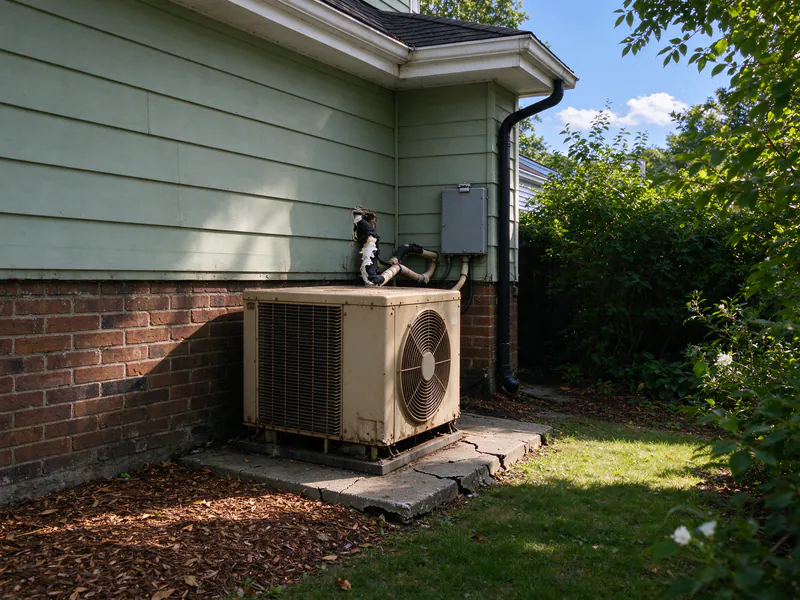
- The outdoor spot. Whether the old pad has sunk, sits under a roof drip line or crowds the neighbor’s lot line.
The estimate names the new equipment with its heating capacity at 5°F, the line set plan, any duct or electrical change, the permits, the rebate and our price.
Why the old size isn’t automatic
The old tonnage was picked for a different set of equipment, often by rule of thumb. A 15-year-old single-stage unit loses much of its heating output as the air gets colder, so its nameplate says little about what your house needs now.
What changed in the equipment
Cold-climate variable-speed heat pumps hold far more of their output near 5°F than older single-speed units. A new 3-ton system can deliver close to its rated heat on a night when the old one made about half. That changes how much work is left for the strips.
Like-for-like or variable speed
A like-for-like single-stage swap costs less up front, and it repeats the old pattern: full blast, off, and strips on cold nights. Variable speed runs longer at low output, holds the temperature steady and dries summer air better. When a house could go either way, we price both and show the difference on paper.
The line set: reuse or replace
The copper lines between the outdoor unit and the air handler can often stay. Whether yours can depends on their size, condition and route, and on what the new equipment’s instructions allow.
Reuse works when the diameters match the new unit’s specification, the run is within its length and lift limits, and the lines pass a flush and a standing nitrogen test. It spares a finished ceiling. Replacement is the call when lines are undersized, kinked, badly insulated or full of old oil.
The refrigerant change
New heat pumps run on lower-impact refrigerants such as R-454B or R-32 in place of R-410A. These are classed as mildly flammable, so most new air handlers carry a refrigerant leak sensor, and the indoor and outdoor units change as a matched pair. Our R-454B guide explains what that means for a swap.
How the swap goes, start to finish
A replacement follows the same order as a new install, with the old refrigerant recovered first. Most basement-to-yard swaps take one to two working days on site once the permit is issued.
- Recover the old refrigerant and remove both units.
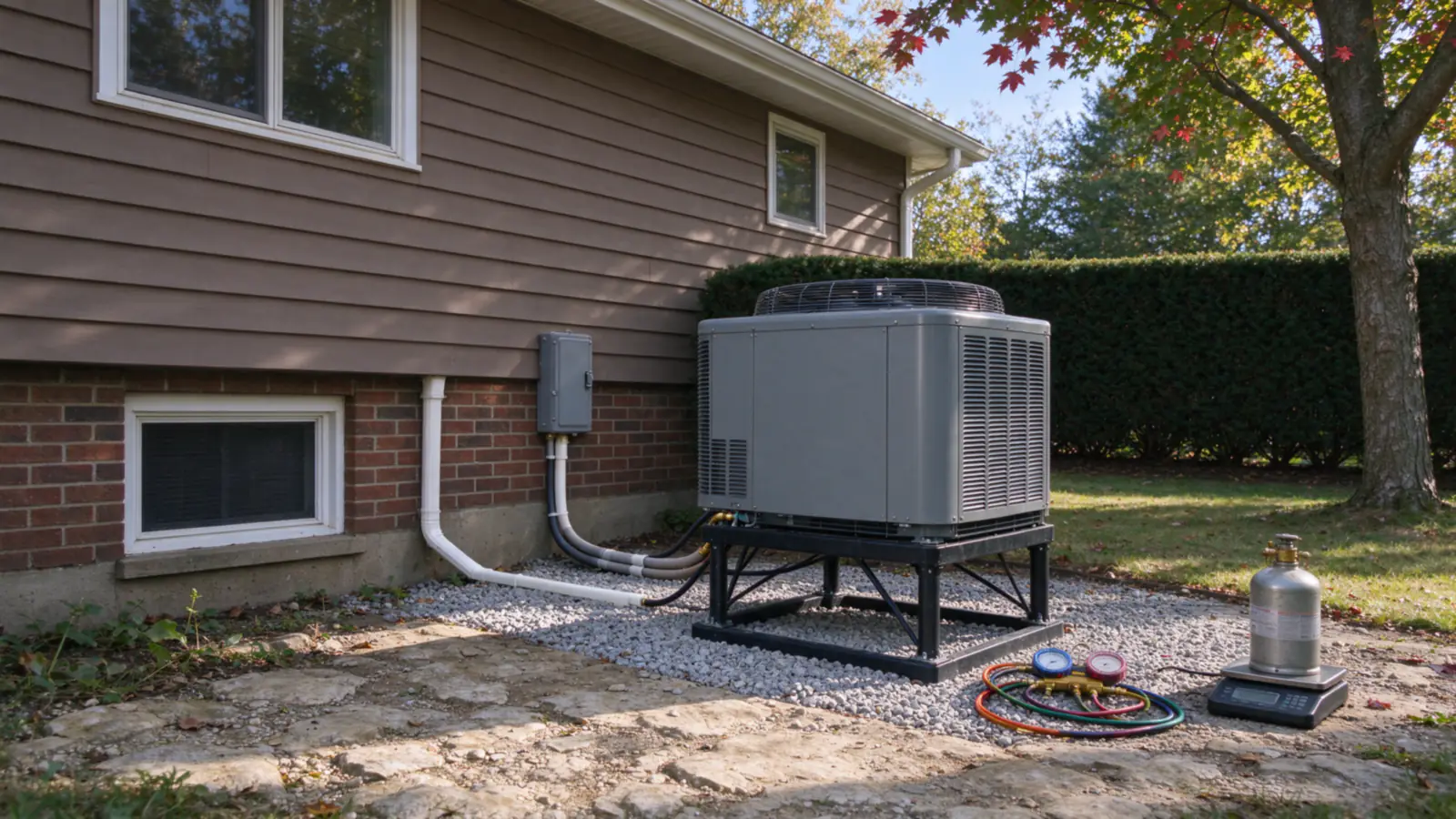
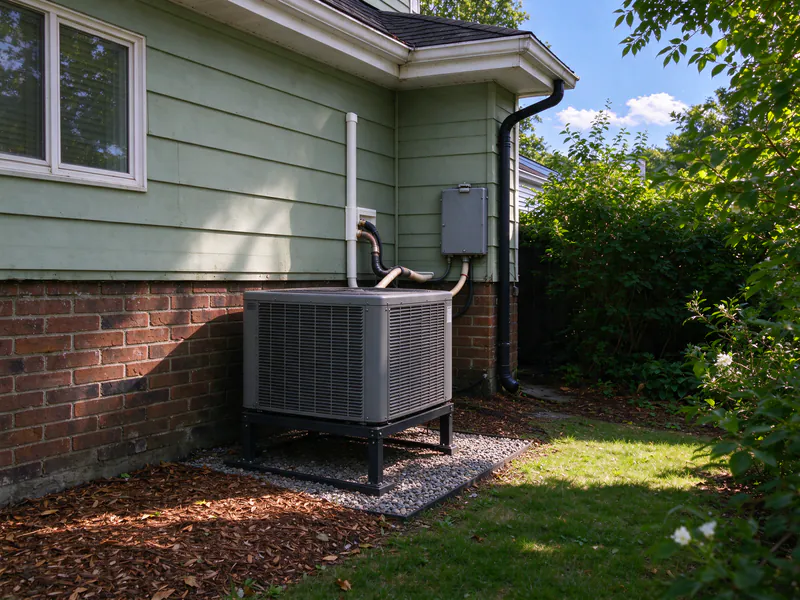
- Set the outdoor unit level on a stand above drifting snow, out from under the roof edge (snow stands).
- Set the air handler and connect the plenum, return, condensate trap and float switch.
- Braze the lines under flowing nitrogen, then pressure-test them.
- Pull a vacuum below 500 microns and confirm it holds.
- Weigh in the charge for the actual line length.
- Measure airflow and static, set the thermostat and record the backup heat lockout.
You get the readings in writing, so the next service visit starts from known numbers instead of guesses.
Rebates when you replace a heat pump
A heat-pump-for-heat-pump swap earns Mass Save’s basic rebate, $250 per ton up to $2,500. The larger whole-home and partial-home rebates pay for displacing oil, propane, gas or electric resistance heat, not for upgrading a heat pump.
| Your situation | What applies |
|---|---|
| Eversource or National Grid electric | Basic rebate for qualifying equipment installed by a participating contractor |
| A light plant town such as Braintree or Peabody | The town utility’s own program, which sets its own terms for replacements |
| Any Eversource, National Grid or Unitil heat pump home | The winter heat pump rate on household electricity |
Basic rebates go through electric sponsors only, and the equipment has to be on Mass Save’s cold-climate qualified list. We confirm current figures for your address when we write the estimate.
What moves the price of a replacement
Most of the spread in our $12,000 to $24,000 range comes from the equipment tier and what has to change around it.
- Capacity and tier: single-stage, two-stage or variable speed.
- Line set reused or replaced, and how hard a new route is.
- Air handler location: an open basement against a tight closet or an attic install.
- Duct fixes found on the static test.
- Electrical work, from a new disconnect to a service upgrade.
Our cost guide puts replacement beside the other jobs we price. If only the indoor unit is failing, an air handler replacement may be the smaller job.