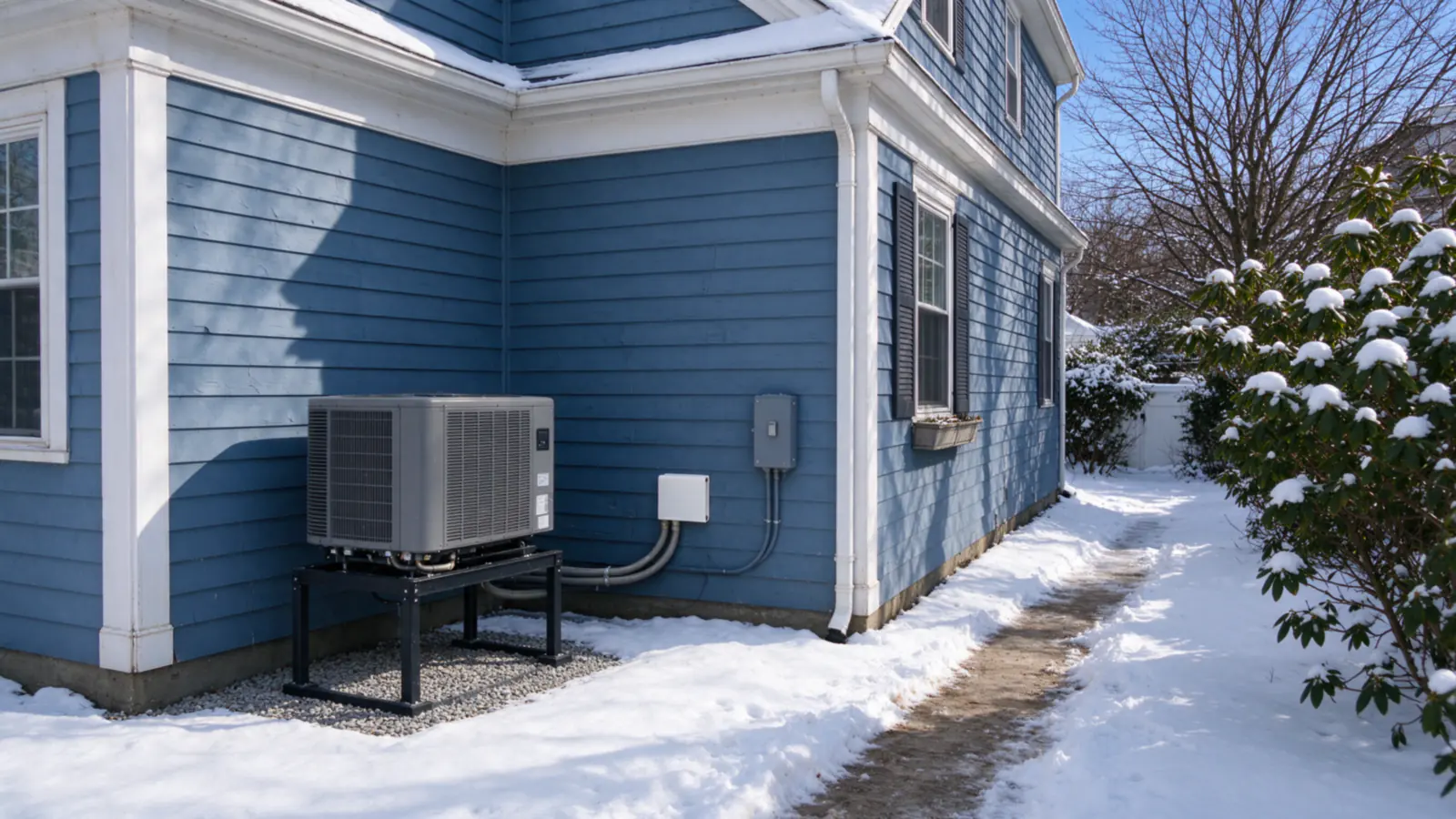
If your electric bill comes from Peabody Municipal Light Plant, Mass Save isn’t the program that pays for an oil switch. Clement Boston Heat Pumps plans heat pump installation in Peabody, MA around the light plant’s own rebate, which has a cap that shapes larger houses.
PMLP pays $500 a ton, up to 36,000 BTU per address each calendar year. That is three tons, and plenty of Peabody colonials need more.
Why the light plant changes a Peabody plan
Peabody owns its electric utility. That decides the rebate, the electric rate and which homes can reach Mass Save at all, so we work it out before sizing anything.
The three-ton cap
PMLP’s rebate is $500 per ton for air-source heat pumps, with the maximum based on 36,000 BTU per address per calendar year. A three-ton house gets $1,500; a four-ton house still gets $1,500. We size to your load, not to the cap, because a short system leans on backup heat every cold night. See our sizing guide.
Who qualifies
The rebate is for owner-occupied homes and not for new construction. The equipment has to meet SEER2 15.2, HSPF2 8.1 and a COP of 1.75 at 5°F, and the work has to be done by a Massachusetts-licensed contractor.
Mass Save, for gas homes only
Mass Save’s electric-side rebates for oil, propane and baseboard switches need a Mass Save electric sponsor, and PMLP isn’t one. Gas heat is different: National Grid supplies Peabody’s gas and sponsors Mass Save, so a gas-heated home has a gas-side route. Our rebate guide lists its conditions.
The houses we plan for in Peabody
About half of Peabody’s homes are detached houses and more than a quarter are in buildings of five or more units. Only about one in five dates from before 1940, so most houses were built with a furnace, a boiler or central air.
West Peabody colonials and raised ranches
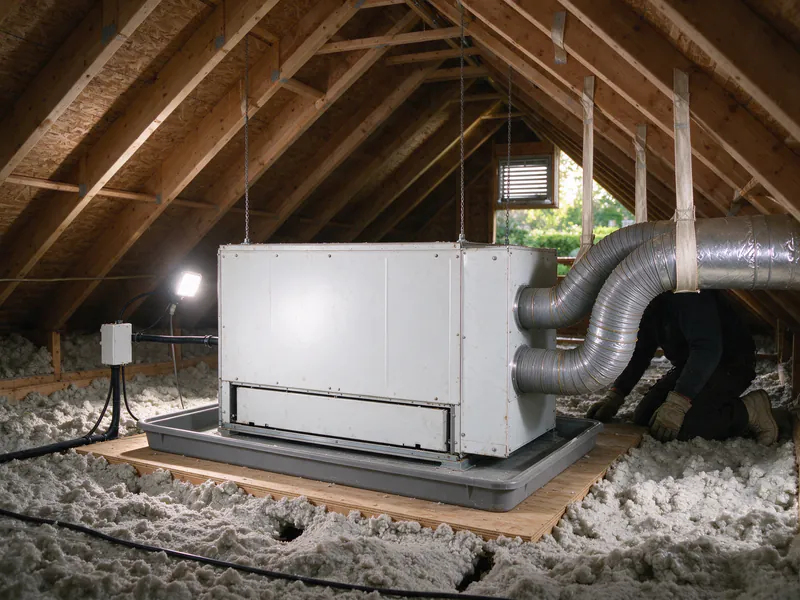
Many West Peabody houses from the 1960s on have a boiler with baseboard and a separate central air system in the attic. The attic ducts already reach the bedrooms, so swapping that air handler for a heat pump unit covers the second floor. See replacing AC with a heat pump.
Older houses near Peabody Square
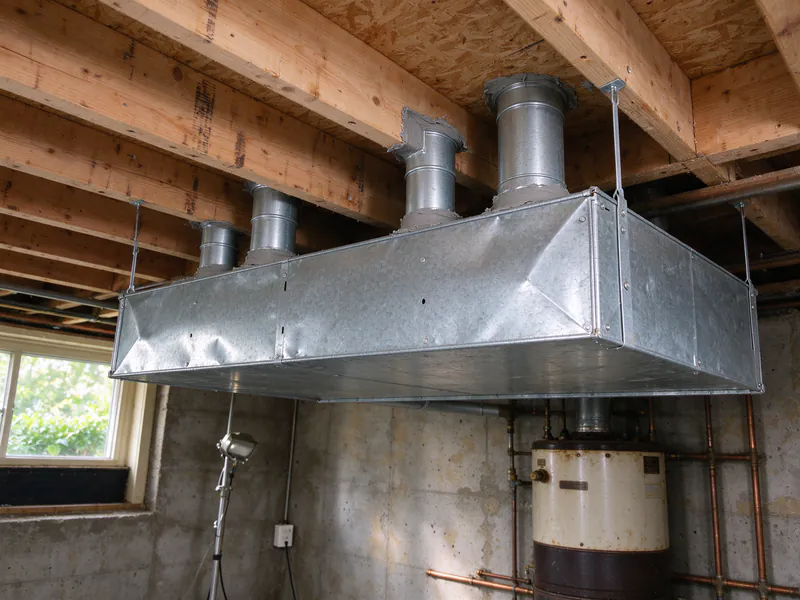
Closer to downtown and the old tannery district, houses are older and often heated by a boiler with no ducts at all. That plan means new ductwork, an attic unit for upstairs and a basement unit for the first floor; see heat pump ductwork.
Condos off Route 1 and Route 114
In larger condo buildings, the board decides where outdoor units go and how line sets run. The PMLP rebate still applies if the unit is owner-occupied.
Oil, gas and the Peabody electric rate
About 24% of Peabody homes heat with oil and about half with gas. On light plant power, the running-cost comparison uses PMLP’s tariff, not the state’s seasonal heat pump rates, which only Eversource, National Grid and Unitil offer.
- Oil homes stand to gain most, because oil is the costliest common fuel per delivered BTU. Our heat pump vs oil guide explains the comparison.
- Gas homes usually switch for central cooling or a failing boiler, and they’re the group with the Mass Save route.
- Electric baseboard homes, about one in five, get two to three units of heat per kilowatt-hour from a heat pump instead of one.
Refrigerant and the rebate
Equipment using R-410A is being replaced by newer refrigerants such as R-454B. We quote current equipment so the rebate paperwork and the service parts line up; see the refrigerant guide.
Making a capped rebate go further
With PMLP’s rebate topping out at $1,500, the bigger savings in Peabody come from the size of the system and how it runs. Three choices move the numbers more than the rebate does.
Cut the load before you buy tonnage
Air sealing the attic floor and insulating the rim joist can lower a colonial’s heat loss enough to drop half a ton. A smaller system costs less up front, cycles less on mild days and stays closer to the three tons the rebate covers. The room-by-room load calculation shows where the losses are.
Decide what happens to the boiler
PMLP’s terms list ratings, ownership and the cap. Whether the oil or gas boiler stays as backup for a winter or comes out on day one is a comfort and cost decision we lay out on the estimate. If it comes out, the oil tank comes out with it; see oil tank removal.
Use the attic you already have
Where an attic AC air handler already serves the bedrooms, a matched heat pump air handler on those ducts is the cheapest ton of heat in the house. We test the ducts’ static pressure first, because AC ducts sized for summer airflow sometimes need a larger return for winter.
What Peabody permits and Peabody Municipal Light Plant rebates involve
Peabody takes permit applications through its OpenGov portal. The job needs an electrical permit and the mechanical permits the city requires for the ducts and equipment, confirmed per address.
| What | The Peabody figure |
|---|---|
| Electric utility | Peabody Municipal Light Plant |
| Gas utility | National Grid |
| PMLP air-source rebate | $500 per ton, 36,000 BTU cap per address per calendar year |
| Eligibility | Owner-occupied, existing homes |
| Energy code | Stretch code since January 1, 2024 |
| Heating fuel | Gas 50.6%, oil 24.0%, electricity 19.5% |
Peabody is also one of the state’s coastal communities along the North River and Salem’s harbor edge. Houses near tidal water get a unit placed out of direct spray.
The order of work in a Peabody house
The first visit covers a room-by-room load calculation, a check of any attic or basement ducts, the panel and the outdoor spot.
- Written estimate: equipment, its capacity at 5°F and its PMLP ratings, ducts, electrical, permits and the rebate amount at the three-ton cap.
- Phasing, if it helps: a house that needs two systems can split them across calendar years to claim the cap twice.
- Install: three to eight working days, depending on new ducts.
- Commissioning: pressure test, vacuum, weighed charge, airflow and static, controls and backup heat settings recorded.
See our cost guide for ranges. South Lynnfield also buys power from PMLP; see Lynnfield. Danvers runs its own light plant with a different rebate.