(857) 837-1475Get an Estimate

Service

Replace AC with a heat pump in Boston, MA

When the central AC dies, a heat pump on the same ducts cools and adds a second source of heat.

Last Updated:

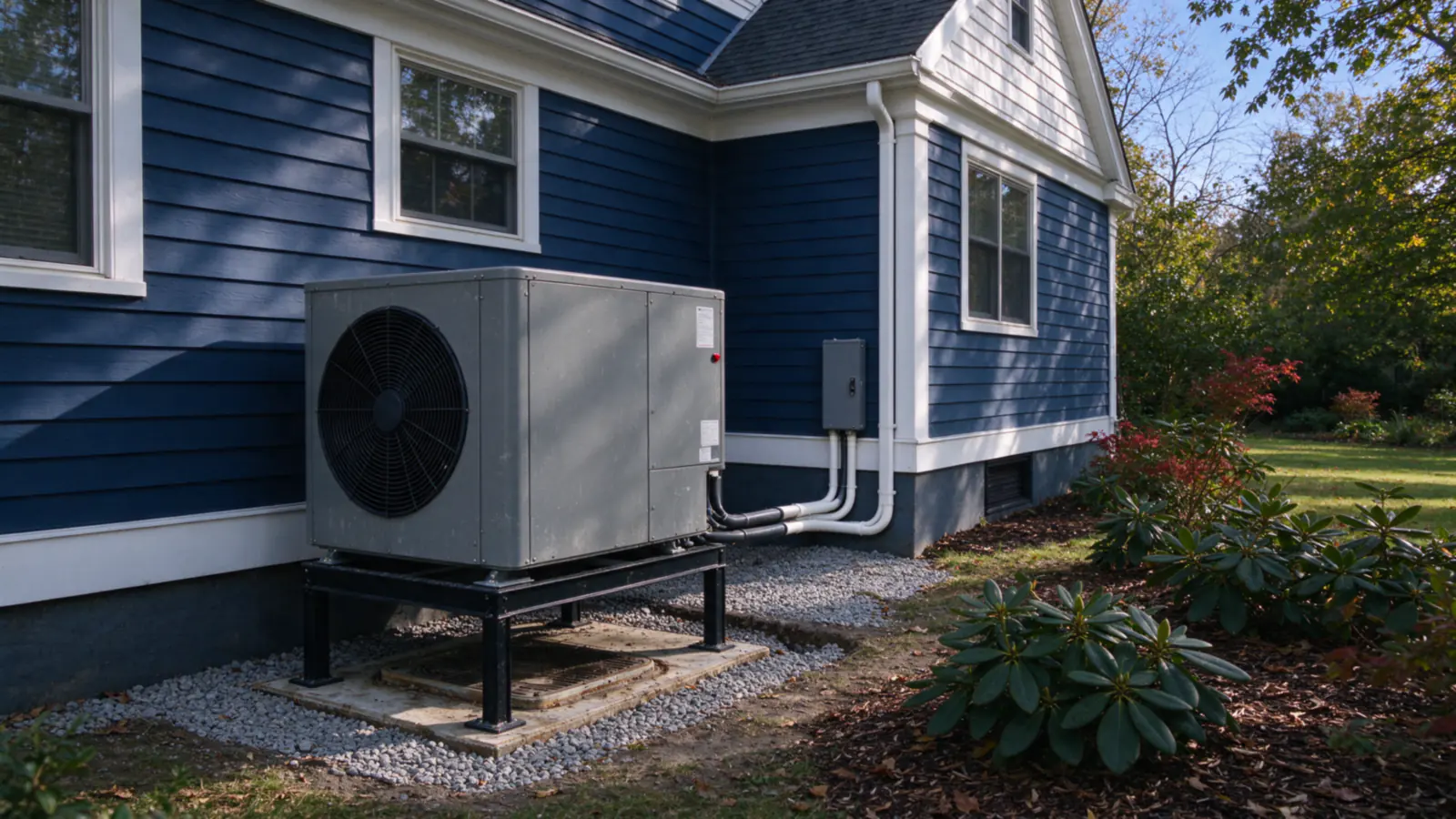
Cold-climate heat pump on a raised stand where an old central AC condenser sat, beside a two-story Boston-area house in early fall
SizedFrom a room-by-room load calculation at your town's design temperature
MeasuredDuct static pressure and airflow before and after
TestedNitrogen pressure test and deep vacuum before the charge
In writingEquipment, duct work, electrical and permits listed line by line

What an AC-to-heat-pump job in Belmont looks like

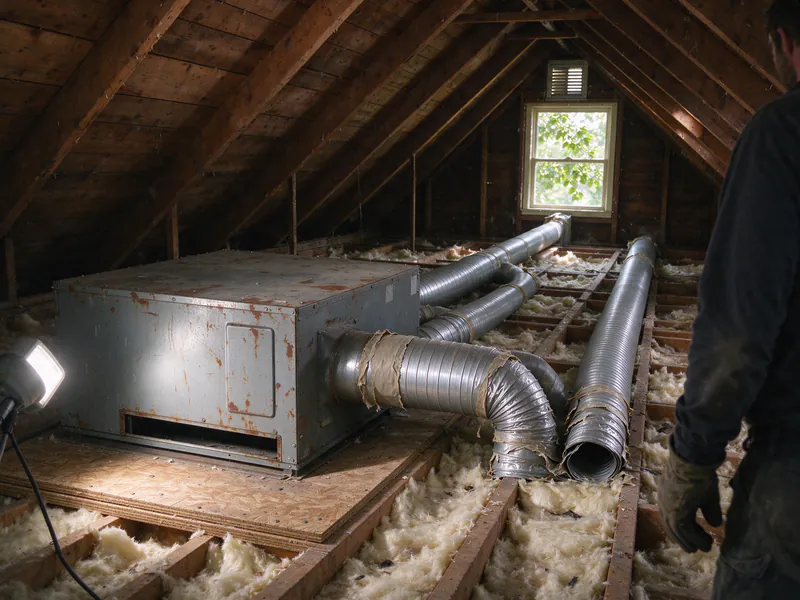
The failed attic air handler on crushed flex ducts, Belmont
The failed attic air handler on crushed flex ducts
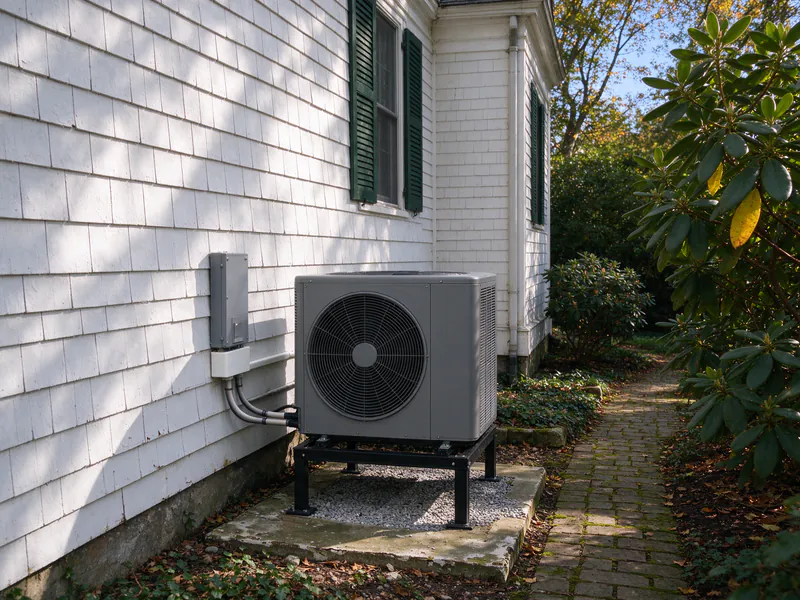
New heat pump on an 18-inch stand where the old condenser sat, Belmont
New heat pump on an 18-inch stand where the old condenser sat

A dead attic AC over an oil boiler

A 1920s colonial in Belmont heated by a 12-year-old oil boiler and cast-iron radiators. Upstairs cooling comes from a 19-year-old attic AC whose compressor quits in July. The boiler is sound, so the owners replace the AC with a heat pump that also heats the second floor and cuts the oil the house burns.

Sized for both seasons

The second floor needs 20,400 BTU an hour of cooling and 17,900 of heat on a 7°F night. A 2-ton cold-climate heat pump covers both, half a ton smaller than the old AC. The new attic air handler carries no electric strips: the upstairs radiators are the backup, on a thermostat set a few degrees below the heat pump's.

Fixing the attic ducts

The old flex runs are crushed and uninsulated, which costs little in summer and a lot in winter. All six are replaced with sealed R-8 duct, the trunk joints get mastic, and the ceiling diffusers are swapped for adjustable ones that throw warm air down. The air handler sits on a platform with a secondary pan and float switch.

Belmont Light, not Mass Save

Belmont buys power from its own light plant, so the rebate is Belmont Light's per-ton program, which asks for a recent home energy assessment and an outdoor unit at least 12 inches off the ground. The unit goes on an 18-inch stand where the old pad sat, with a new 36-foot line set and the charge weighed in.

Project facts
ServiceAC replaced with a heat pump, oil boiler kept
WhereBelmont
House1920s colonial, about 2,100 sq ft
BeforeFailed 2.5-ton attic AC, oil boiler and radiators
After2-ton cold-climate heat pump, new attic air handler and ducts
Price$16,400 before rebates
Time on siteThree working days

The central air quit, the quote on your desk is for another cooling-only condenser, and you’re wondering whether to replace AC with a heat pump instead. Clement Boston Heat Pumps makes that swap on the ducts you already have, so the same system cools all summer and heats spring, fall and much of the winter.

Your furnace or boiler stays for the coldest days unless you decide otherwise. We size the heat pump for both seasons and price it after the home visit, because the cost depends on how much heating it takes over.

Isn’t a heat pump just an AC that heats?

Nearly. It has the same compressor, coils and refrigerant loop as an air conditioner, plus a reversing valve that flips the flow in winter so the outdoor coil gathers heat instead of shedding it.

In heating mode the outdoor coil runs below freezing, so frost builds up and the unit defrosts it every so often. Cold-climate models add variable-speed compressors that keep heating well below 0°F; a standard heat pump fades fast in deep cold. Our heat pump vs central AC guide compares them side by side.

Ratings to read on a quote

Cooling efficiency is rated in SEER2 and heating in HSPF2. For a Boston house that leans on the heat pump in winter, the heating rating and the output at 5°F matter more than the cooling number; see SEER2 and HSPF2.

What gets replaced besides the outdoor unit

The indoor coil, almost always. An AC coil wasn’t built or matched for heating, so the new outdoor unit gets a matched coil or air handler, and the controls change to manage two heat sources.

  • Coil or air handler. On a furnace, a new heat-rated coil sits on top of it. In an attic, a new air handler goes in, because the old one is usually as old as the condenser that failed.
  • Line set. Older AC lines carried R-22 or R-410A, and new equipment uses R-454B. We flush or replace the lines, pressure-test with nitrogen, pull a vacuum below 500 microns and weigh in the charge for the line length.
  • Thermostat. A control that runs the reversing valve and decides between the heat pump and the furnace or boiler; see our thermostat guide.
  • The outdoor spot. An AC sits on a ground pad. A heat pump runs all winter and sheds defrost water, so it goes on a stand above drifting snow.
  • The circuit. Often reused when the breaker and wire suit the new unit’s nameplate; we check before counting on it.

If the AC sat on top of a furnace

The new heat-rated coil goes where the AC coil was, and the furnace stays as backup. A dual-fuel control chooses which one heats, usually by outdoor temperature, so they never run against each other.

The switchover temperature is the setting that matters. Set it low and the heat pump carries most of the winter; set it high and the furnace does. Our dual-fuel page explains how we pick it.

When the furnace is old too

If the furnace is near the end as well, replacing both at once avoids paying for a coil twice. That job is a furnace to heat pump conversion, with the furnace gone and a heat pump air handler in its place.

If a boiler heats the house and the AC lives in the attic

Here the attic AC has its own ducts to the top floor while radiators heat the house. Replace that AC with a heat pump and the top floor gets a second heat source that runs on electricity instead of the boiler’s fuel.

Attic ducts that only ever cooled now carry heat through the coldest space in the house. We seal joints with mastic, replace crushed or uninsulated flex with R-8 duct, and check that the ceiling registers can push warm air down to the floor. See attic air handlers for the platform, drain pan and access details.

Who heats what

The heat pump leads upstairs, and the boiler’s radiators follow on the coldest nights. We set the upstairs radiator thermostat a few degrees below the heat pump’s, so the boiler fires upstairs only when the heat pump can’t hold the setpoint. Downstairs stays on the boiler.

Sizing it for heat, not just cooling

An AC was sized for summer, and often oversized. A heat pump has to cool without short-cycling and heat well on cold nights, so we run the load both ways and choose a variable-speed unit that serves both.

In Greater Boston the heating load is normally the larger of the two. Where the heat pump only shares the heat, we size it to the cooling load and the floor it serves, then check how much of the winter it can carry. Our sizing guide shows the numbers.

Rebates when you replace AC with a heat pump

The rebate depends on what heat the heat pump displaces and how it’s controlled. Beside oil, propane or gas on integrated controls, Mass Save’s partial-home rebate can apply; a heat pump that only adds heat may fall to the basic tier.

If the furnace comes out, the job becomes whole-home. In light plant towns the town utility sets the rules: Belmont Light, for example, pays per ton for partial or whole-home systems after a home energy assessment, and Reading runs its own program. We confirm which tier your setup qualifies for before the estimate; the rebate guide has the amounts.

How long the swap takes

A condenser-and-coil swap on a furnace is usually one to two working days on site. An attic job with a new air handler and duct repairs runs closer to three, mostly for the attic work.

Summer is the busy season for AC, so a failure in July can mean a wait. Planning the change in spring or fall, while the old AC still runs, gives time for the load calculation and any rebate paperwork the town utility asks for first.

What's included

Your central AC died. Three ways to replace it

New ACHeat pump in its placeHeat pump, and retire the furnace
CoolingYesYesYes
HeatingNoneSpring, fall and milder winter days; the furnace or boiler covers the coldAll winter, with electric backup
Indoor equipmentNew coilNew heat-rated coil or air handlerNew air handler in place of the furnace
Fuel burned for heatUnchangedLessNone
Rebate pathNonePartial-home with integrated controls, or basicWhole-home

Related resources

How a job runs

First call

You tell us what heats and cools the house now, which rooms aren't working, and roughly where the house is.

Home visit

We measure the house for a load calculation, test the ducts, check the panel and look for an outdoor spot.

Written estimate

Equipment, duct changes, electrical, permits and the rebate path, line by line, with our price.

Install

Permits first, then the work: usually two to five working days on site.

Commissioning

Pressure test, vacuum, charge by weight, airflow and controls set before we call it done.

AC quit in the hottest week?

Send the age of the AC and what heats the house. We'll size the replacement for both seasons and put the price in writing.

Replace AC with a heat pump: questions

Can I just swap my AC's outdoor unit for a heat pump?

Not by itself. The indoor coil has to be rated for heating and matched to the new outdoor unit, the line set flushed or replaced for the new refrigerant, and the thermostat wired for the reversing valve and two heat sources. The swap is outdoor unit, coil and controls together.

Will a heat pump fight my furnace?

Not with the right controls. On a furnace, a dual-fuel control runs one or the other, switching at an outdoor temperature you choose. With a boiler and separate attic ducts, we set the thermostats so the heat pump leads on its floor and the boiler fires only when it can't keep up.

Do ceiling registers from an attic AC heat a room well?

They can, with some changes. Warm air wants to stay at the ceiling, so the registers need enough throw to push it down; adjustable diffusers help. The attic ducts also need sealing and insulation, or the heat is lost in the attic before it reaches the room.

Should the heat pump be the same size as my old AC?

Not automatically. The AC was sized for summer, often generously. A heat pump has to cool without short-cycling and heat on cold nights, so we run both loads and pick a variable-speed unit that covers both, which can come in smaller than the old AC.

What does it cost to replace an AC with a heat pump?

It depends on how much heat the heat pump takes over. If it becomes your only heat on ducts we can reuse, our typical range is $15,000 to $28,000 and up before rebates. A heat pump that shares the heating with a furnace or boiler is priced after the visit, from the coil, the line set and the duct repairs it needs.

Related services

Get an estimate for replace ac with a heat pump

Tell us what heats it now and which rooms aren't working. We'll measure, lay out the system and the ducts, and put the plan and the price in writing.

Step 1 of 2

The house and the work