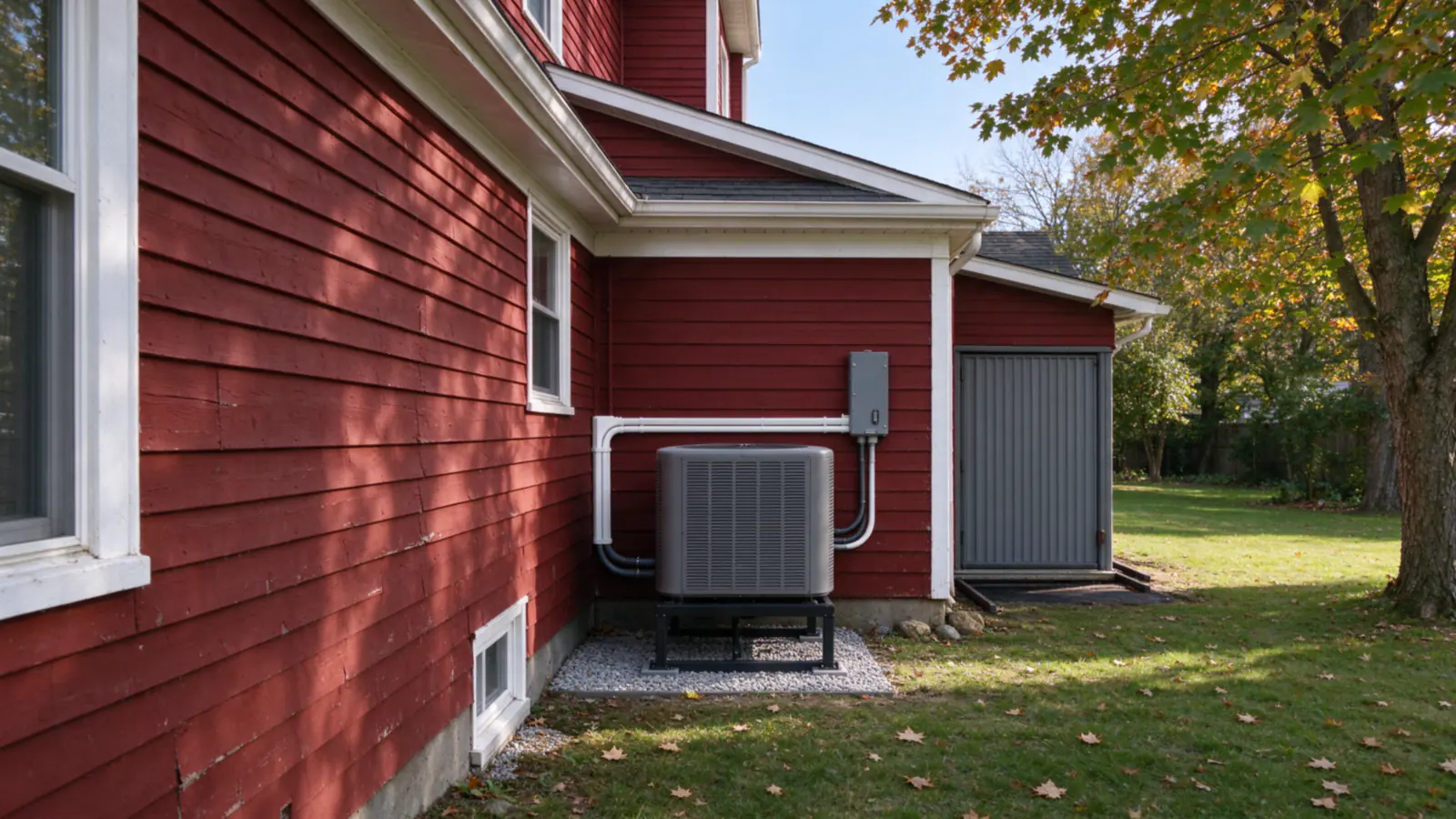
The same heat pump can earn two different rebates in Reading: RMLD lists up to $11,500 for a new heat pump and up to $7,500 for a replacement. Clement Boston Heat Pumps plans heat pump installation in Reading, MA with that split, and with RMLD’s 0% loan, worked out before the estimate is priced.
It matters here because so many houses still burn oil. About 42% of Reading homes do, nearly double the state’s share.
What RMLD pays, and what it means for your plan
Reading’s electricity comes from the Reading Municipal Light Department, not a Mass Save sponsor. RMLD’s own program covers residential customers who install heat pumps at their primary home in its territory.
Two rebate amounts
RMLD’s page lists up to $11,500 for a new heat pump and up to $7,500 for a replacement heat pump. Which one fits your job is RMLD’s call, so we confirm it with them before ordering. The difference is $4,000, which is enough to change how a budget comes together.
The rebate or the loan
The program reads as a rebate or a 0% loan up to $40,000. The rebate lowers the price outright; the loan spreads the whole cost with no interest. We price both on the estimate. The quote checklist explains what else to compare.
Weatherization first
RMLD also pays up to $3,500 toward weatherization. Air sealing and attic insulation lower the heat loss, and a smaller load can mean a smaller system. We run the load calculation on the house as it will be after that work.
Oil heat in a Reading house
Oil heats about 42% of Reading homes, gas about 44% and electricity about 10%. Per delivered BTU, oil is the most expensive common heating fuel in the state, so these homes see the clearest savings.
Furnace houses
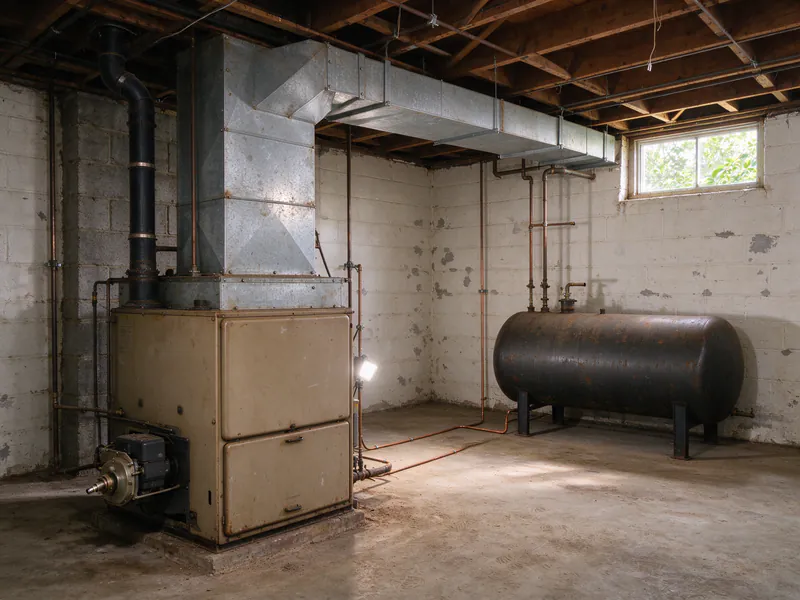
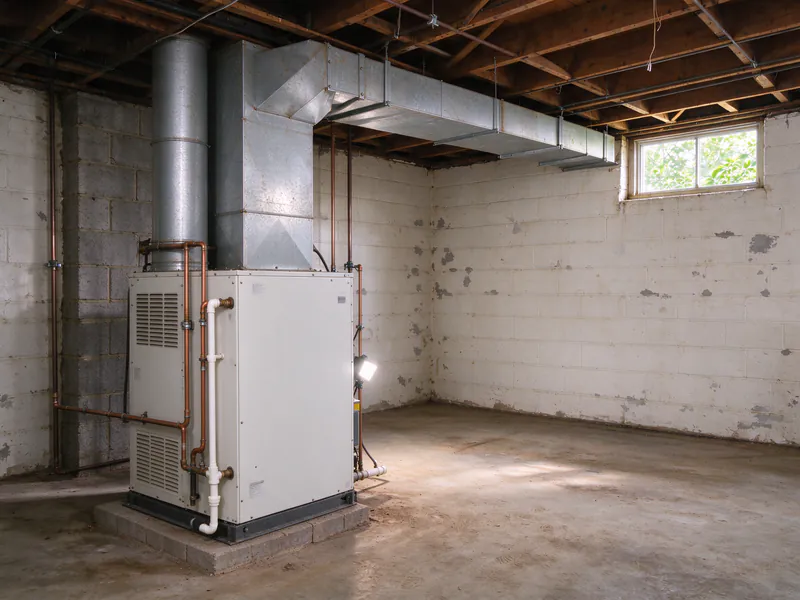
Many Reading colonials and garrisons from the 1950s through the 1970s have an oil furnace and a duct system in the basement. We measure static pressure, return size and leakage; where the ducts pass, the heat pump reuses them. See oil to heat pump conversion.
Boiler houses
Older houses near Downtown Reading and the Common more often have an oil boiler and radiators. That plan needs new ducts, with an attic unit for the second floor and a basement unit for the first.
The tank
When the oil system comes out, so does the tank. We remove an accessible basement tank under the fire department’s permit; see oil tank removal and heat pump vs oil heat.
The panel
An oil furnace draws little electricity, so a house that has burned oil for decades may still have a 100-amp service. We add up the existing loads before deciding; many houses carry a right-sized system without an upgrade. When one is needed, it goes on the estimate as its own line; see panel upgrades.
Gas homes and the cooling question
Gas is cheap per BTU, so Reading’s gas homes switch for other reasons: central air, an aging furnace, or one system for both seasons. National Grid supplies the gas, and Mass Save’s gas side is the route to look at.
- Furnace and central air: the outdoor AC and indoor coil get replaced by a heat pump pair on the same ducts; see replacing AC with a heat pump.
- Furnace near the end of its life: a furnace to heat pump conversion removes it, or keeps it as backup.
- Running cost: we compare on your actual RMLD and gas bills; see heat pump vs gas furnace.
Sizing for a Reading winter
Reading sits north of Boston and away from the harbor, so its coldest nights run harder than the city’s. We size every room for the town’s design temperature and read the equipment’s output at 5°F, not its nameplate.
A system sized that way runs long, even cycles on mild days and still holds the house on the coldest nights. Our sizing guide shows the steps.
Backup heat, set on purpose
Most ducted systems carry electric strips in the air handler for defrost and for the rare night below the equipment’s range. We set an outdoor lockout so the strips stay off above a temperature you approve, because strips cost as much to run as baseboard. The setting is recorded at start-up; see the backup heat guide.
Condos and townhouses
About one Reading home in five sits in a building of five or more units, mostly condo and apartment complexes. Those jobs turn on the association as much as the equipment.
What the board decides
The master deed and the board set where outdoor units can go, how line sets cross shared walls and who maintains them. We bring the spec sheet, its sound rating and a placement sketch to that discussion early.
What changes inside
A condo on electric heat swaps baseboard for a compact air handler in a closet, with short duct runs to each room. The RMLD rebate still applies to a primary home; see condo heat pump replacement.
Who pays what in Reading: RMLD and the permit
Reading takes permit applications through its online portal. The job needs an electrical permit, plus the mechanical and building permits the town requires for the scope, confirmed per address.
| What | The Reading figure |
|---|---|
| Electric utility | Reading Municipal Light Department |
| Gas utility | National Grid |
| RMLD heat pump rebate | Up to $11,500 new, up to $7,500 replacement |
| RMLD 0% loan | Up to $40,000, instead of the rebate |
| RMLD weatherization | Up to $3,500 |
| Energy code | Stretch code since January 1, 2021 |
| Heating fuel | Oil 42.0%, gas 43.5%, electricity 9.6% |
The cost guide sets out our ranges and what moves them.
Start to finish in Reading
We check the RMLD route on the first visit, alongside the ducts and the panel, so your estimate already carries the right rebate or loan.
- First visit: load calculation, duct tests, panel, the outdoor spot, and the old system’s age.
- Estimate: equipment with 5°F capacity, ducts, electrical, permits, the RMLD option and the price.
- Install: three to five working days on reused ducts; longer with new ones.
- Start-up: nitrogen pressure test, deep vacuum, weighed charge, airflow readings and controls.
North Reading and Wilmington share RMLD; Wakefield has its own light plant.