Up to $11,500 toward a new heat pump, or a zero-interest loan up to $40,000: that’s what Reading Municipal Light puts on the table for North Reading homes. It’s more than Mass Save’s $8,500 whole-home cap, and it’s the program that applies here, because RMLD, not a Mass Save sponsor, sells the town its electricity.
So heat pump installation in North Reading, MA starts with RMLD’s rules at Clement Boston Heat Pumps. More than a third of homes here burn oil, and they’re the ones with the most to gain.
How RMLD’s program shapes the plan
Reading Municipal Light serves Reading, North Reading, Wilmington and Lynnfield Center. Its heat pump program is open to residential customers installing at their primary home in RMLD territory.
New system or replacement
RMLD pays up to $11,500 for a new heat pump and up to $7,500 for a replacement heat pump. If you’re switching from oil, propane, gas or baseboard, you’re in the first group. If a heat pump already heats the house, the lower cap applies, and the estimate shows it.
Rebate or loan
Instead of the rebate, RMLD offers a zero-interest loan up to $40,000. That can cover a boiler house that needs new ducts, where the price runs higher. Weatherization rebates up to $3,500 sit alongside both.
Sealing and insulating first can shrink the system you need. The estimate shows the rebate and the loan side by side so you can pick.
Where Mass Save fits
Mass Save’s heat pump rebates for oil, propane and electric homes need a Mass Save electric sponsor, and RMLD isn’t one. Gas-heated homes buy their gas from National Grid, so a Mass Save route may exist through the gas side; we confirm which program applies before pricing.
Oil heat, and what replaces it
Oil heats about 35% of North Reading homes, well above the state’s 22%. Gas heats about half; electricity and propane cover most of the rest.
Oil furnaces with ducts
A warm-air furnace leaves supply and return ducts in the basement. We measure static pressure and the returns before reusing them, since a heat pump moves more air at a lower temperature. Often one return needs enlarging; see oil to heat pump conversion.
Oil boilers with baseboard
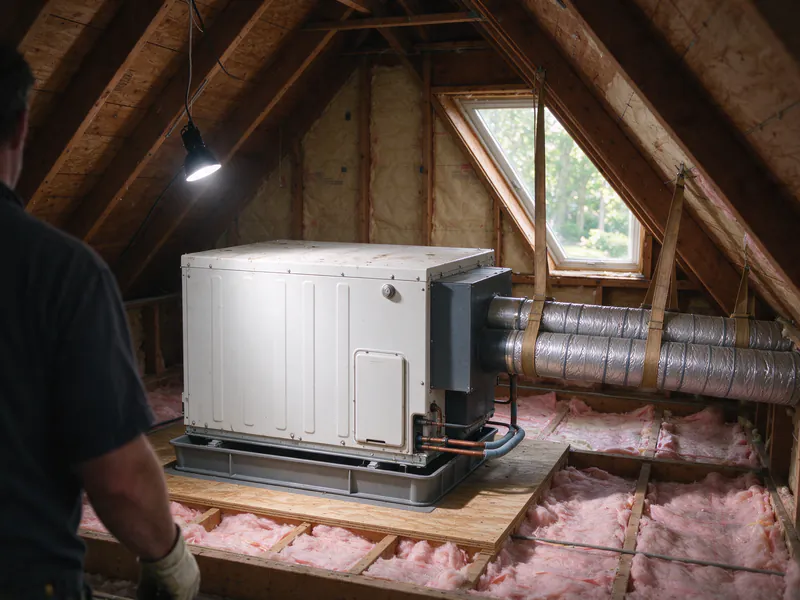
A boiler house has pipes, not ducts. A basement air handler serves the first floor through floor registers, and an attic unit feeds the bedrooms through ceiling registers, with a closet chase between them. See boiler to heat pump conversion and heat pump vs boiler.
The tank
When the burner goes, an accessible basement tank comes out too. Our typical range is $600 to $1,500, plus the fire department permit confirmed per address; see oil tank removal.
Capes, colonials and the newer subdivisions
Only about one North Reading home in ten predates 1940, and about 74% are detached houses. That means mostly post-war capes, ranches and colonials plus apartment and condo complexes.
- Capes with dormers: the knee walls hide a narrow attic on each side, often the best route for ducts to the upstairs bedrooms.
- Colonials and garrisons: two full floors usually want two systems, one in the basement and one in the attic, so each floor has its own returns.
- Condos and apartments: about 17.5% of homes sit in buildings of five or more units, where the association decides where outdoor units go.
Our guide to heat pumps in older houses covers chases and register placement in finished rooms.
Sizing and running cost on RMLD power
North Reading sits inland along the Ipswich River, where clear winter nights run colder than at the coast. We size from a room-by-room Manual J at your address’s design temperature and list capacity at 5°F.
Backup heat
Electric strips cost as much to run as baseboard, so we set the lockout to keep them for the hours the heat pump genuinely can’t carry. Our aux heat guide explains how that’s decided.
Where the outdoor unit sits
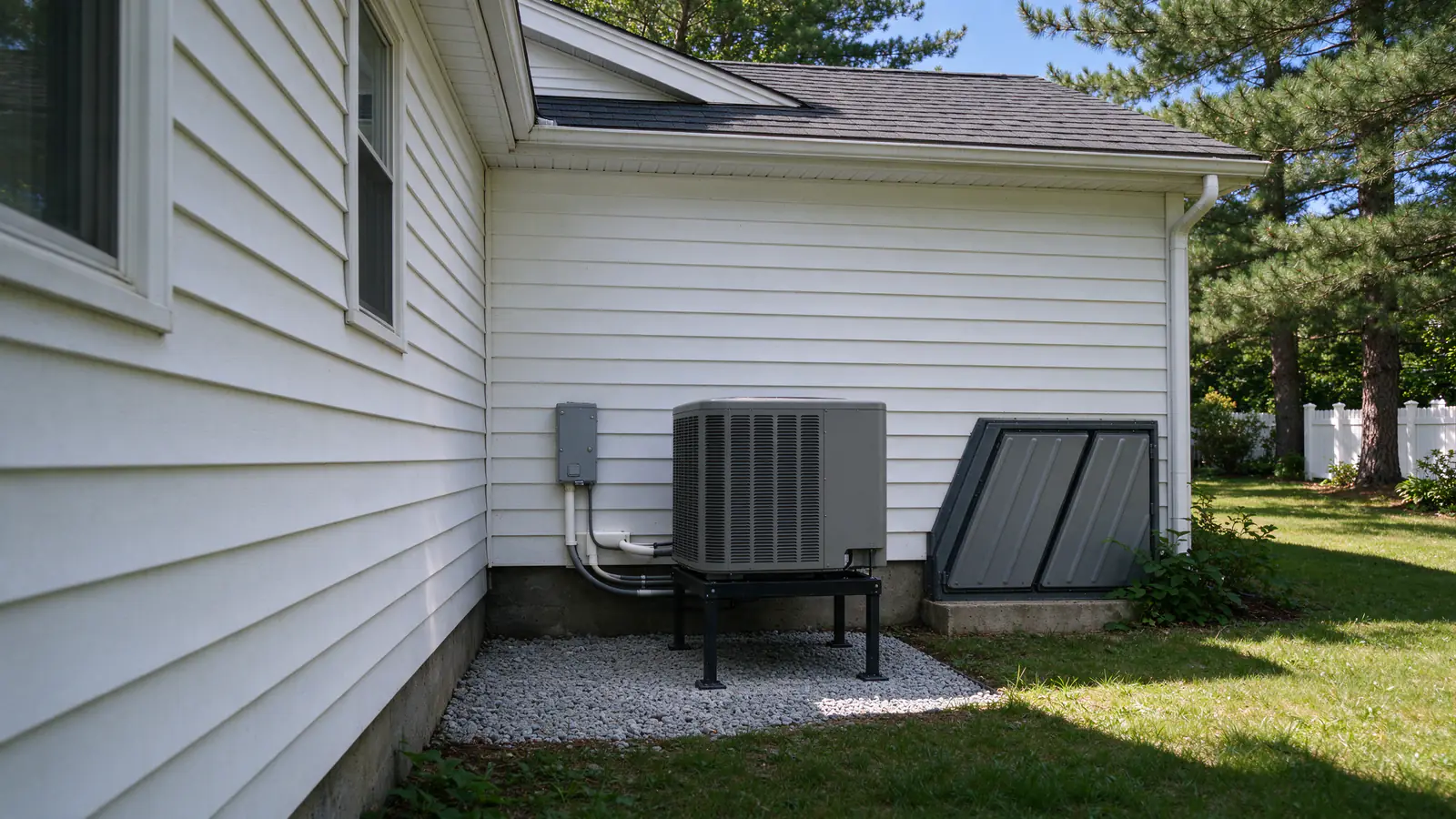
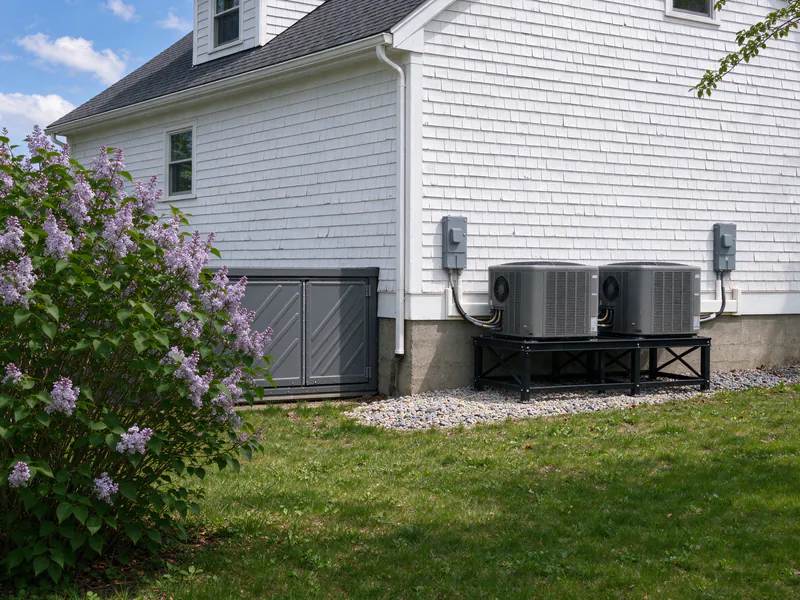
Where a lot is wooded, the best spot has clear air on all sides, sits out from under a dripping roof edge and stands above the snow that drifts against the foundation. Leaves and pine needles need clearing from the coil each fall, so we leave room to reach it.
Local setback and sound rules are confirmed per address, and statewide MassDEP limits how far a unit may raise the sound level at a neighbor’s home. See outdoor unit placement.
Comparing fuels
The state’s seasonal heat pump rates don’t apply to municipal light plants, so we use RMLD’s own residential rate in the comparison. Oil remains the costliest common fuel per delivered BTU; heat pump vs oil shows how we build that math.
North Reading’s utility, code and rebates
The town’s building department issues the electrical permit and, where ducts change or gas is capped, sheet metal and gas permits. Its filing route and any outdoor-unit setbacks are confirmed per address.
| What | The North Reading figure |
|---|---|
| Electric utility | Reading Municipal Light Department |
| Gas company | National Grid (Boston Gas) |
| RMLD rebate, new heat pump | Up to $11,500 |
| RMLD rebate, replacement heat pump | Up to $7,500 |
| RMLD zero-interest loan | Up to $40,000 |
| Energy code | Base code; stretch and specialized not adopted |
| Heating fuel | Gas 50.5%, oil 34.7%, electricity 7.5%, propane 4.4% |
On the base code, new homes and major renovations aren’t held to the stretch paths, and a retrofit is a mechanical job either way. Our cost guide sets out our ranges.
From first call to commissioning in North Reading
We begin at the house with the heat loss for each room, a look at the boiler or furnace and any ducts, the electrical panel, and the yard.
- Estimate: systems and their 5°F capacity, ductwork or chases, electrical, tank removal, permits, and the RMLD rebate or loan figure.
- Permits, then the install: three to four working days on existing ducts, five to eight with new ones.
- Old system out: boiler or furnace removed and the tank taken away.
- Start-up: nitrogen pressure test, vacuum below 500 microns, charge by weight, airflow measured, strip lockout set.
Reading and Wilmington share RMLD’s program, while Lynnfield is split between two light plants.