Upstairs is an oven in July, the back bedrooms are cold in January, and the furnace and the AC are both past 20. Clement Boston Heat Pumps installs whole-home ducted heat pumps across Boston and the towns within 20 miles: one system that heats and cools the house, with the furnace or boiler retired.
We size it from your house, not from the old unit, and put the plan in writing before anyone talks brands. Our typical range for a whole-home system on ducts we can reuse is $15,000 to $28,000 and up, before rebates.
What “whole-home” means
A whole-home heat pump carries all of the heating, every night of the year, with nothing burning fuel beside it. In summer the same system cools.
How it works
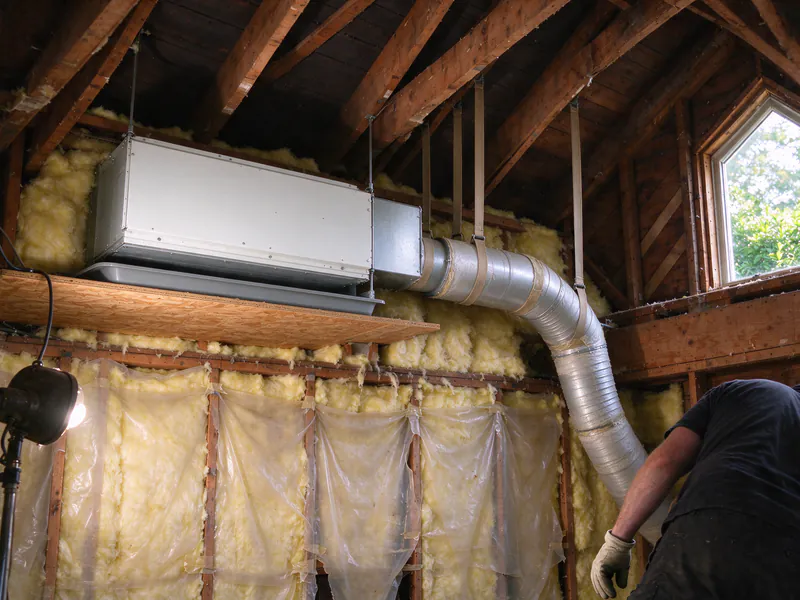
The outdoor unit pulls heat from outside air even below zero. A copper line set carries it inside, and an air handler pushes it through your ducts. A reversing valve flips the flow for cooling.
How it differs from the alternatives
A dual-fuel system keeps your furnace for the coldest hours. A partial system heats one floor while the boiler heats the rest. Whole-home is the choice when you want one system type, one kind of fuel bill and the old equipment gone.
It’s also the path Mass Save rewards most: a per-ton rebate that requires the old system removed or disconnected. Our Mass Save rebate guide compares the paths.
What happens on the first visit
We measure the house, test the ducts, check the panel and find a spot for the outdoor unit. All four go into the written estimate.
- The load calculation. A room-by-room calculation using the ACCA Manual J method: walls, windows, insulation, air leaks and your town’s design temperature. Boston sizes to 7°F at Logan; inland towns such as Waltham and Woburn run colder.
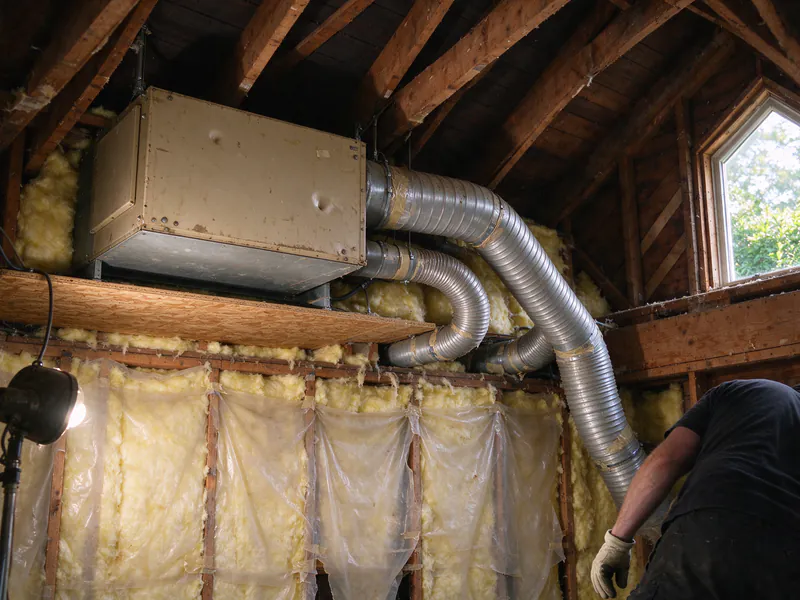
- The ducts. Static pressure across the furnace or air handler, the size of the return, and leaks at the trunk joints and in any attic runs. Heat pumps move more air than furnaces.
- The panel. Whether the service has room for the heat pump and its backup heat, or needs an upgrade.
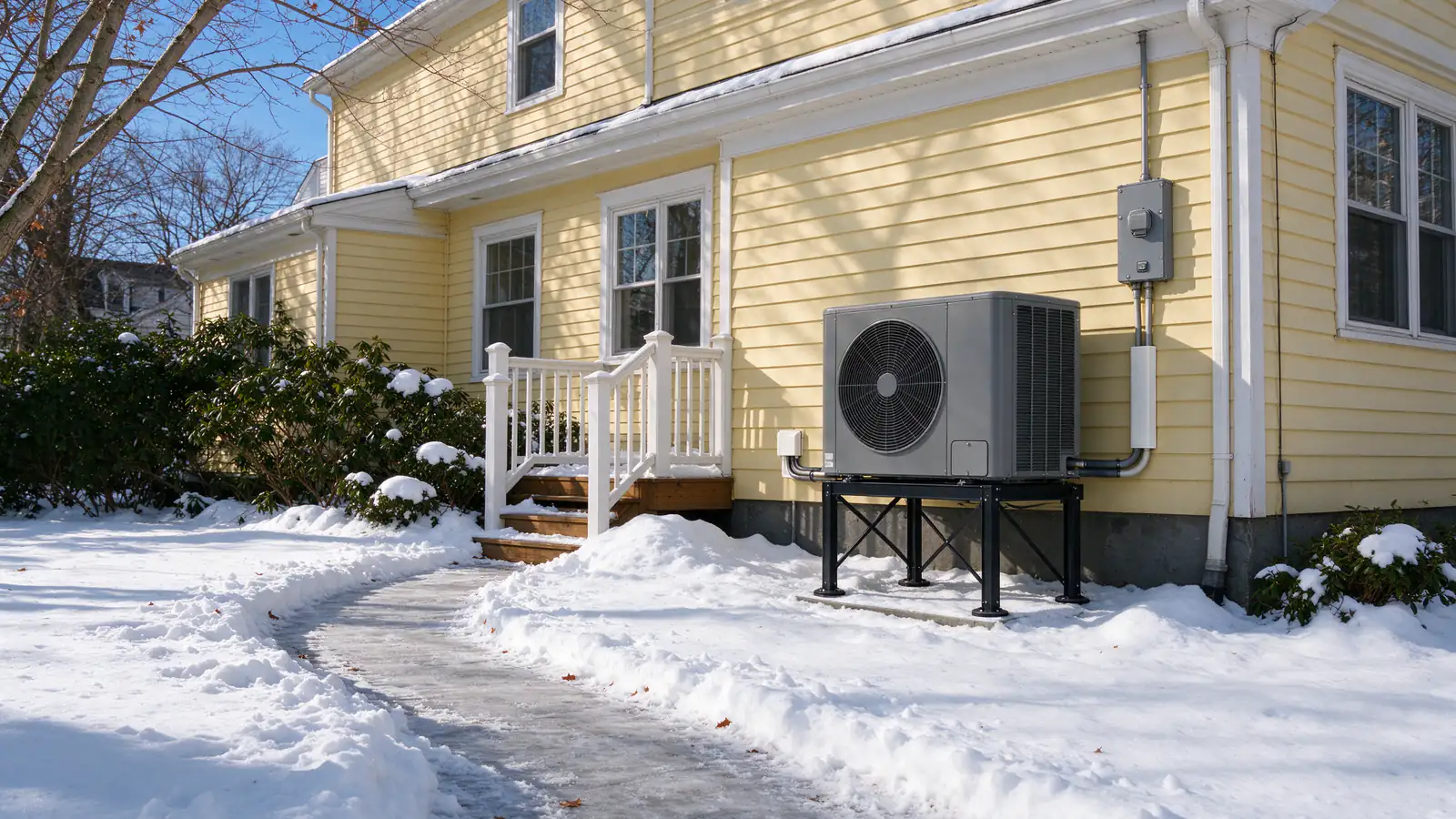
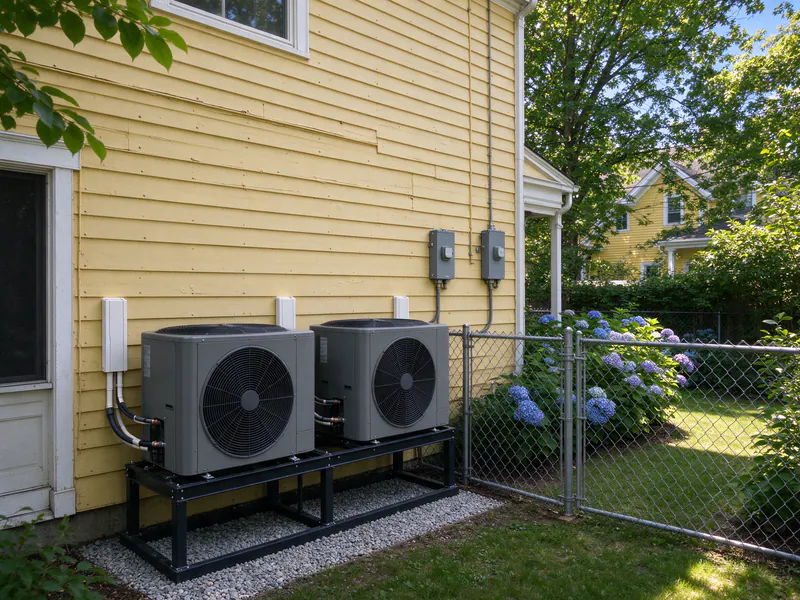
- The outdoor spot. A stand above drifting snow, out from under the drip line, and far enough from the lot line to meet your town’s noise rules.
You get it back in writing: the equipment and its capacity at 5°F, every duct change and why, the electrical work, the permits, the rebate path and our price.
Why same-size replacement is the wrong start
Copying the tonnage off the old AC is the most common mistake in a conversion. Older systems were often sized by rule of thumb, and many furnaces are far larger than the house needs.
Oversized
An oversized heat pump reaches the setpoint fast, shuts off, and leaves summer air clammy because it never runs long enough to pull out moisture.
Undersized
An undersized one runs flat out on the coldest nights and leans on electric backup strips, which cost two to three times as much per unit of heat. That’s the January bill people complain about.
The load calculation lands between the two, and it often lands smaller than the old furnace. Mass Save pays a sizing bonus for systems sized to the home’s total heating need. Our sizing guide shows how the numbers work.
Cold weather, backup heat and the controls
Every whole-home system we install is on the ENERGY STAR cold-climate list, tested to 5°F, which Mass Save also requires. These units are variable speed.
They run slow and steady most of the winter and ramp up on the coldest nights, which keeps supply air warm and the house even. Our guide on cold-weather performance goes deeper.
The backup heat lockout
Most all-electric air handlers carry heat strips for the coldest hours and for defrost. We set a lockout so they stay off above a chosen outdoor temperature, and record it in your closeout papers. Aux heat on a mild day means a setup problem; see heat pump aux heat.
Insulation and air sealing come first
The cheapest ton of heat pump is the one you don’t need. Air sealing and attic insulation can drop a house a size before we pick equipment.
Leaks around the attic hatch, the top plates of balloon-framed walls and the basement rim joist let warm air out all winter, and every bit adds to the load. Older Boston houses have plenty.
What Mass Save asks for
Mass Save ties its whole-home rebate to weatherization: a home energy assessment with its recommended air sealing and insulation done, or a house new enough not to need it. If yours hasn’t had one, we say so before sizing, because the load drops once the work is done.
Rebates and town rules
Mass Save pays its whole-home rebate per ton for qualifying equipment installed by a participating contractor in its Heat Pump Installer Network. The per-ton rate drops on January 1, 2027.
| Where the house is | What applies |
|---|---|
| Eversource or National Grid electric | Mass Save’s whole-home, partial-home or basic rebate, plus the winter heat pump rate |
| A light plant town such as Belmont, Reading, Peabody or Braintree | The town utility’s own heat pump program for oil, propane and electric-heat switches |
| Cambridge, Arlington, Brookline, Newton or Lexington, in a major renovation | No new fossil-fuel equipment, so whole-home is the route |
We confirm the current figures for your address when we write the estimate. The cost guide lists the rebate amounts and our ranges side by side.
When whole-home isn’t the right call
Some houses lose so much heat that a system big enough for the coldest night is oversized the rest of the winter. Some have a five-year-old furnace. Some have ducts that can’t carry heat pump airflow without work.
In those cases we price the alternatives beside it: dual fuel with the furnace as backup, duct work first, or a heat pump for part of the house. You decide with both numbers in front of you.