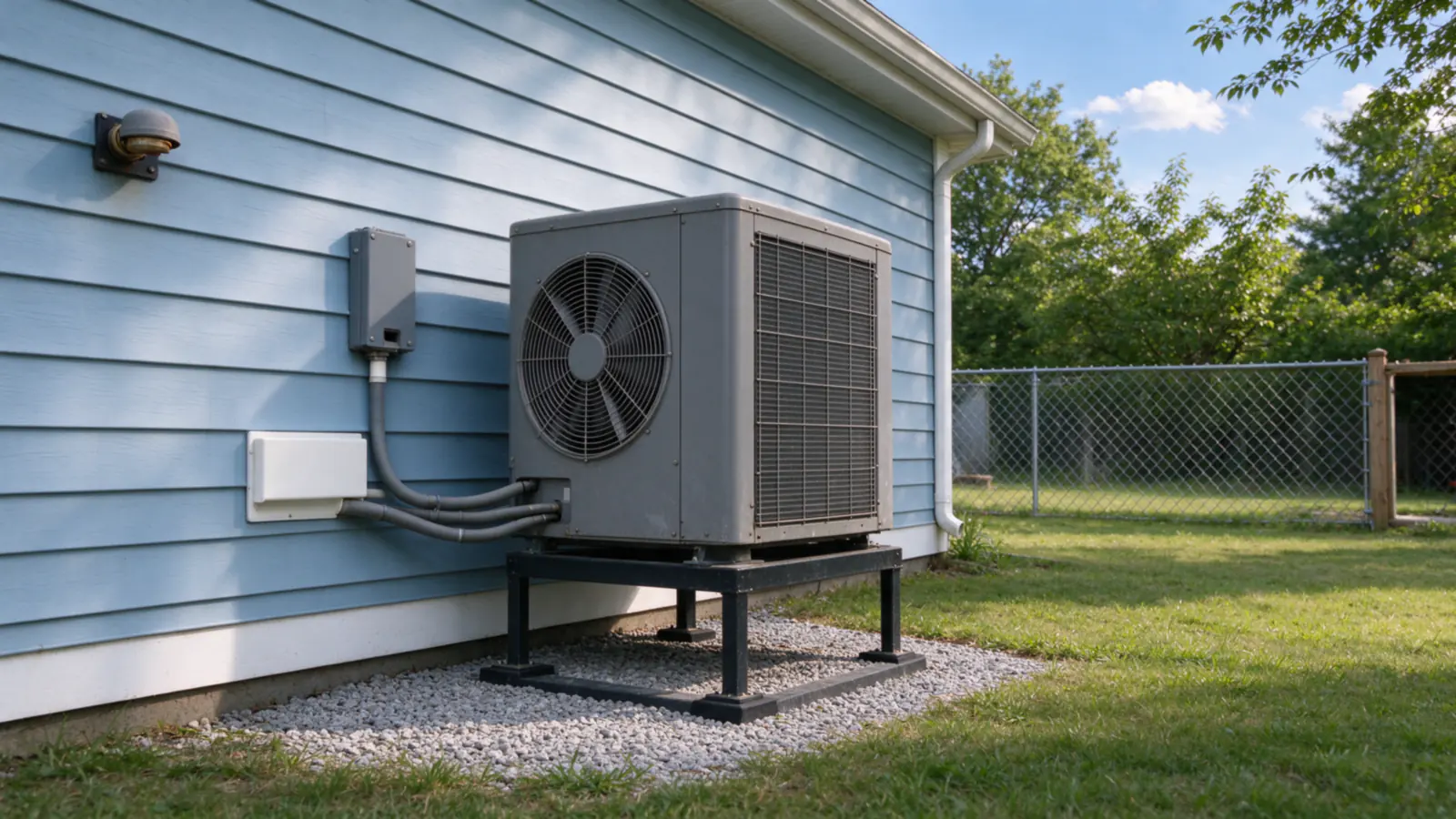
Waltham never adopted the specialized energy code, and that leaves its owners more choices than most cities near Boston. Clement Boston Heat Pumps brings that wider menu to heat pump installation in Waltham, MA: full electric, gas backup, or a staged switch.
Which option fits depends on what heats the house today. Waltham’s mix is unusual: nearly one home in five still burns oil, and almost a quarter heat with electricity.
What’s different about heating a Waltham house
Three facts set the plan here: a lighter energy code than the neighbors, a big share of oil and electric heat, and colder nights than downtown Boston.
The stretch code, not the specialized code
Newton, Watertown and Lexington have moved to the specialized code, which steers new homes and major renovations toward all-electric or pre-wired designs. Waltham stays on the stretch code it adopted on July 1, 2012.
In practice, a Waltham renovation can still pair a heat pump with a new gas furnace. Whether that’s the better plan depends on the house; the dual fuel page explains when it earns its keep.
Oil and electric heat
Waltham’s fuel mix is roughly 53% gas, 24% electric and 19% oil, against a state average of about 22% oil. Oil and electric homes have the strongest running-cost case, and both are eligible for Mass Save’s whole-home rebate once the old system is out.
Inland cold
Waltham sits about 12 miles west of downtown, away from the harbor. Hanscom Field in Bedford, the closest long-record inland station, averages about 19 nights a year at or below 10°F, against fewer than seven at Logan.
That changes the sizing. We calculate the load at Waltham’s design temperature and pick equipment by its output at 5°F; see the sizing guide.
From oil tank to heat pump
About 19% of Waltham homes burn oil. Where the burner is a forced-air furnace, the ducts are already in place and the conversion is mostly equipment.
Reusing the ducts
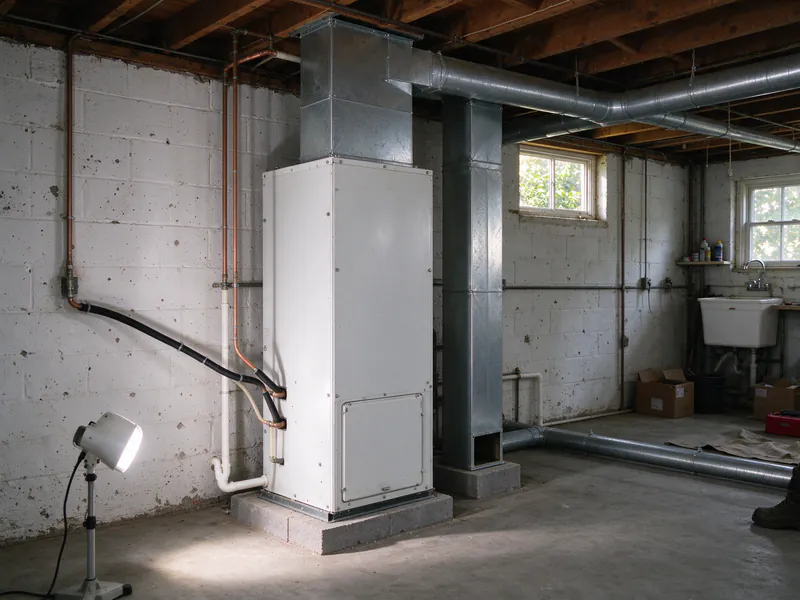
A forced-air oil furnace means the ducts already exist. We measure static pressure, check that the return is big enough for a heat pump’s airflow and look for leaky joints before deciding to reuse them. When they pass, the job is mostly equipment; see oil to heat pump.
The tank comes out
Once the heat pump carries the house, the oil tank goes. Our typical range for an accessible basement tank is $600 to $1,500; buried tanks are priced on site. The oil tank removal page covers the process.
Running cost
Per unit of heat delivered, oil costs more than a heat pump on Eversource’s winter rate, which lowers distribution and transmission charges from November through April. The heat pump vs oil guide works through the comparison.
Waltham’s housing, block by block
Waltham is a mix: just over a third detached houses, about a tenth two-families, and nearly a third in larger buildings. Only 28% predates 1940, below Boston’s inner suburbs.
| Waltham home type | Share | What the ducted plan looks like |
|---|---|---|
| Detached house | 37.0% | Reuse existing ducts, or basement plus attic air handlers |
| Two-family | 10.9% | One system per unit |
| Three or four units | 12.0% | Per unit, closet air handlers in the middle |
| Five or more units | 31.1% | Unit by unit, with the association |
South Side and older two-families
On the South Side near Moody Street, many of the older two-families and small multi-families were built for radiators. Those floors get their own systems, with the attic and basement carrying the top and bottom units.
Warrendale, the Highlands and post-war streets
Further from the river, ranches, capes and colonials from the mid-century on often have a furnace and central air. That’s the simplest heat pump job in Waltham; see furnace to heat pump. A split-level or a ranch with ducts in a crawlspace or slab needs a closer look at duct condition before we commit to reusing them.
Condos and apartments
Where a condo or apartment heats with baseboard or wall heaters, a ducted heat pump replaces them room by room and adds cooling. See baseboard to heat pump.
Backup heat and comfort on cold nights
On the coldest nights a heat pump’s output drops while the house needs more. How that gap gets covered is a design choice, not an afterthought.
Electric strips or a gas furnace
A whole-home system uses electric strips in the air handler for the few hours a correctly sized heat pump can’t cover. A dual fuel system uses a gas furnace instead, which Waltham’s code still allows. The backup heat guide explains how the lockout temperature is set.
Will it keep up?
Cold-climate units hold most of their capacity well below freezing. Our guide to whether heat pumps work in Massachusetts explains the physics and the equipment listing that Mass Save requires.
What the town and Eversource need from a Waltham job
Waltham’s Building Department issues the electrical and sheet metal permits, plus a gas permit where a line is capped. The filing route and fees are confirmed per address.
| What | The Waltham picture |
|---|---|
| Electric utility | Eversource |
| Gas utility | National Grid |
| Energy code | Stretch code since July 1, 2012 |
| Heating fuel mix | Gas 53.4%, electricity 23.5%, oil 18.9% |
| Built before 1940 | 28.3% |
Mass Save’s whole-home rebate needs cold-climate listed equipment, an installer in its network, the old system out and proof of weatherization; the rebate guide has the details.
Start to finish in Waltham
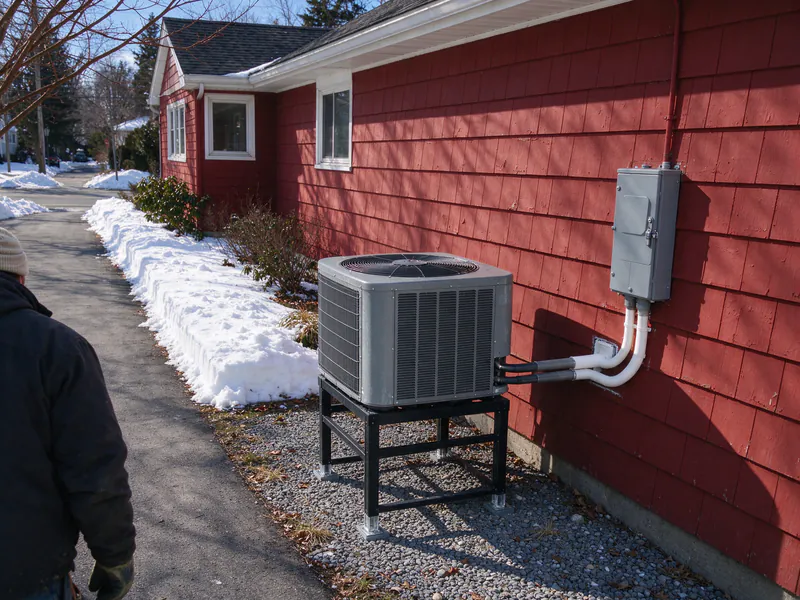
On the first visit we work out the heat loss room by room at Waltham’s design temperature, test the existing ducts, check the panel and pick an outdoor spot clear of the driveway and the plow.
- Estimate: each line priced, from equipment and its 5°F capacity to ducts, wiring, permits, the tank and the rebate tier.
- Permits, then three to six working days on site for a house with usable ducts, longer where new ducts go in.
- Old system out once the heat pump carries the house, then the tank.
- Commissioning: nitrogen test, deep vacuum, refrigerant weighed in, airflow and static recorded, backup lockout set.
Newton and Watertown border Waltham to the south and east; Belmont runs its own light plant.