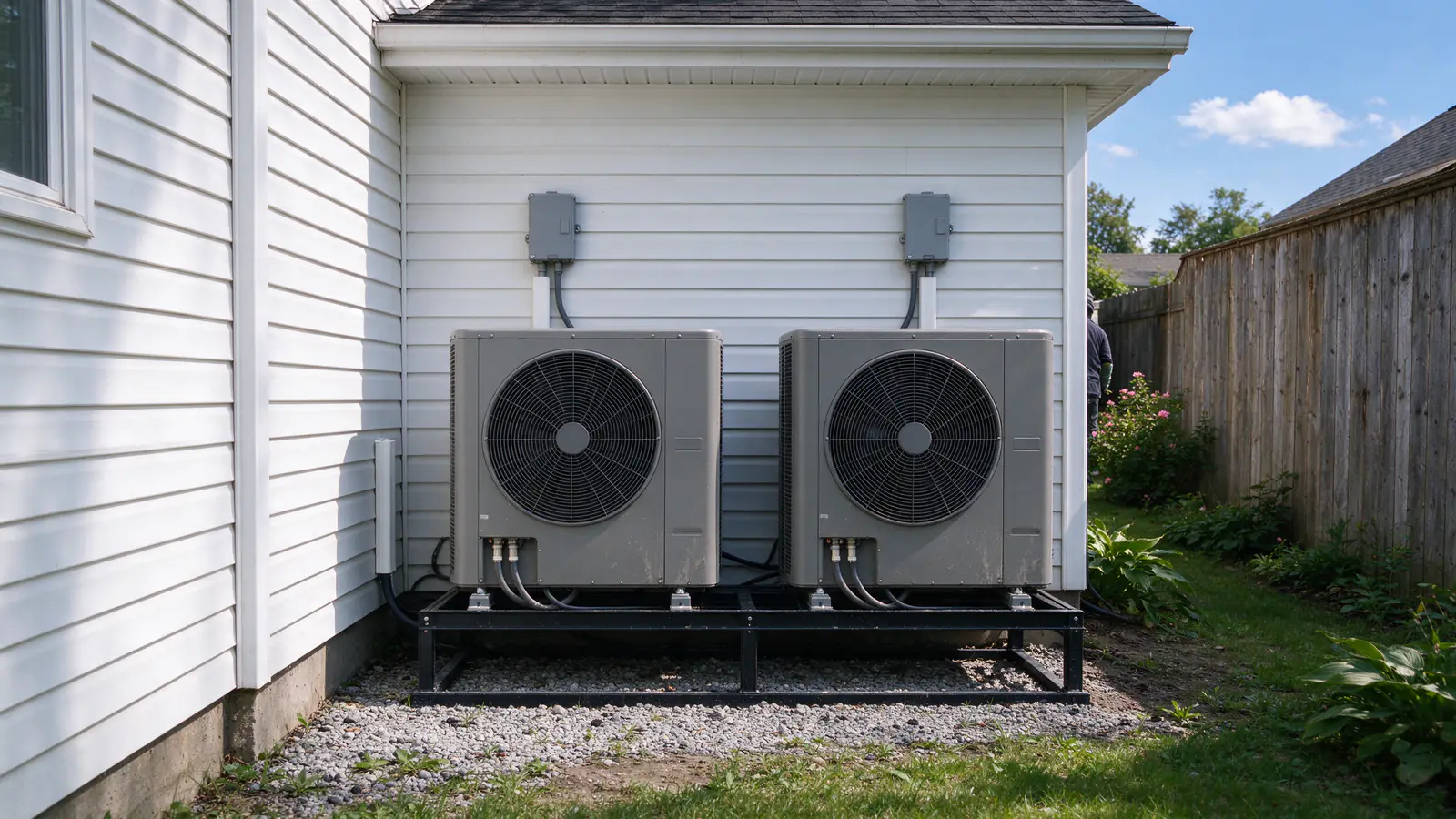
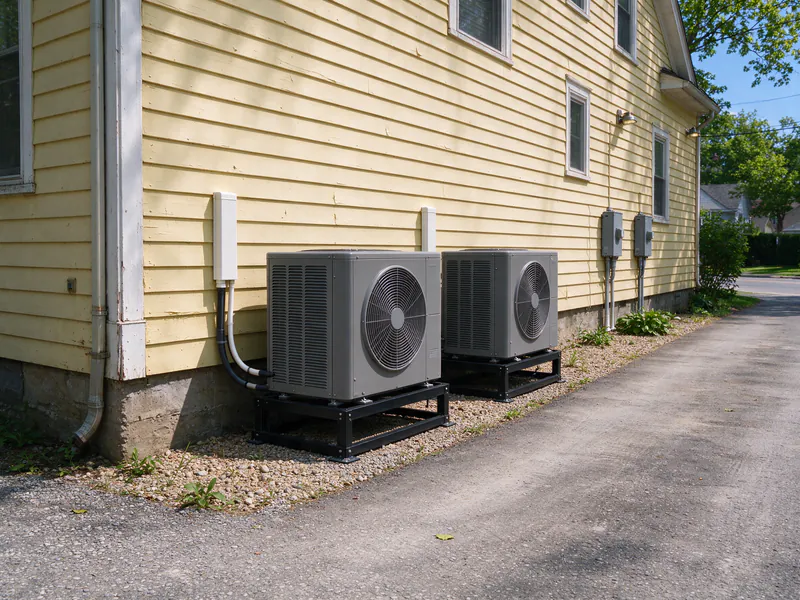
One driveway, two front doors and two heating systems: that’s the up-down two-family, and about a third of Watertown’s homes sit in one. Clement Boston Heat Pumps plans heat pump installation in Watertown, MA one unit at a time, so each floor gets a system sized for itself and each owner keeps control of their own heat.
A single-family on a side street off Mount Auburn Street gets the same care, just with one system instead of two. Either way, the plan starts with who heats which floor and where the ducts already run.
One system per unit
A two-family gets two heat pumps, one per unit, never one shared system. That keeps the bills, thermostats and decisions separate, which matters most when the units have different owners.
Sizing each floor
The second floor loses more heat through the roof than the first does, and the first floor loses heat to the basement. So each unit gets its own room-by-room load calculation, and neither system ends up oversized and short-cycling through mild days. The sizing guide has the method.
Where the air handlers go
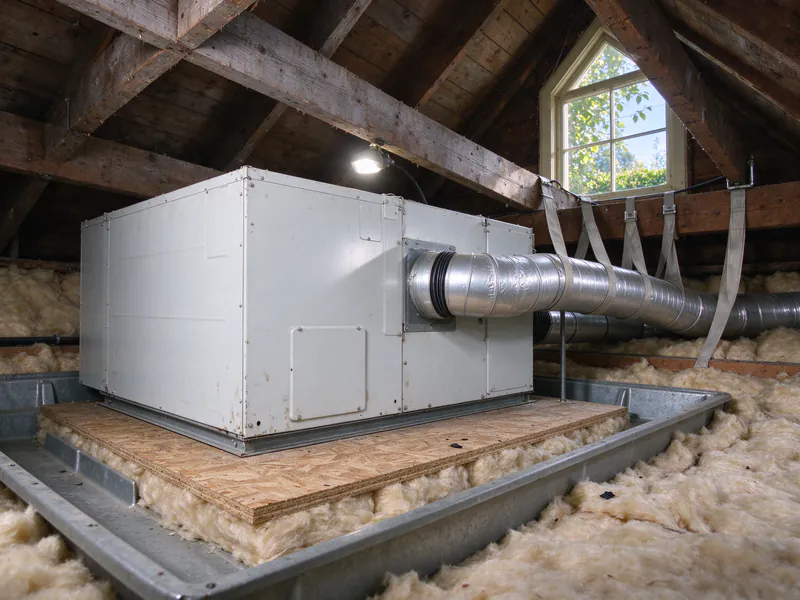
Where both furnaces sit in the basement today, the first floor’s air handler takes its furnace’s place. The second floor’s often moves up to the attic, which shortens its ducts and frees basement space; see attic air handlers. Our multi-family guide covers stacked units in more detail.
Ducts that pass through the other unit
In many up-down houses, the second floor’s supply ducts rise from the basement through chases in the first-floor walls. Any leak in those risers heats or cools the wrong unit. We pressure-test them, seal what we can reach, and move the upstairs system to the attic when the risers can’t be fixed.
Two owners, two timelines
Condo owners in an up-down don’t always replace at the same time. Each system stands on its own, so one unit can switch this year and the other later, with the outdoor spots planned for both on the first visit.
Cooling the top floor
Second floors in a two-family run hot in July, under a roof with little insulation. A ducted heat pump cools that floor as part of the heating job.
Replacing old central air
Where the upstairs unit already has central air from an attic air handler, that air handler becomes a heat pump air handler on the same ducts, once we confirm they carry enough air for heating. See replacing central AC with a heat pump.
Window units out
Where the upstairs runs on window units, the attic air handler replaces them with one quiet system and a register in each room. Ceiling registers suit cooling well, since cool air drops.
Gas backup is still allowed here
Unlike Arlington, Brookline and Cambridge next door, Watertown isn’t a fossil-fuel-free town. The state named it a comparison community for that program, which leaves dual fuel available.
What that means for a renovation
In a fossil-fuel-free town, a major renovation can’t add new gas equipment. In Watertown, a dual-fuel design with a gas furnace backup is still an option, subject to the specialized energy code the city adopted on July 10, 2023.
Whole-home or dual fuel
About two in three Watertown homes heat with gas. If the furnace is old, the heat pump carries the house alone and Mass Save’s whole-home rebate applies. If it has years left, it stays as backup under integrated controls, which earns the partial-home rebate. Our backup heat guide explains the switchover temperature.
Running cost on gas
Gas is the cheapest fuel per BTU, so the heating savings are modest; the case rests on central cooling, a failing furnace, or getting off gas. We put your rates into the estimate; see heat pump vs gas furnace.
Panels, meters and the driveway
Two-families come with two meters and often two small panels. That, plus the outdoor spots, sets the electrical and placement side of the job.
Two panels
Each unit’s heat pump runs from that unit’s own panel, so each panel’s capacity gets checked. If one unit’s 100-amp panel is already full, that unit’s panel upgrade becomes its own estimate line; our typical range for it is $3,000 to $6,500, and Eversource schedules the service change.
Two outdoor units
Side by side along the driveway is the tidiest spot, with a stand above the snow and clear air on all sides. Watertown’s noise limits for HVAC equipment are confirmed per address, so we check rated sound against the distance to the neighbor’s windows.
A driveway also collects plowed and shoveled snow. We set the units where the snow pile won’t land, keep the stand high enough for a full winter’s drift, and leave room to clear around them. Our snow stand guide gives the clearances.
Rebates and permits, Watertown edition
Watertown takes sheet metal and mechanical permit applications online through its permitting portal. A ducted job also needs an electrical permit, and a gas permit where a line gets capped.
| What | Watertown |
|---|---|
| Electric utility | Eversource |
| Gas utility | National Grid |
| Energy code | Specialized stretch code since July 10, 2023 |
| Fossil-fuel-free status | Comparison community; dual fuel allowed |
| Rebate route | Mass Save, through Eversource |
From November 1 to April 30, Eversource’s heat pump rate trims both the distribution and transmission parts of every kilowatt-hour each unit uses. The Mass Save rebate guide lists the conditions, and the cost guide explains our ranges.
Steps on a Watertown install
The first visit covers both units: two load calculations, both duct systems tested for static pressure and leakage, both panels, and outdoor spots for two units.
- Written estimate: each unit priced as its own line, with capacity at 5°F, duct fixes, electrical, permits and its rebate path.
- Install: four to six working days for both units on existing ducts.
- Commissioning, unit by unit: nitrogen test, a vacuum pulled below 500 microns, refrigerant weighed in for each line set, airflow readings, and the switchover point written down.
Across the river, Newton runs a fossil-fuel-free rule, and Belmont, to the north, has its own light plant rebate.