(857) 837-1475Get an Estimate

Service area, Massachusetts

Ducted heat pumps for Wilmington's oil-heated houses

Ducted heat pumps for Wilmington's oil and propane homes, from attic AC swaps to new basement systems, with RMLD's heat pump rebate or 0% loan.

Last Updated:

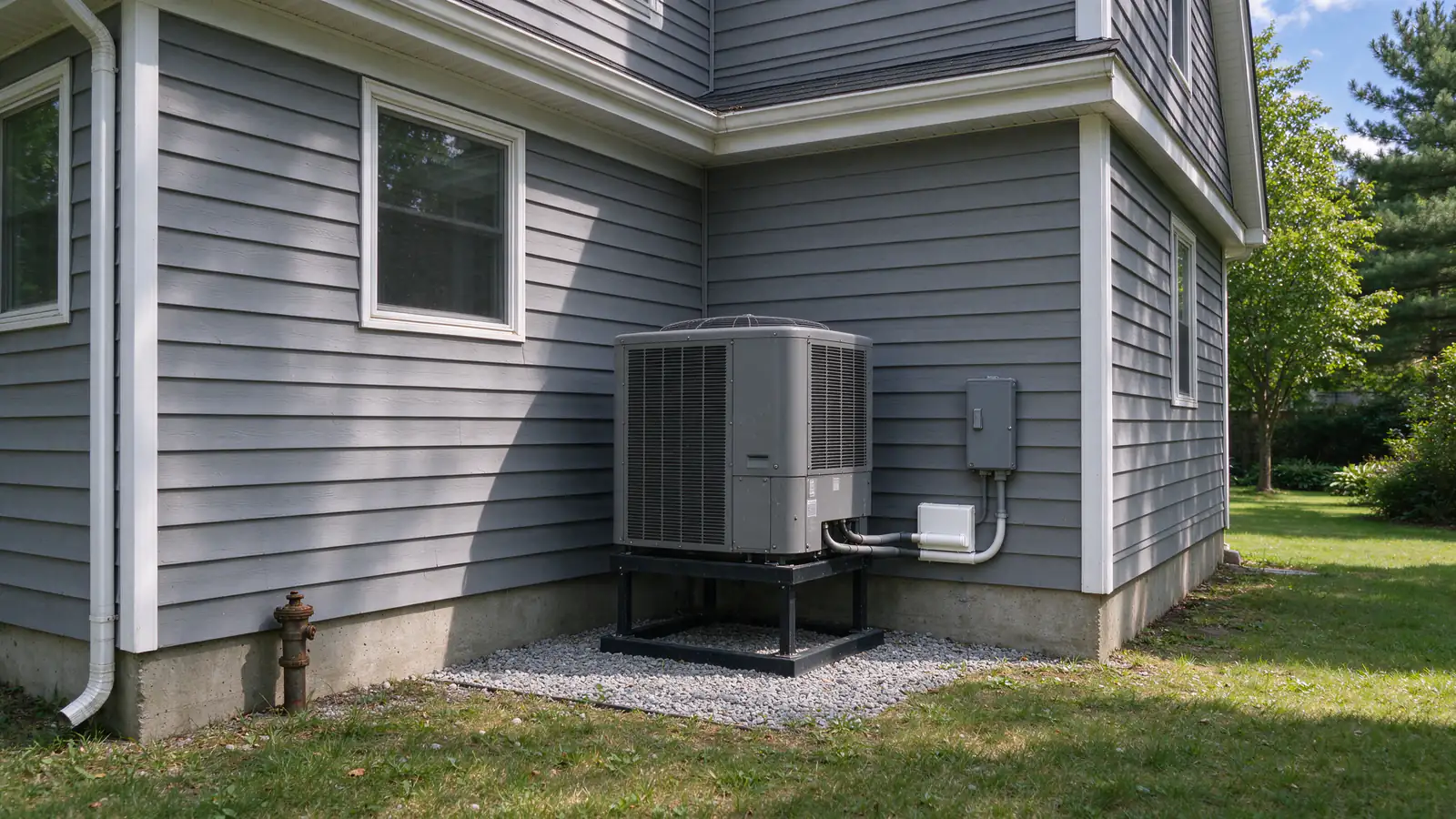
Center-entrance colonial with gray vinyl siding on a North Wilmington street, a ducted heat pump outdoor unit on a raised stand at the back corner beside a capped oil fill pipe
ElectricReading Municipal Light Department (RMLD)
RebatesRMLD heat pump rebate or 0% loan (gas-heated homes may also look at Mass Save)
PermitsTown of Wilmington building department
Energy codeBase energy code (IECC 2021 with Massachusetts amendments)

What an oil-to-heat-pump job in North Wilmington looks like

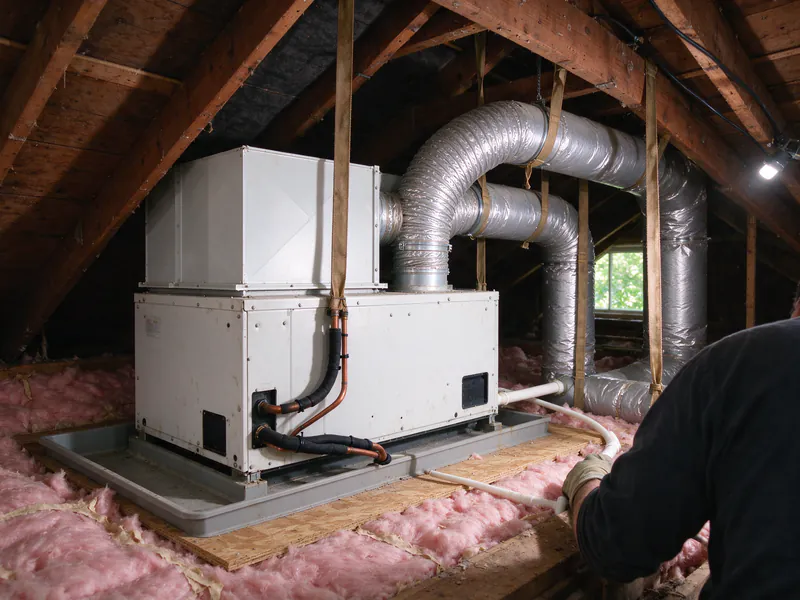
Heat pump air handler in place of the old attic AC unit in a North Wilmington colonial
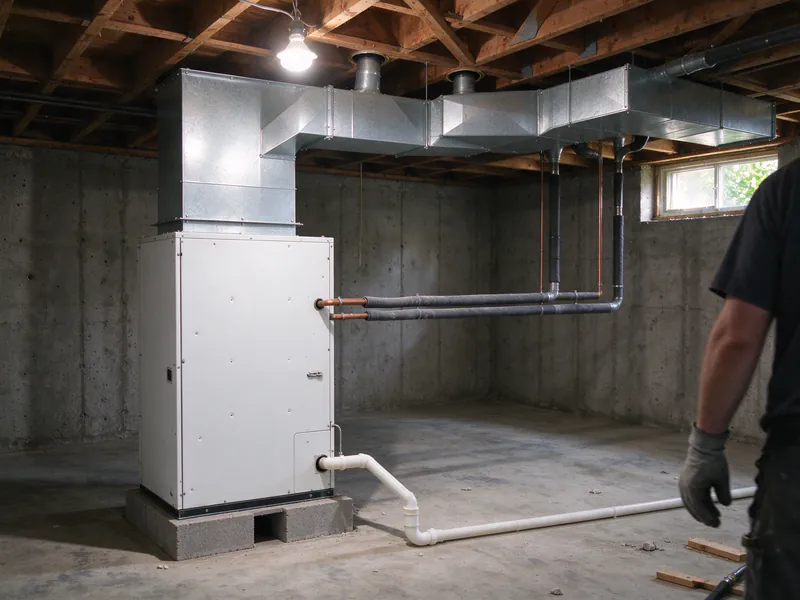
New basement air handler and trunk feeding the first floor, North Wilmington
New basement air handler and trunk feeding the first floor

The setup

A 1978 colonial in North Wilmington heats with an oil boiler and baseboard and cools the bedrooms with an attic air conditioner. The owners want to stop buying oil and replace both systems with heat pumps. The house is on RMLD power, so RMLD's rebate or 0% loan applies.

Upstairs on the old ducts

The attic AC ducts already reach all four bedrooms. A static test shows the return is too small for winter airflow, so it grows to 20x25 and the joints get resealed. A 2-ton heat pump air handler then takes the AC unit's place on the same ceiling registers.

Downstairs from the basement

The first floor has no ducts, but the basement is open. A second 2-ton air handler there feeds seven floor registers through a sealed galvanized trunk, with a central return in the hall. No closet stacks cleanly between floors, which is why two systems beat one larger unit with a riser here.

Panel and oil

With two systems and backup strips, the 100-amp service can't carry the load, so it goes to 200 amps with RMLD's meter work, as its own line on the estimate. After commissioning, the boiler, baseboard and 275-gallon tank come out, the tank under the fire department's permit.

Project facts
ServiceOil boiler and attic AC to two heat pump zones
WhereNorth Wilmington
House1978 colonial, about 2,200 sq ft
BeforeOil boiler, baseboard, attic AC, 100-amp panel
AfterTwo 2-ton cold-climate systems, 200-amp service
Price$31,800 before rebates
Time on siteSeven working days

What brings people to us in Wilmington

An oil boiler with attic air conditioning

The attic AC ducts already reach the bedrooms. A heat pump air handler takes the AC unit's place, and a second system covers the first floor.

An oil furnace with ducts

Once static pressure and the return check out, the furnace ducts carry heat pump air, and the job runs a few days.

Propane heat on a street without gas

About 8% of Wilmington homes burn propane, which costs more per delivered BTU than a heat pump on winter power.

A 100-amp panel

Oil heat draws little electricity, so many houses still have a small service. We add up loads before deciding on an upgrade.

No town we serve has a higher share of oil heat than Wilmington, where about 53% of homes still burn it. Clement Boston Heat Pumps designs each heat pump installation in Wilmington, MA for that starting point: an oil boiler or furnace in the basement, a tank beside it, and often a separate air conditioner in the attic.

The rebate follows the power company. Wilmington buys its electricity from the Reading Municipal Light Department, so RMLD’s program pays, not Mass Save.

Why oil, and what replaces it

Most of Wilmington was built after the war, and only about a third of its homes heat with gas. About 85% are detached houses and fewer than 8% predate 1940, so the typical job is a postwar colonial, cape or ranch.

The running cost

Oil is the most expensive common heating fuel per delivered BTU, and propane, at about 8% of homes, is close behind. A cold-climate heat pump on winter power costs less to run than either; our heat pump vs oil guide shows the derivation.

The tank

When the boiler or furnace comes out, the tank goes too, under the fire department’s permit. That ends deliveries, the tank’s upkeep and the smell in the basement; see oil tank removal.

Three common starting points

What’s in your basement and attic decides the scope more than square footage does. Postwar colonials and capes tend to start from one of three setups.

Oil furnace with ducts

The ducts already reach every room. We read static pressure, size the return and seal the plenum, then set a heat pump air handler in the furnace’s place; see oil to heat pump conversion.

Oil boiler with attic air conditioning

Many 1970s and 1980s colonials heat with a boiler and cool the bedrooms with an attic AC. The attic air handler becomes a heat pump unit on the same ducts, and the first floor gets a basement system. See attic air handlers and replacing AC with a heat pump.

Oil boiler, no ducts

A cape or ranch with baseboard and window units needs new ducts. A basement air handler with floor registers is often enough for a ranch; a cape adds a closet riser for the dormers.

RMLD’s rebate, loan and weatherization money

RMLD serves Reading, North Reading, Wilmington and Lynnfield Center. Its residential program covers customers who install heat pumps at their primary home in its territory.

RMLD program Amount
New heat pump Up to $11,500
Replacement heat pump Up to $7,500
0% loan Up to $40,000, instead of the rebate
Weatherization Up to $3,500

Which amount applies to your job is RMLD’s decision; we confirm it before ordering. Air sealing with the weatherization money first can lower the load and the system size, which trims both the price and the running cost.

Propane homes

About 8% of Wilmington homes burn propane, against about 4% in Reading next door. Propane costs less than oil per delivered BTU but more than a heat pump on winter power.

What changes

A propane furnace or boiler comes out like an oil one, and a leased tank goes back to the supplier. If the range or dryer stays on propane, a smaller tank or cylinders stay with it. Propane homes apply to RMLD’s program, the same as oil homes.

Where the outdoor unit sits

Wilmington’s lots are larger than the inner suburbs’, which gives more choice. The best spot is close to the air handler, out of the roof’s drip line and away from bedroom windows next door.

Snow and defrost

The unit sits on a stand above the snow line, with room for defrost water to drain and freeze below the coil, not on it. Local sound and setback rules are confirmed per address; see our outdoor unit placement guide.

Panels, sizing and backup

An oil house rarely needed much power for heat, so a 100-amp service is common. A ducted heat pump and its strips add a large load, which makes the panel check part of the first visit.

The panel

We total existing loads against the service. Many houses carry a right-sized system as they are; when one can’t, our typical range for a service upgrade, usually 100 to 200 amps, is $3,000 to $6,500. See panel upgrades.

Sizing for an inland town

Wilmington sits inland, north of Route 128, where cold nights run harder than at the harbor. We size each room at the town’s design temperature and pick equipment by its output at 5°F; see heat pump sizing and backup heat settings.

Outages

A heat pump stops in a power outage, as an oil boiler does, since the burner and circulator need electricity too. The difference is the load: a heat pump draws far more than a boiler’s controls. Our power outage guide covers standby generators sized for it.

Paperwork, rebates and code in Wilmington

The town’s building department issues the permits, and the exact set is confirmed per address. Wilmington is on the base energy code, with no stretch or specialized adoption.

What The Wilmington figure
Electric utility Reading Municipal Light Department
Gas utility National Grid
Energy code Base code
Heating fuel Oil 53.1%, gas 32.0%, propane 8.4%, electricity 4.9%
Detached houses 84.5% of homes

On ducts we can reuse, our typical range for a whole-home system is $15,000 to $28,000 and up before rebates. The cost guide explains what moves it.

The order of work in a Wilmington house

The first visit looks at the basement, the attic and the panel together, because in an oil house all three shape the price. You get the RMLD option, the panel answer and the duct plan in one written estimate.

  1. Visit: load calculation, duct tests where ducts exist, routes where they don’t, panel and outdoor spot.
  2. Estimate: equipment with 5°F capacity, ducts, electrical, tank removal, permits, the RMLD option and price.
  3. Install: three to eight working days, then the boiler and tank leave.
  4. Commissioning: nitrogen test, deep vacuum, weighed charge, airflow readings and the strip lockout recorded.

Nearby: Tewksbury, Billerica and Burlington; Reading shares RMLD.

Services in Wilmington

How a job usually runs in Wilmington

First call

You tell us what heats and cools the house now, which rooms aren't working, and roughly where the house is.

Home visit

We measure the house for a load calculation, test the ducts, check the panel and look for an outdoor spot.

Written estimate

Equipment, duct changes, electrical, permits and the rebate path, line by line, with our price.

Install

Permits first, then the work: usually two to five working days on site.

Commissioning

Pressure test, vacuum, charge by weight, airflow and controls set before we call it done.

Neighborhoods, landmarks and routes

  • Wilmington Center
  • North Wilmington
  • Silver Lake

Landmarks

  • Silver Lake
  • Harnden Tavern
  • Wilmington Town Common
  • Wilmington station
  • North Wilmington station

Getting around

  • Interstate 93
  • Route 38 (Main Street)
  • Route 62
  • Route 129
10 mi20 miBostonWilmington
Open Wilmington, MA in Google Maps

Planning a heat pump in Wilmington?

We start with what heats the house now, the ducts you have or could have, and where the outdoor unit can go.

Wilmington: questions

What does it cost to switch a Wilmington oil boiler to a heat pump?

A boiler house usually needs new ductwork, where our typical range is $20,000 to $40,000 and up before rebates; an accessible basement oil tank adds $600 to $1,500 to remove. Wilmington is RMLD territory, so RMLD's rebate or 0% loan applies. Your written estimate sets the price.

Is Wilmington's electric company Mass Save or RMLD?

Wilmington's electricity comes from the Reading Municipal Light Department, which also serves Reading, North Reading and Lynnfield Center. RMLD runs its own heat pump program. Gas service comes from National Grid, which sponsors Mass Save on the gas side.

Can I reuse my attic air conditioning ducts for a Wilmington heat pump?

Usually for the floor they serve. We measure static pressure and the return, because winter heating needs more airflow than many summer-only systems were built for. The first floor then gets its own basement system or a closet riser.

Does Wilmington's energy code change a heating replacement?

Wilmington is on the base Massachusetts energy code and has not adopted the stretch or specialized code. For a heat pump in an existing house, the code shows up in duct sealing and insulation details, confirmed with the permit.

What happens to my Wilmington heat pump in a power outage?

Like an oil boiler, it stops without power. A heat pump draws too much for a small portable generator, so whole-house backup means a standby unit sized for it. Our power outage guide explains the options.

Nearby service areas

Guides for houses in Wilmington

Get an estimate in Wilmington

Tell us what heats the house now and which rooms aren't working in Wilmington.

Step 1 of 2

The house and the work