Gas is cheap enough in Billerica that a heat pump switch rarely starts with the heating bill. It starts when the central air quits, the furnace passes twenty, or the upstairs bedrooms stay too hot to sleep in.
Clement Boston Heat Pumps plans heat pump installation in Billerica, MA for that moment, putting one ducted system where two machines used to be. Seven in ten homes here heat with gas, one of the highest shares among the towns we cover.
When the furnace and the central air age out together
A gas furnace and the air conditioning coil on top of it share one blower and one set of ducts. When either one fails, a heat pump can take over both jobs on the same ducts.
What we check before reusing the ducts
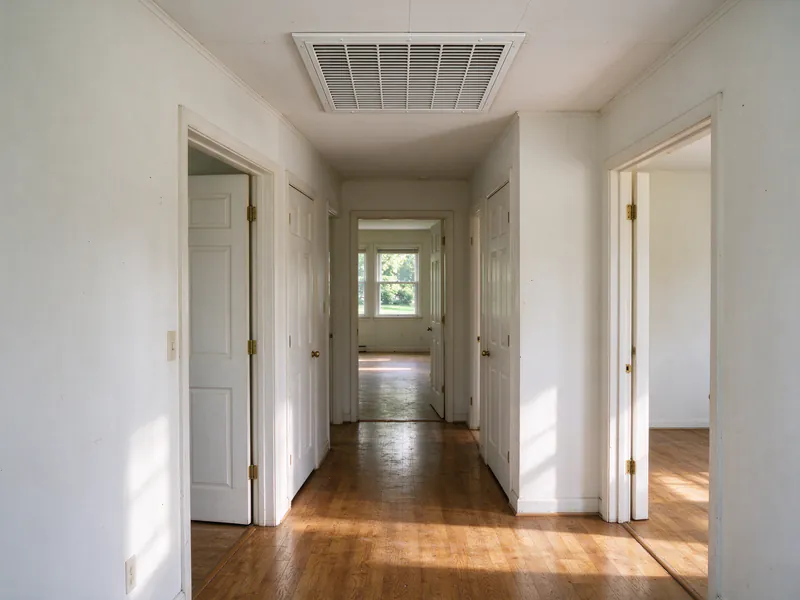
Heat pump air leaves the coil cooler than furnace air, so the system has to move more of it. We read total static pressure, size each return and look for leaks along the basement trunk. A cramped return is a common fault in post-war duct systems, and we fix it rather than oversize the unit.
Replacing only the air conditioner
If the furnace is young, you can replace the AC with a heat pump and keep the furnace for the coldest hours. That dual fuel design qualifies for Mass Save’s partial-home rebate when integrated controls decide which system runs. Our heat pump vs central AC guide compares the two.
Mass Save on both sides of the meter
National Grid supplies Billerica’s electricity and its gas, so every heating fuel in town has a Mass Save route. Gas homes apply through the gas side; oil, propane and electric homes apply through the electric side.
Taking the furnace out
Replacing gas heat entirely qualifies for the whole-home tier: $2,650 a ton up to $8,500 on installs through December 31, 2026, then $2,350 a ton up to $7,500 from January 1, 2027. The furnace has to come out or be disconnected, the equipment must be cold-climate listed, and the house needs proof of weatherization.
Keeping it as backup
The partial-home tier pays $1,125 a ton up to $8,500 when the gas furnace stays and integrated controls run both. It’s less money, but a furnace with years left keeps working. The rebate guide walks through the paperwork each tier needs.
Ranches, colonials and condos in Billerica
Nine in ten Billerica homes were built after 1939, and about 73% are detached houses. Where a furnace heats the house, the ducts a heat pump needs are usually already in the basement.
One-story ranches
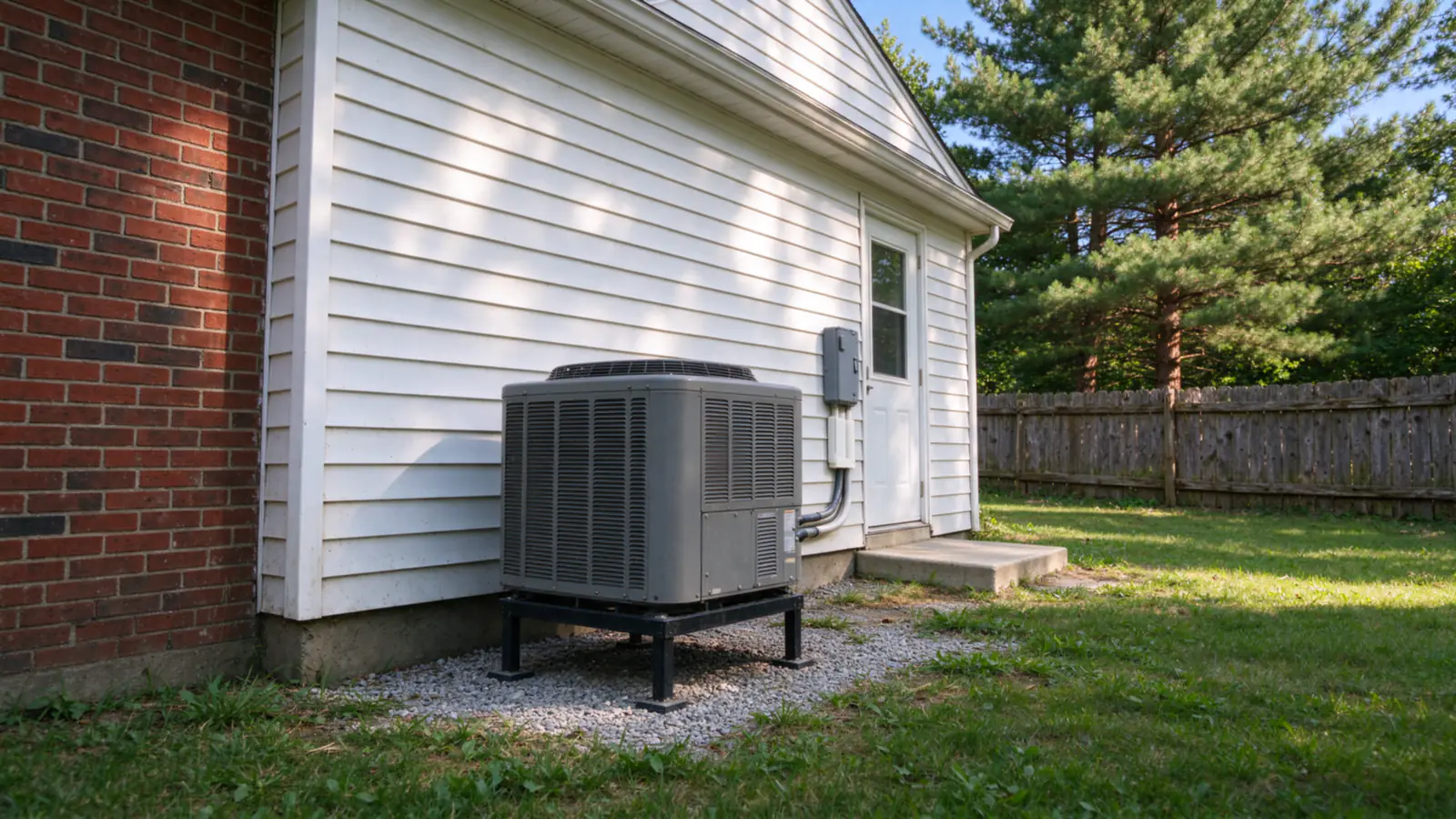
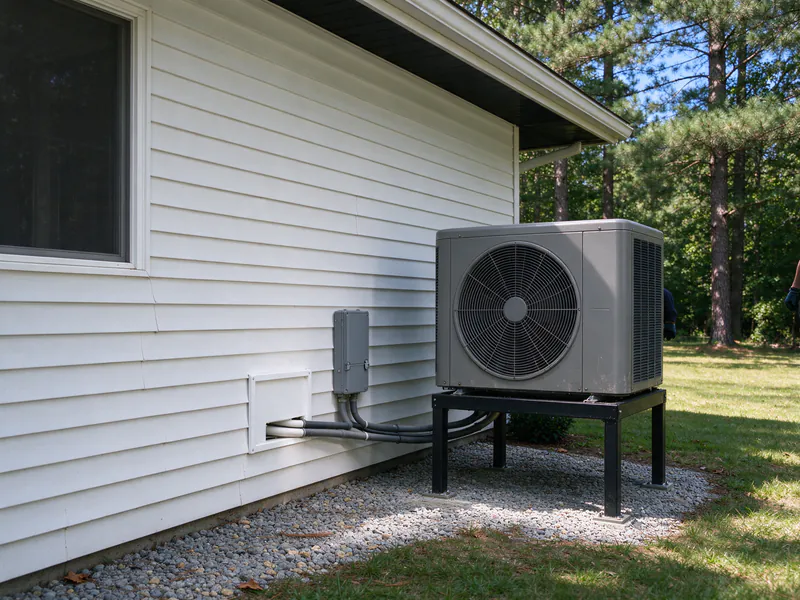
On a ranch, the basement trunk reaches every room from below. The heat pump’s air handler takes the furnace’s spot, and the outdoor unit goes on a stand clear of roof drip and drifting snow; see outdoor unit placement.
Colonials with a warm upstairs
Where a colonial’s second floor runs hot in July and cool in January, the cause is usually duct design, not the furnace. A second system in the attic, with its own returns and thermostat, fixes that; see attic air handlers.
Condos and apartments
About 16% of Billerica homes sit in complexes of five or more units. The association approves the outdoor spot and any wall penetrations, so the placement plan goes to the board before any equipment is ordered. A unit that heats with electric baseboard gains the most, since the same kilowatt-hours carry roughly twice the heat; see our condo guide.
Gas, oil and National Grid’s winter rate
On gas, a heat pump’s running cost lands close to a furnace’s. On oil or propane, the heat pump costs less per delivered BTU, and the savings start on the first bill of the winter.
The winter rate
National Grid’s optional heat pump rate cuts the distribution charge on all household kilowatt-hours from November 1 to April 30. It doesn’t touch transmission. Rebate recipients are usually enrolled automatically; see the winter rate guide and heat pump vs gas furnace.
Leaving oil or propane
About one Billerica home in five still burns oil or propane, and those owners gain the most from the switch. When the burner goes, an accessible basement oil tank comes out too; our typical range for that is $600 to $1,500, plus the fire department’s permit, confirmed per address. See oil tank removal.
The electrical panel
Where a house still has 100-amp service, a heat pump with backup strips may not fit. Our typical range for a service upgrade, usually 100 to 200 amps, is $3,000 to $6,500; we decide after a load check, and it’s listed on its own line. See panel upgrades.
Billerica permits, code and rebates in one table
Billerica’s building department takes permits online through SimpliCity and posts a public permit report. Setbacks and sound limits for the outdoor unit are confirmed per address.
| What | The Billerica figure |
|---|---|
| Electric and gas company | National Grid for both |
| Energy code | Stretch code since July 1, 2018; specialized code not adopted |
| Heating fuel | Gas 71.2%, oil 15.8%, electricity 7.7%, propane 3.6% |
| Homes built after 1939 | About 90% |
| Online permitting | SimpliCity |
The stretch code shapes new homes and large additions, not a furnace swap. Mass Save’s 0% HEAT Loan covers up to $25,000 through participating lenders, applied for before work starts; see the HEAT Loan guide.
Start to finish in Billerica
It starts with a visit: a room-by-room Manual J, static and return readings on the existing ducts, a panel load check, and a look at the yard for a dry, level spot.
- The estimate: heat pump size and its output at 5°F, return or duct fixes, electrical, permits, and whether the furnace goes or stays.
- SimpliCity filing for the permits, then two to four days on site for a ranch or colonial on existing ducts.
- Gas capped by a licensed gas fitter if the furnace comes out.
- Commissioning: pressure test with nitrogen, deep vacuum, charge by weight, airflow and static recorded, backup heat lockout set.
Tewksbury to the east has a similar gas-heated housing stock, and Bedford to the south switches to Eversource.