In Danvers, a gas-heated home can collect two heat pump rebates for one system: up to $4,000 from Danvers Electric, and Mass Save’s gas-side rebate on top. Clement Boston Heat Pumps prices each heat pump installation in Danvers, MA with both counted, so the estimate shows what you actually pay.
Oil and electric homes have one route instead of two. Which group you’re in decides the paperwork before we size anything.
Two rebates for homes leaving gas
Danvers runs its own electric utility and buys gas from National Grid. That pairing is why a gas-to-heat-pump switch here can draw on both a municipal program and Mass Save.
The Danvers Electric rebate
The town’s heat pump page says Danvers Electric offers up to $4,000 for eligible heat pumps, and that this amount can be added to Mass Save’s rebate for homes switching from natural gas. Danvers Electric sets the eligibility and application terms; we confirm them before ordering.
The Mass Save side
National Grid sponsors Mass Save for gas customers. The whole-home tier pays by the ton and needs cold-climate listed equipment, an installer in Mass Save’s network, weatherization done and the gas furnace or boiler removed or disconnected. Our rebate guide walks through it.
The gas line
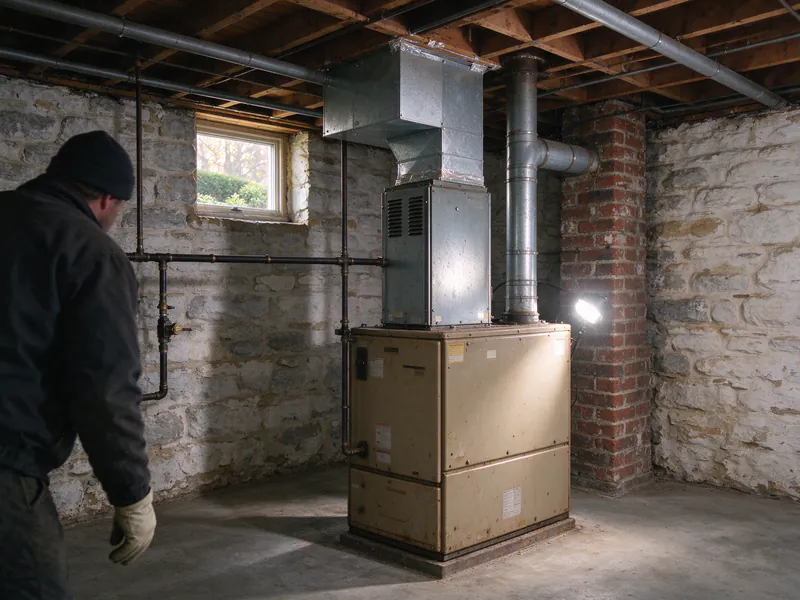
When the furnace comes out, a licensed gas fitter caps the line under the permit. If the range and dryer stay on gas, the meter stays; if not, the service can be retired.
Keep the gas furnace, or take it out?
Some Danvers owners want the furnace kept as backup. That choice moves you to a different Mass Save tier, so we price both versions before you decide.
Taking it out
The whole-home tier pays $2,650 a ton up to $8,500 for installs through 2026, then $2,350 a ton up to $7,500 from January 1, 2027. A cold-climate system sized to the full heating load carries the house alone, with electric strips locked out except on the rare night it needs help.
Keeping it as backup
A dual fuel system runs the heat pump first and hands off to the furnace below a temperature you choose. With integrated controls, Mass Save’s partial-home tier pays $1,125 a ton up to $8,500, dropping to $1,000 a ton up to $7,500 from January 1, 2027. You keep the gas service and its monthly charge.
Oil and electric homes in Danvers
About 32% of Danvers homes burn oil and 15% use electric heat. Mass Save’s electric-side rebates need a sponsoring utility, and Danvers Electric is municipal, so these homes go through Danvers Electric’s program.
- Oil furnace homes keep their ducts after a static pressure check; see oil to heat pump conversion.
- Oil boiler homes need new ducts, usually an attic unit for bedrooms and a basement unit for the first floor; see boiler to heat pump conversion.
- Baseboard homes get two to three units of heat per kilowatt-hour where baseboard gives one.
The tank leaves with the oil system, under the fire department’s permit; see oil tank removal.
On Danvers Electric power, the seasonal heat pump rates that Eversource, National Grid and Unitil offer don’t apply. We run the cost comparison on Danvers Electric’s own residential rate and your past fuel bills, so the savings figure on the estimate is yours, not an average.
From Danvers Square to Danversport
About 58% of Danvers homes are detached houses and a quarter predate 1940. Another 24% sit in buildings of five or more units, many near Route 1 and Route 114.
Older houses near the Square
Houses around Danvers Square and Tapleyville that predate 1940 were built for radiators. Plaster walls and few chases push the ducts into the attic and basement, joined through a closet.
Postwar houses with forced air
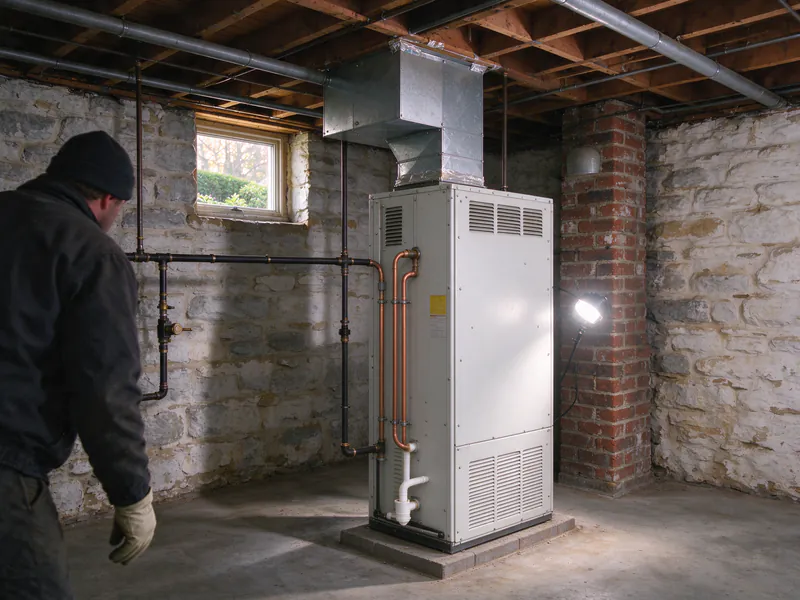
Many houses from the 1950s on have a gas or oil furnace with central air. We measure static pressure and return size before reusing those ducts, because a heat pump moves more air at a lower temperature than a furnace; see furnace to heat pump conversion.
Near the water
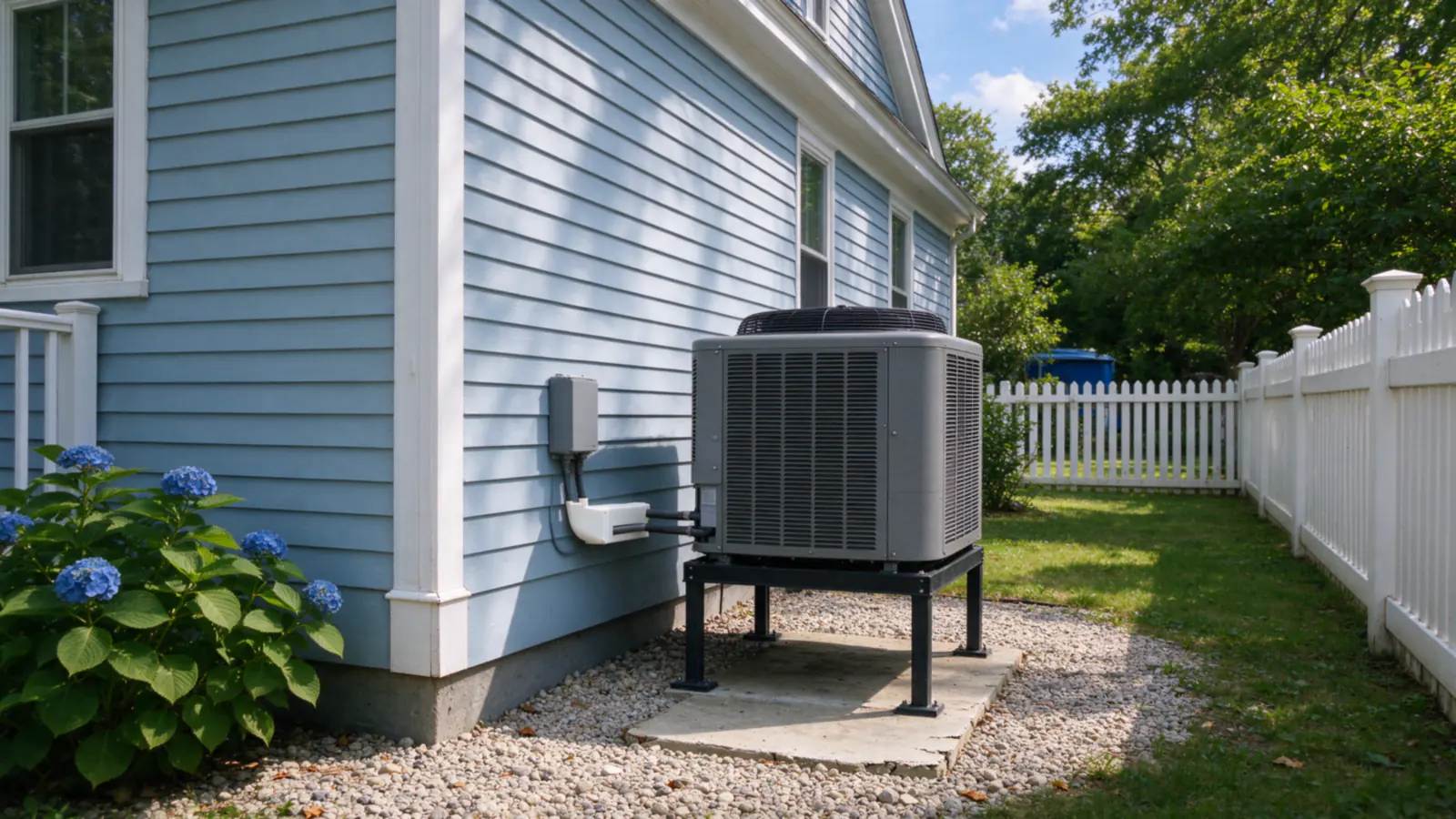
Danvers is on the state’s list of coastal communities. In Danversport and along the Danvers River, we place the outdoor unit on the side away from tidal spray and raise it where rain rinses the coil. The placement guide covers clearances and snow.
The base code and what it changes
Danvers follows the base Massachusetts energy code and has not adopted the stretch or specialized code. For most heating replacements in existing houses, the difference is small.
Where it shows up
The code governs duct sealing, duct insulation in unconditioned spaces and the details of any wall or ceiling we open. A whole renovation or an addition brings more of the code into play. We confirm what applies when we file the permit.
Filing, inspection and rebates in Danvers
The town’s building department issues the permits, and the set is confirmed per address. An electrical permit is standard; ducts, gas capping and opened walls add their own.
| What | The Danvers figure |
|---|---|
| Electric utility | Danvers Electric (municipal) |
| Gas utility | National Grid |
| Danvers Electric heat pump rebate | Up to $4,000 |
| Stacks with Mass Save | For homes switching from natural gas |
| Energy code | Base code, no stretch or specialized adoption |
| Heating fuel | Gas 48.6%, oil 31.8%, electricity 14.8% |
Where new ducts are needed, our typical range is $20,000 to $40,000 and up before rebates. The cost guide and our quote checklist explain what moves the price.
Visit, estimate, install: the Danvers sequence
The first visit settles which rebates apply and whether the ducts can stay. In a gas home with good ducts, the install is often three to four working days.
- Visit: room-by-room load, duct tests, panel, outdoor spot and the gas service.
- Estimate: equipment with 5°F capacity, ducts, electrical, gas capping, permits, both rebates and price.
- Install: air handler, outdoor unit and line set, then the old furnace out and the line capped.
- Commissioning: nitrogen test, deep vacuum, weighed charge, measured airflow and controls.
Peabody, Beverly and Salem are nearby, each with its own rebate route. For gas comparisons, see heat pump vs gas furnace.