Since January 1, 2026, Beverly has built under Massachusetts’ specialized energy code. Clement Boston Heat Pumps plans heat pump installation in Beverly, MA for houses on both sides of that change: existing homes swapping out old heat and central air, and additions and renovations that now start under the new code.
For most Beverly owners the code isn’t the deciding factor. The house is: what heats it, whether it has ducts, and how close it sits to the water.
What the code change means for your house
The specialized code is the strictest of the three tiers a Massachusetts town can adopt. Its weight falls on new construction and large projects, not on replacing a furnace or an air conditioner.
Existing houses
Replacing a boiler, furnace or central air system in an existing Beverly home is permitted as mechanical and electrical work. Duct sealing, line insulation and equipment ratings are checked, and the job doesn’t trigger the new-home requirements.
Additions and major renovations
A large addition or a gut renovation is where the specialized code applies. New homes under it are built either all-electric or to tighter mixed-fuel paths, so a heat pump sized for the whole house is the simplest way to meet it. We size it with the builder’s insulation details in hand.
Gas stays allowed
Beverly is not in the state’s fossil-fuel-free program, so a gas furnace can stay as backup in an existing house. That opens dual fuel as an option where it isn’t in towns like Arlington.
Beverly’s houses, by neighborhood
Half of Beverly’s homes are detached houses and a third date from before 1940. The rest spread from three-deckers downtown to post-war capes and big shingle-style houses along the shore.
North Beverly and Centerville
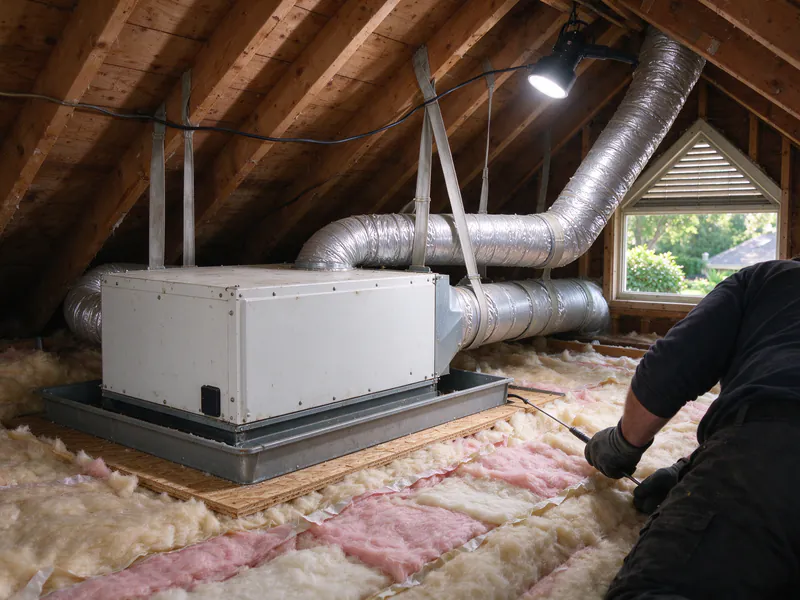
Colonials and split-levels from the 1960s to the 1990s, many with a gas furnace or oil boiler in the basement and central air in the attic. The attic ducts already reach the bedrooms, which makes an attic air handler heat pump the natural first step.
Downtown and Ryal Side
Older two-families and three-deckers, some on radiators. Each unit gets its own system, with new ducts where the house has none; see heat pump ductwork.
Beverly Farms, Prides Crossing and Beverly Cove
Larger, older houses on the water, often heated by oil boilers. More floors and more rooms usually mean two or three zones and a closer look at outdoor placement.
Oil, gas and central air
About half of Beverly homes heat with gas, a quarter with oil and a fifth with electricity. Each group starts the switch from a different place.
- Oil: the costliest common fuel per delivered BTU. A cold-climate heat pump on National Grid’s winter rate costs less to run; see oil to heat pump conversion.
- Gas: cheaper per BTU, so the case often rests on replacing aging central air with a system that also heats. Our heat pump vs gas furnace guide compares them.
- Electric: baseboard homes see the biggest drop, at two to three units of heat per kilowatt-hour instead of one.
When the AC is the reason
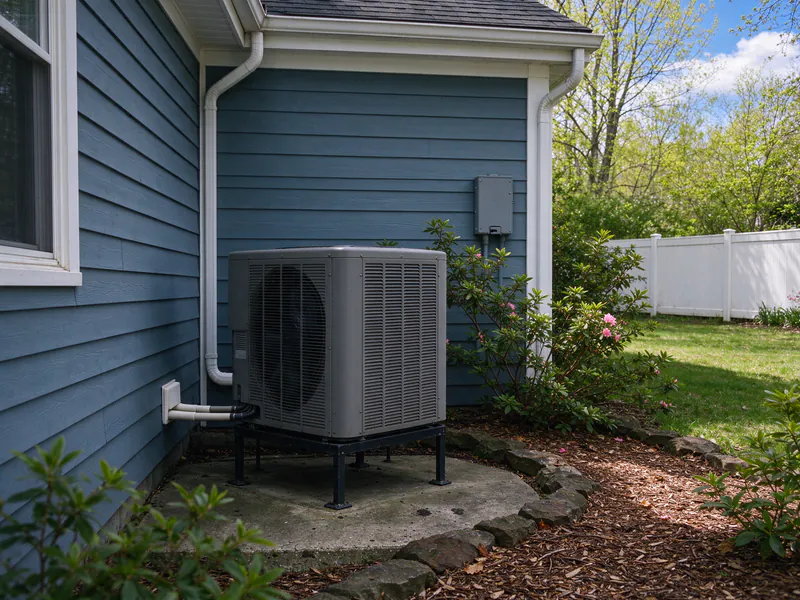
A central air condenser and a heat pump look almost identical outside. The heat pump adds a reversing valve, so the same equipment that cools in July heats in January. If your attic AC is near the end, the replacement can be a heat pump for a modest step up; see heat pump vs central AC.
Whole-home or partial: picking the rebate tier
Because gas backup is allowed in Beverly, many owners choose between two Mass Save tiers. The choice depends on whether the old system stays.
Whole-home
The whole-home tier pays $2,650 per ton up to $8,500 for installs through December 31, 2026, and $2,350 per ton up to $7,500 from January 1, 2027. The heat pump has to carry the house, and the old furnace or boiler comes out or is disconnected.
Partial-home
Keeping the furnace as backup qualifies for the partial-home tier, $1,125 per ton up to $8,500, when the furnace and heat pump run on integrated controls. It suits a house where only the upstairs gets a heat pump at first.
Placing units near the shore
Beverly is on the state’s coastal list, with shoreline from the Bass River to Beverly Farms. Salt spray shortens the life of outdoor coils and fasteners.
Where the unit goes
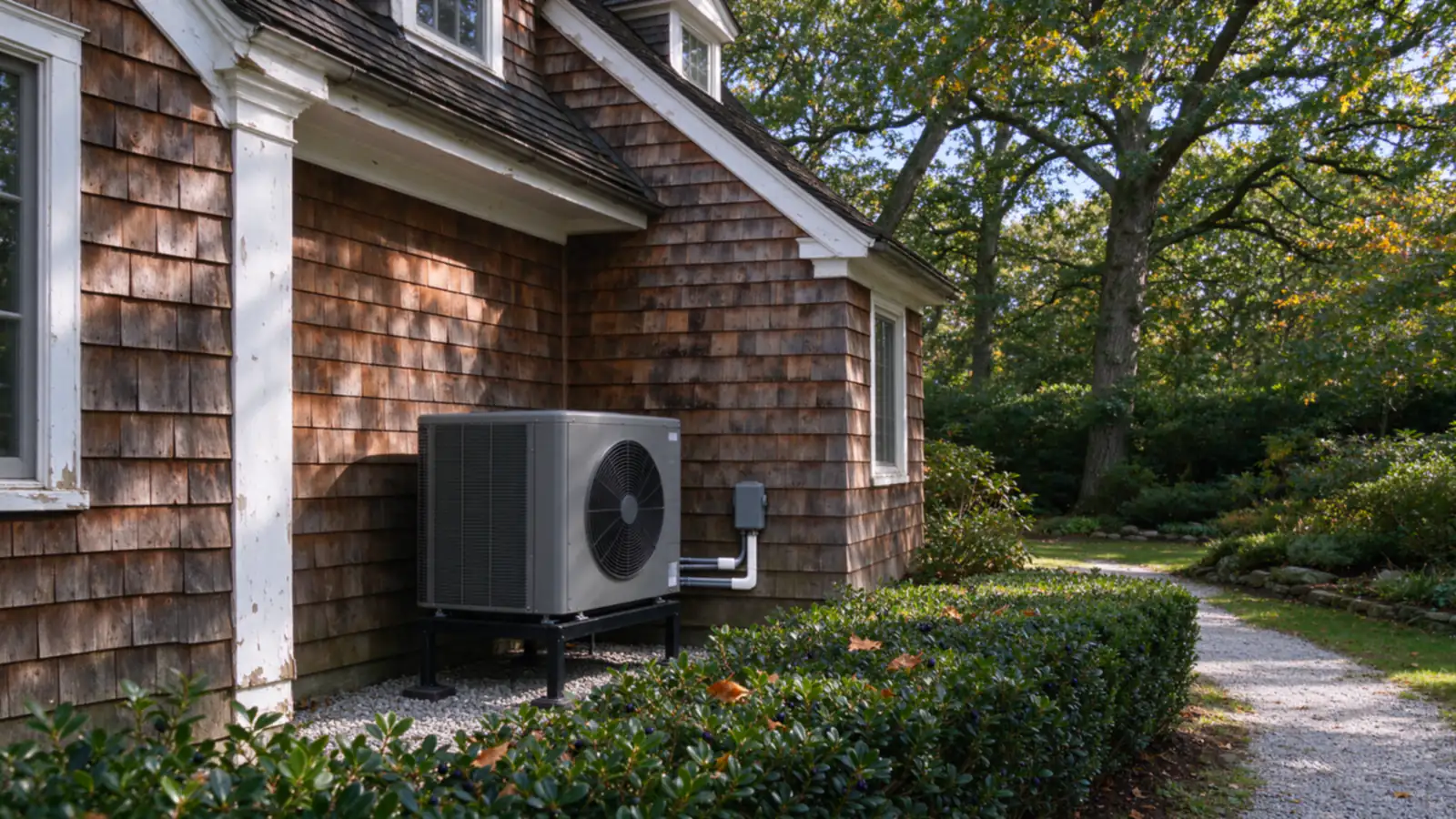
No state rule covers it, so we follow the maker’s guidance: the landward side of the house, out of direct spray, not under an eave that drips, on a stand high enough for drifting snow. Our placement guide covers stands and clearances.
Controls that keep backup in its place
A shore house with a furnace kept as backup needs the thermostat to decide when to switch. We set the changeover point on the controls and record it; our thermostat guide explains the settings.
Paperwork, rebates and code in Beverly
Beverly’s Online Permit Center takes building, electrical, gas, plumbing and mechanical permit applications. The set a heat pump job needs is confirmed per address.
| What | The Beverly figure |
|---|---|
| Electric and gas company | National Grid for both |
| Energy code | Specialized code since January 1, 2026 |
| Heating fuel | Gas 50.3%, oil 25.2%, electricity 20.3% |
| Built before 1940 | 35.4% of homes |
| Coastal community | Yes, North Shore region |
National Grid sponsors Mass Save for electricity and gas, so every fuel has a rebate route. Its winter heat pump rate lowers distribution charges from November 1 to April 30. The conditions are in our rebate guide.
How the work runs on a Beverly job
The first visit covers a room-by-room load, the attic and basement ducts, the panel and a landward outdoor spot.
- Written estimate: equipment with its capacity at 5°F, duct changes, electrical, permits and the rebate path.
- Permits through the Online Permit Center.
- Install: two to four working days for an attic swap, longer with new ducts or an oil tank to remove.
- Commissioning: pressure test, vacuum, weighed charge, airflow, and the changeover or lockout recorded.
Salem across the Danvers River shares Beverly’s utility and code tier, while Danvers runs its own light plant.