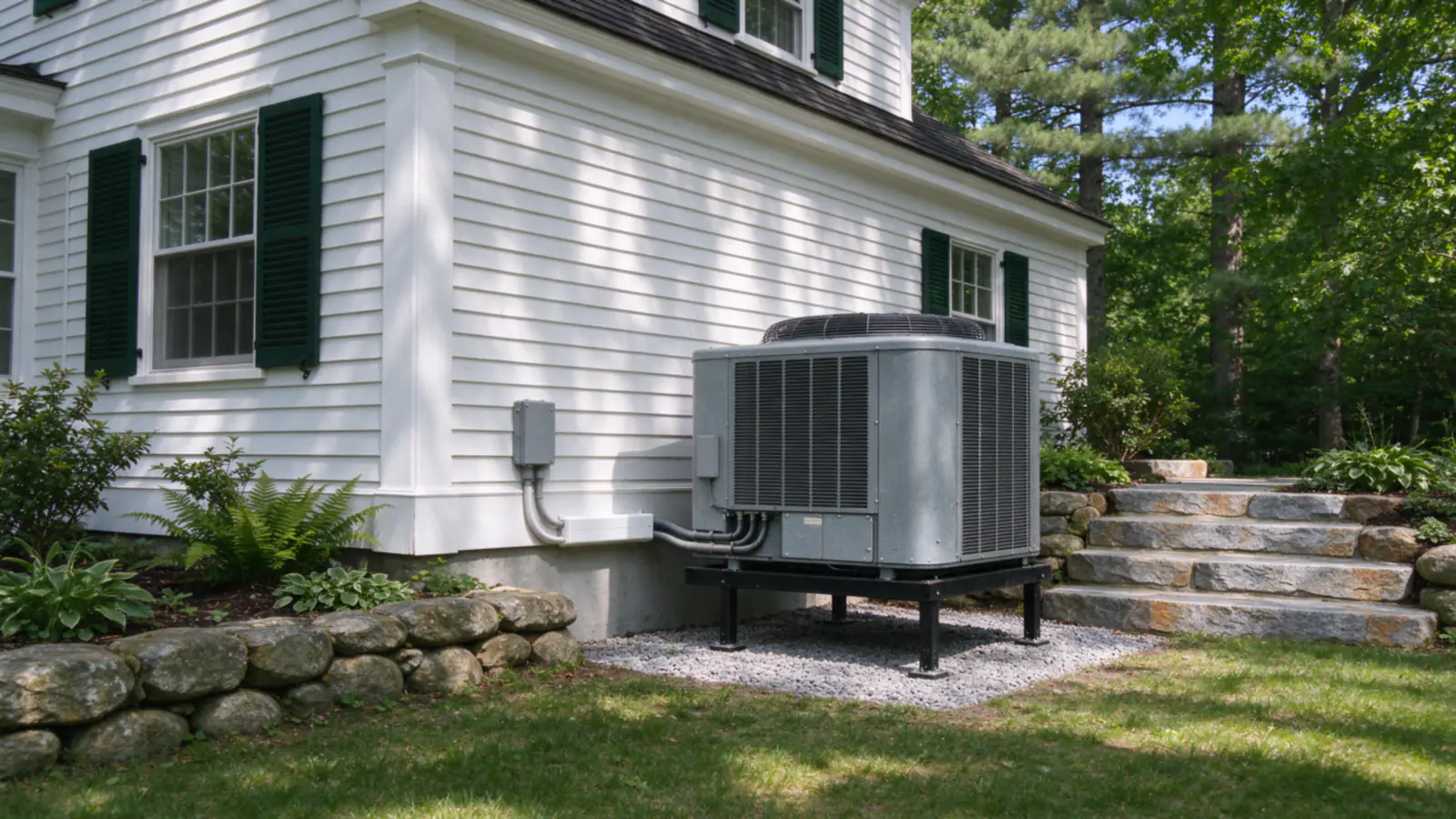
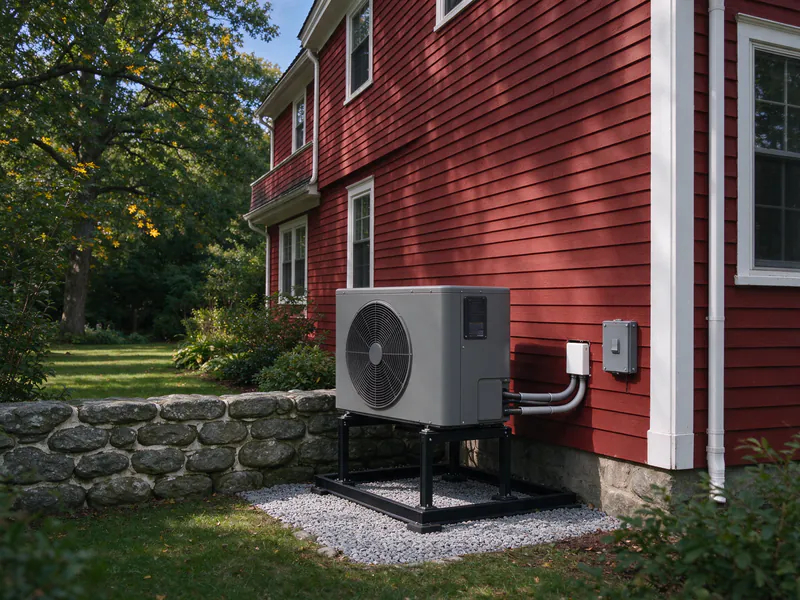
To earn Concord Light’s whole-home rebate, a heat pump has to be sized on a load calculation run at 8°F and land between 90% and 120% of the house’s total heat load. That rule, not the size of the old furnace, is where heat pump installation in Concord, MA starts at Clement Boston Heat Pumps.
The light plant pays $3,000 a ton, up to $10,000, for a system that meets it. Concord’s fossil-fuel-free by-law and its specialized energy code shape the rest of the plan, mostly when a house is being renovated.
What Concord Light asks of a whole-home system
Concord Municipal Light Plant runs its own heat pump rebate, separate from Mass Save, for homes heated by oil, propane, electric resistance, an older heat pump or storage heaters. Its whole-home tier sets conditions we design to from the first visit.
The 8°F load calculation
The verification form asks for a room-by-room Manual J at an 8°F outdoor design temperature, from ASHRAE’s 2021 design conditions, and a system sized to 90% to 120% of the total load. A unit that falls short fails the form, and one that runs well over it short-cycles through mild days.
We also list the equipment’s capacity at 5°F on the estimate, so you can see the margin on nights colder than the design point. Our sizing guide explains how the load calculation works.
Matched equipment and backup controls
The outdoor unit and the indoor air handler or coil have to be installed together. If an oil or propane furnace stays as backup, the program requires integrated controls that decide when each system runs; our backup heat guide covers lockout settings.
Inspection, then payment
Concord Light pays only after the job passes the Concord Building Department’s electrical inspection, and the application has a 90-day window. The town permits online through PermitEyes, so the electrical permit is filed without a trip to the office, and we keep the paperwork lined up for the form.
Renovating under Concord’s fossil-fuel-free by-law
Concord is one of the towns in the state’s fossil-fuel-free demonstration program. Its by-law took effect March 22, 2024 and keeps new fossil-fuel equipment out of new buildings and major renovations.
If you’re adding a wing or gutting a floor, the new heat for that work is electric, and a gas furnace as backup isn’t an option inside that scope. A straight heating replacement outside a renovation is a different case.
- We confirm the scope first: whether your project counts as a major renovation decides whether dual fuel is even possible.
- Open walls help: with ceilings down, trunks run where they belong instead of through closets; see heat pump ductwork.
- The code applies too: Concord has used the specialized energy code since January 1, 2024, which sets the rules for new homes and major renovations but not for a like-for-like replacement.
Concord houses and where the ducts run
About two-thirds of Concord homes are detached houses, and a little over one in five was built before 1940. The age of the house usually decides whether there are ducts to reuse.
Post-war colonials and capes with a furnace
A warm-air furnace means supply and return ducts are already in place. A heat pump moves more air at a milder supply temperature, so we measure static pressure and return size before reusing them. Where they pass, the job stays short; see whole-home heat pumps.
Older houses with radiators
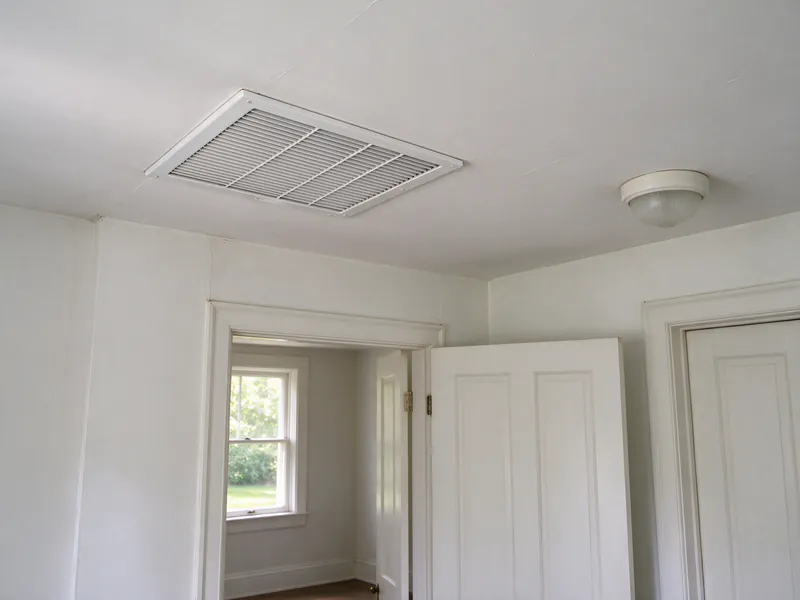
Where a house near Monument Square or along the old roads heats with a boiler and radiators, nothing is there to reuse. An attic air handler serves the bedrooms through ceiling registers and a basement unit feeds the first floor. Our guide to heat pumps in old houses covers routes through plaster.
Condos and townhouses
About 18% of Concord homes sit in buildings of five or more units. The association decides where outdoor units go, so we bring the spec, the sound rating and a placement plan to that conversation early.
Oil, propane and Concord’s colder nights
Gas heats about 53% of Concord homes, oil about 27% and electricity about 14%. The oil, propane and electric homes pay the most for heat today, and they’re the ones Concord Light’s rebate is built for.
Leaving oil
Per delivered BTU, oil costs more than any common fuel except electric resistance heat. When the burner goes, the basement tank usually goes too; our typical range for an accessible tank is $600 to $1,500, plus the fire department permit, confirmed per address. See oil to heat pump conversion.
Weather closer to Hanscom than to Logan
Concord’s winters run closer to Hanscom Field next door in Bedford than to the harbor. Hanscom averages about five nights a year at or below 0°F, against fewer than one at Logan Airport, so capacity at low temperatures matters more here than in the city.
The electric rate
The seasonal heat pump rates come from Eversource, National Grid and Unitil, so they don’t reach Concord Light customers. We run your running cost on the light plant’s current residential rate instead; heat pump vs oil shows how that math is built.
Concord’s light plant, permits and code at a glance
The Concord Building Department issues the electrical permit, plus sheet metal and gas permits where ducts change or a gas line is capped. Outdoor unit setbacks and sound limits are confirmed per address.
| What | The Concord figure |
|---|---|
| Electric utility | Concord Municipal Light Plant |
| Gas company | National Grid (Boston Gas) |
| Whole-home rebate, oil, propane or electric heat | $3,000 per ton up to $10,000 |
| Partial-home rebate | $1,250 per ton up to $10,000 a year |
| Sizing rule for the whole-home tier | Manual J at 8°F, system at 90% to 120% of load |
| Energy code | Specialized code since January 1, 2024 |
| Fossil-fuel-free by-law | In effect since March 22, 2024 |
Gas-heated homes apply to Mass Save instead, at $2,650 per ton up to $8,500 for installs through December 31, 2026 and $2,350 per ton up to $7,500 from January 1, 2027. Our rebate guide and cost guide cover the rest.
The order of work in a Concord house
The first visit covers the room-by-room load at 8°F, the ducts and returns or routes for new ones, the panel, and an outdoor spot measured to the lot lines.
- Written estimate: equipment with its capacity at 5°F, duct work, electrical, tank removal, permits and the Concord Light or Mass Save path, line by line.
- Permits filed online, then the install, usually three to seven working days depending on new ducts.
- Commissioning: nitrogen pressure test, vacuum below 500 microns, charge by weight, measured airflow and static, backup lockout recorded.
- Electrical inspection, then the light plant’s verification form inside its 90-day window.
Next door, Bedford buys power from Eversource and keeps dual fuel available, while Lexington shares Concord’s fossil-fuel-free approach.