Lake Cochituate, Route 9 and the Natick Mall frame a town where more than a quarter of homes sit in buildings of five or more units. Nearly one Natick home in four heats with electricity, and in an apartment or condo that usually means baseboard.
Clement Boston Heat Pumps handles heat pump installation in Natick, MA for those condos and for the town’s houses on oil and gas. The baseboard homes pay the most for each unit of heat, and a small ducted system changes that ratio from the first bill.
Baseboard condos and townhouses
Electric baseboard turns one kilowatt-hour into one unit of heat. A ducted heat pump moves two to three units for the same kilowatt-hour on a typical winter day, and it adds central cooling the baseboard never had.
Where the air handler goes
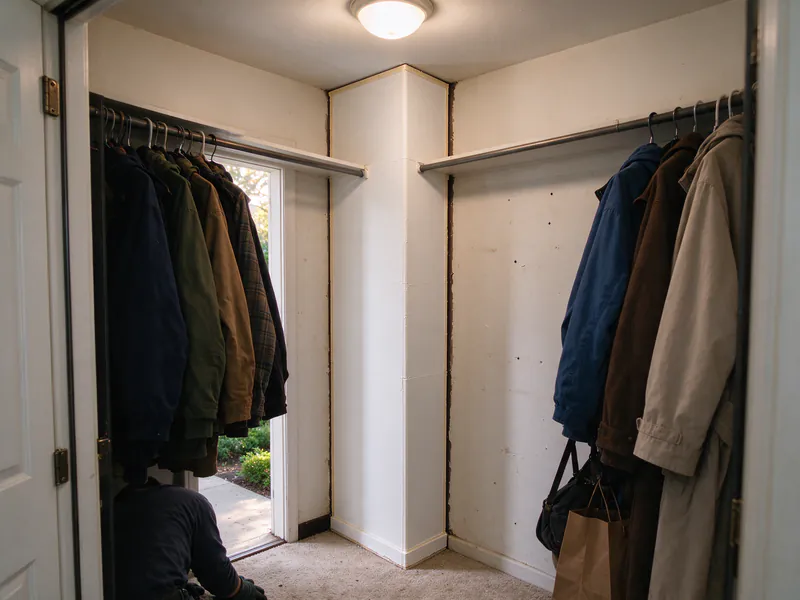
A compact air handler fits in a hall closet, above a dropped hall ceiling or in an attic over the top floor. Short ducts reach each room, and one return in the hall pulls the air back. See baseboard heat to heat pump and heat pump ductwork.
Ducted or wall units
Wall-mounted ductless heads are the other common choice in condos. We install ducted systems only, which keep the equipment out of sight and send air to every room; our ducted vs ductless guide sets out the trade-offs honestly.
The rebate and the rate
Electric resistance heat is one of the systems Mass Save’s whole-home rebate covers replacing, through Eversource. After that, Eversource’s seasonal rate trims distribution and transmission on every kilowatt-hour the home uses through the six heating months; see the winter rate guide.
Getting the association’s approval
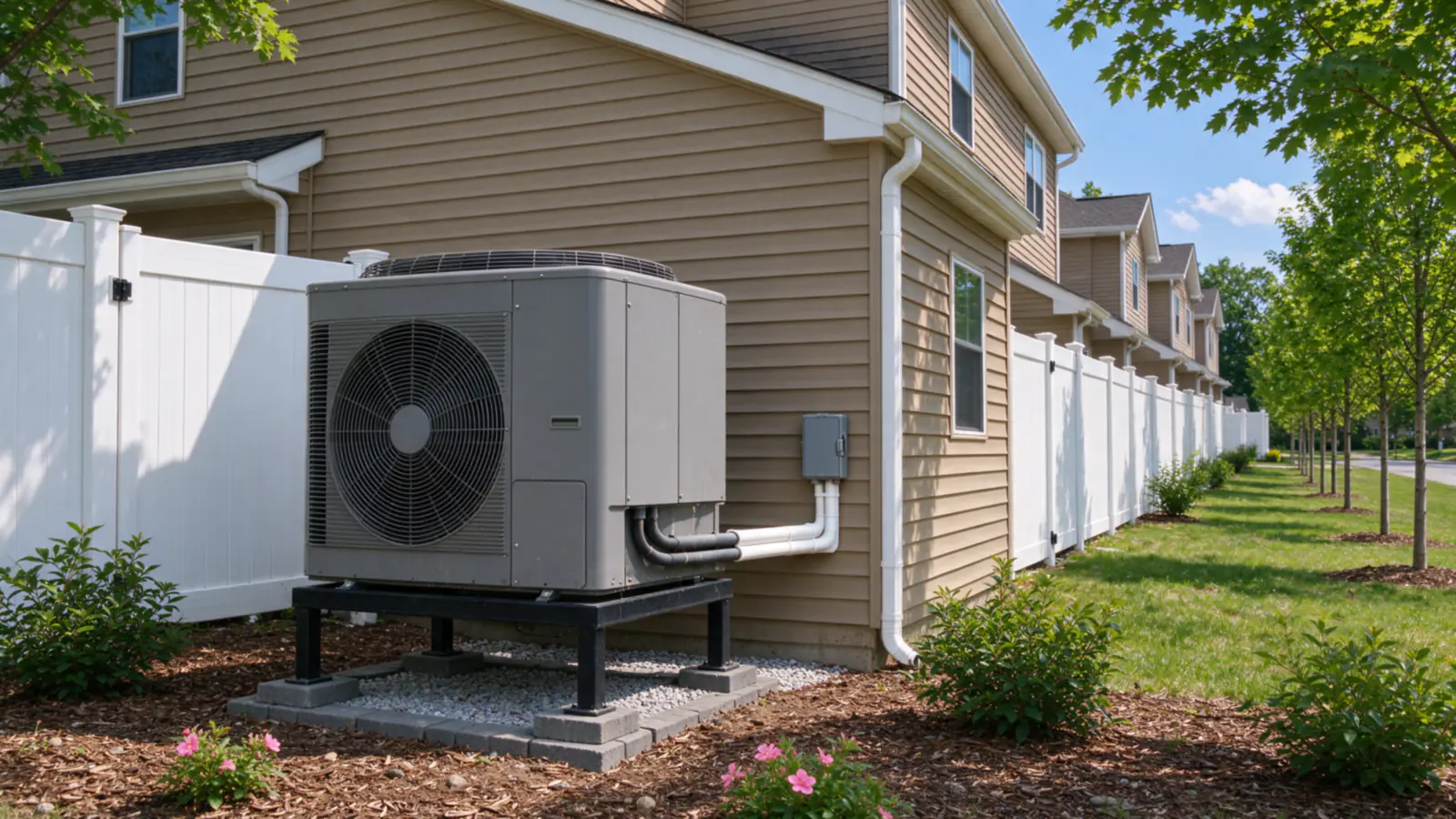
In a condo, the master deed and the board decide where an outdoor unit can sit and whether a wall can be opened for the line set. That conversation goes better with drawings than with a sales pitch.
- What we bring: the unit’s dimensions and sound rating, a placement drawing, the line-set route and how the wall penetration is sealed.
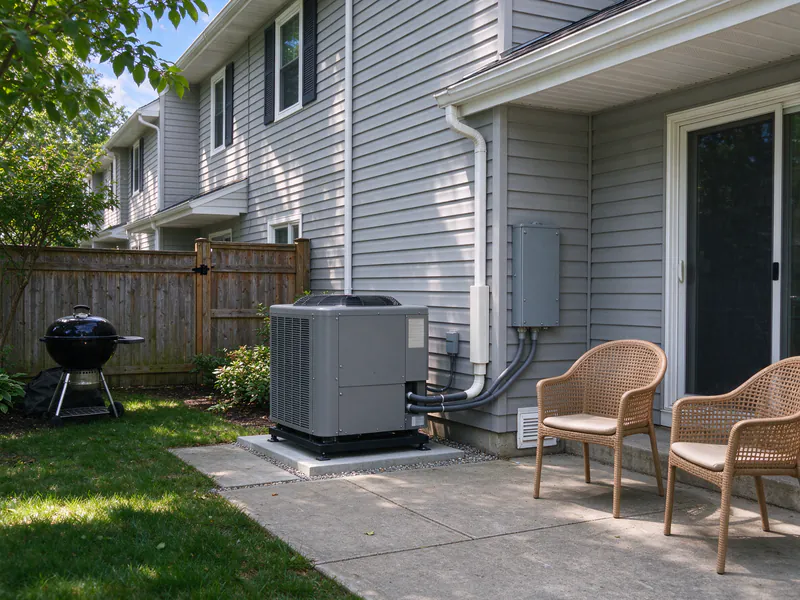
- What the board decides: patio, rear wall, roof or a common-area pad, and who maintains the stand.
- What we confirm per address: any local setback or sound rule for the outdoor unit, before the board votes.
Our condo heat pump guide covers the approval step by step.
Natick’s specialized code since July 1, 2025
Natick moved from the stretch code to the specialized energy code effective July 1, 2025. The change reaches new construction and big remodels; trading old heat for a heat pump in a lived-in home stays a mechanical permit.
Renovations and additions
If you’re gutting a kitchen wing or adding a floor, the specialized paths push toward all-electric heat or wiring for it. With ceilings open, ducts go in before the drywall, which costs far less than fishing them later.
Straight replacements
Swapping baseboard, a boiler or a furnace for a heat pump needs an electrical permit and, for duct work, a sheet metal permit. Natick files through its OpenGov portal, so permits don’t wait on office hours.
Houses from South Natick to the Route 9 streets
About 57% of Natick homes are detached houses, and about 22% were built before 1940. Gas heats close to half, oil about 23%, and propane about 4%.
Older houses with radiators
Where a house near Natick Center or South Natick heats with a boiler, there are no ducts. The usual answer is a pair of air handlers, one below the first floor and one above the bedrooms, with the trunk between them hidden in stacked closets; see heat pumps in old houses and boiler to heat pump conversion.
Post-war houses with a furnace
Where a post-war house has a forced-air furnace, its supply and return runs can carry a heat pump once static pressure readings say the blower won’t strain. On oil, the basement tank goes when the new system is running; removing an accessible one sits in our $600 to $1,500 typical range. See oil to heat pump conversion.
Running cost on a house
Oil and propane homes see a lower cost per delivered BTU on the winter rate, while gas homes come out close to even and switch mainly for cooling or an aging furnace. We run your comparison on your own bills.
Two-families
About 6% of homes are in two-unit buildings. Each unit gets its own system sized for its own floor, so one owner’s thermostat never heats the other’s rooms.
Natick permits, utilities and rebates
Natick’s building department takes applications through OpenGov. Expect an electrical permit on every job, a sheet metal permit wherever duct is added or altered, and a gas permit if a line gets capped.
| What | The Natick figure |
|---|---|
| Electric utility | Eversource |
| Gas service | Boston Gas or Eversource Gas, by location |
| Energy code tier | Specialized, effective July 1, 2025 |
| Heating fuel | Gas 48.9%, electricity 23.6%, oil 22.7%, propane 4.0% |
| Homes in buildings of five or more units | About 28% |
| Online permits | OpenGov |
A gas home’s rebate goes through the gas company on its bill; everyone else’s through Eversource. Installs from January 1, 2027 earn $2,350 a ton up to $7,500 on the whole-home tier; the rebate guide has the rest, including weatherization proof.
How we run a Natick install
For a condo, the first visit measures each room’s heat loss, finds the closet or ceiling for the air handler, checks the unit’s electrical panel and photographs the outdoor options for the board.
- Estimate and drawings: equipment and its 5°F capacity, duct layout, electrical, permits, the rebate path, and a placement sketch for the association.
- Board approval and OpenGov permits, then about a week of work inside the unit, less for a house on existing ducts.
- Baseboard out: heaters removed and circuits made safe, or the old furnace or boiler taken out.
- Start-up: the refrigerant circuit is tested under nitrogen, pulled to a deep vacuum and charged by weight; airflow is read at each register and the strip heat lockout written down.
Framingham to the west has an even larger share of electric-heat homes, and Wellesley to the east runs its own light plant.