Close to three in ten Framingham homes heat with electricity, more than in Natick, Wayland, Sudbury or Weston. The city also moved to the specialized energy code on July 1, 2026, which changes how its renovations get heated.
Clement Boston Heat Pumps handles heat pump installation in Framingham, MA for both sides of that: apartments and condos replacing baseboard, and houses and two-families leaving oil or gas behind.
Electric heat across the city
About 28.6% of Framingham homes heat with electricity, among the highest shares in the towns we cover. In apartments and condos, that usually means baseboard or wall heaters, the costliest heat to run besides oil.
Why baseboard homes gain the most
A baseboard heater turns one kilowatt-hour into one unit of heat. A ducted heat pump moves two to three units for that kilowatt-hour on a typical winter day, and adds central cooling. See baseboard heat to heat pump.
Eversource’s seasonal rate
Once you heat with a heat pump, Eversource’s seasonal rate lowers distribution and transmission charges on every household kilowatt-hour from November 1 to April 30. Mass Save rebate recipients are usually enrolled automatically; see the winter rate guide.
Inside a condo
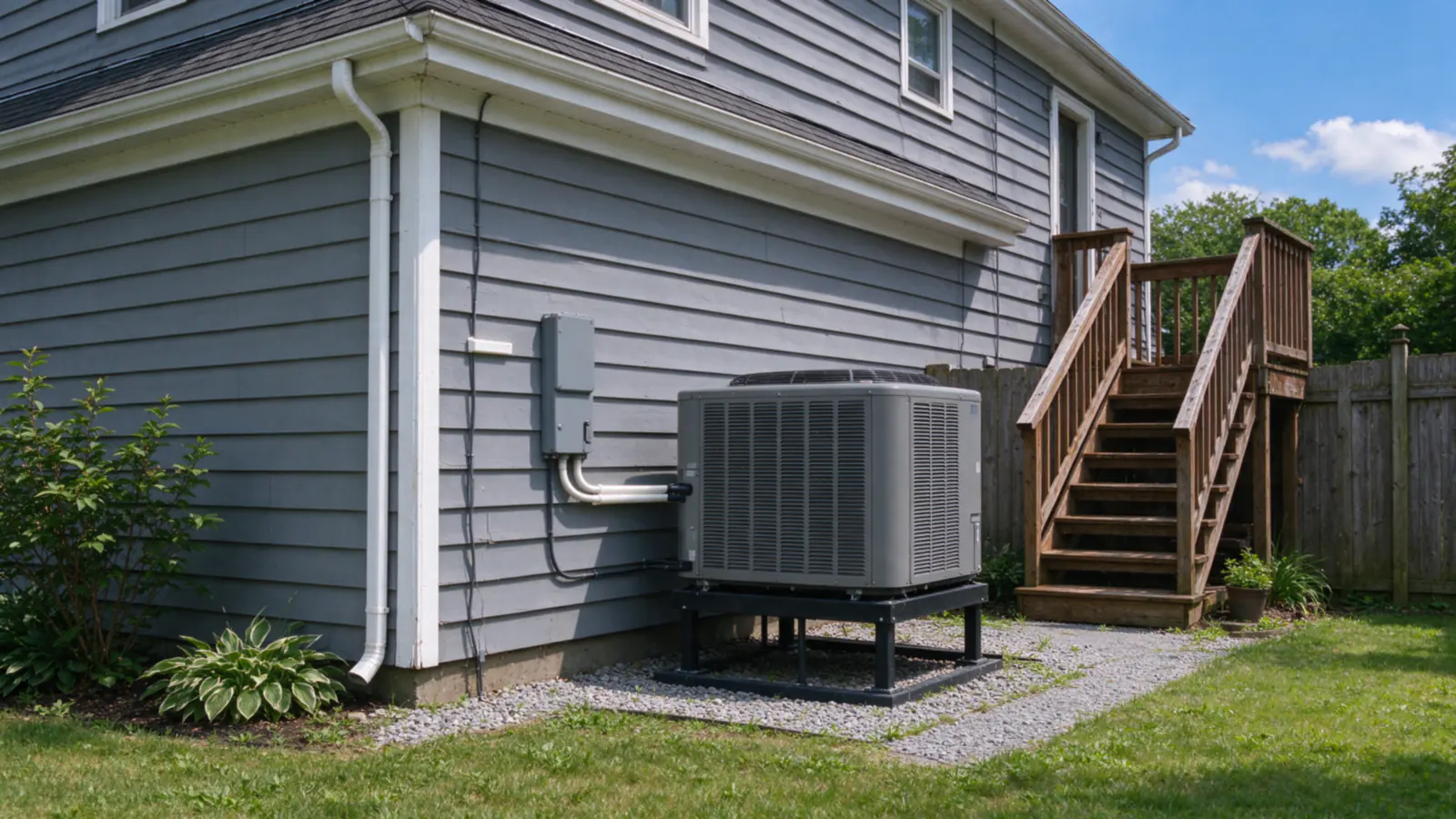
A compact air handler fits a hall closet or a dropped ceiling, with short ducts to each room and one return in the hall. The association decides where the outdoor unit goes, and in a larger building that can mean a roof or a common pad; our condo guide covers the approval.
What changed on July 1, 2026
Framingham adopted the specialized energy code, effective July 1, 2026, after years on the stretch code. It reaches new homes and major renovations, not a straight heating replacement.
- New homes and additions: the specialized paths favor all-electric heat or wiring for it, so the heat pump is designed in with the framing.
- Gut renovations: ducts go in while walls and ceilings are open, which is far cheaper than fishing them through finished rooms.
- Replacing heat in an existing home: a mechanical job with an electrical permit and, where ducts change, a sheet metal permit.
Two-families, ranches and apartment buildings
Framingham’s housing is mixed. About 52% of homes are detached houses, 7% sit in three- or four-unit buildings, and nearly a third in buildings of five or more units. About 17% predate 1940.
Two-families and three-unit houses
Where an older two- or three-unit house in Saxonville, Coburnville or near downtown heats each floor with its own boiler, each unit gets its own system sized for its own floor, with the air handler in the basement, a closet or the attic. Our triple-decker guide covers stacked units.
Ranches and capes
Where a post-war ranch or cape has a warm-air furnace, its ducts can usually carry heat pump air after we measure static pressure and size the returns. A cape’s knee walls often give the upstairs a duct route; see whole-home heat pumps.
Older houses with radiators
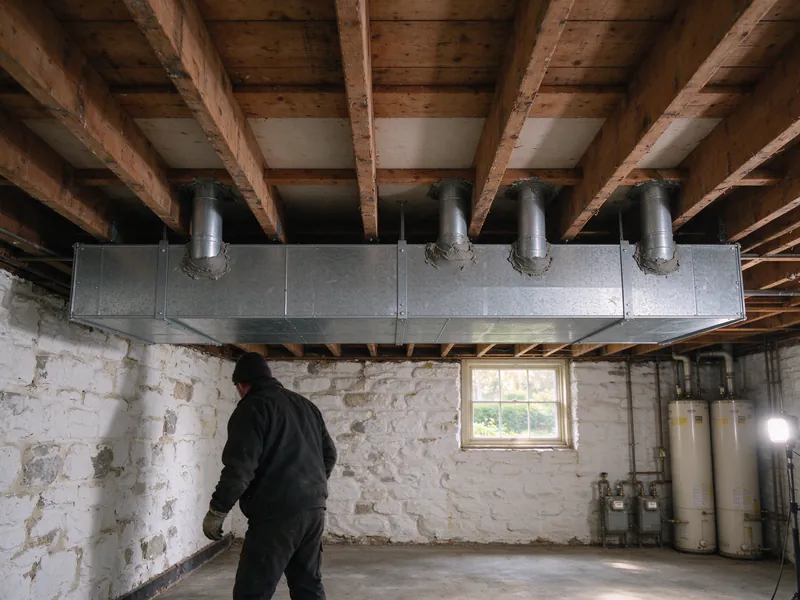
A boiler house has no ducts. A basement air handler serves the first floor and an attic unit the bedrooms; see boiler to heat pump conversion and heat pump ductwork.
Oil, gas and the panel
Gas heats about 46% of Framingham homes and oil about 21%. Eversource supplies the gas as well as the electricity, so every fuel applies to Mass Save through the same company.
Leaving oil
Oil is the costliest common fuel per delivered BTU after electric resistance. A cold-climate heat pump on the winter rate costs less, and an accessible basement tank comes out for $600 to $1,500 in our typical range; see heat pump vs oil.
Gas homes
Gas stays the cheapest fuel per BTU. A gas-heated house switches mainly for central cooling or because the boiler or furnace is near the end, and the whole-home rebate applies once it comes out. We put both running costs on your own bills, so the comparison is about your house.
Sizing for an inland winter
Framingham sits about twenty miles inland, where clear January nights run colder than at Logan Airport. We size from a room-by-room Manual J at the design temperature for your address and list each unit’s capacity at 5°F, so backup strips stay a backup. Our sizing guide explains the method.
The electrical service
Where an older two-family runs on a small service, the new circuits may not fit. We run a load check per unit, and if an upgrade is needed, our typical range for 100 to 200 amps is $3,000 to $6,500; see panel upgrades.
Framingham’s permits, code and rebates in a table
The city’s building department takes permit applications through OpenGov. Outdoor unit setbacks and sound rules are confirmed per address before we file.
| What | The Framingham figure |
|---|---|
| Electric and gas company | Eversource for both |
| Energy code | Specialized code since July 1, 2026 |
| Heating fuel | Gas 45.8%, electricity 28.6%, oil 21.2%, propane 2.2% |
| Homes in buildings of five or more units | About 32% |
| Online permits | OpenGov |
| Mass Save whole-home rebate | $2,650 a ton up to $8,500 through December 31, 2026 |
From January 1, 2027, the whole-home tier pays $2,350 a ton up to $7,500. Mass Save’s 0% HEAT Loan covers up to $25,000, applied for before work; see the HEAT Loan guide.
Steps on a Framingham install
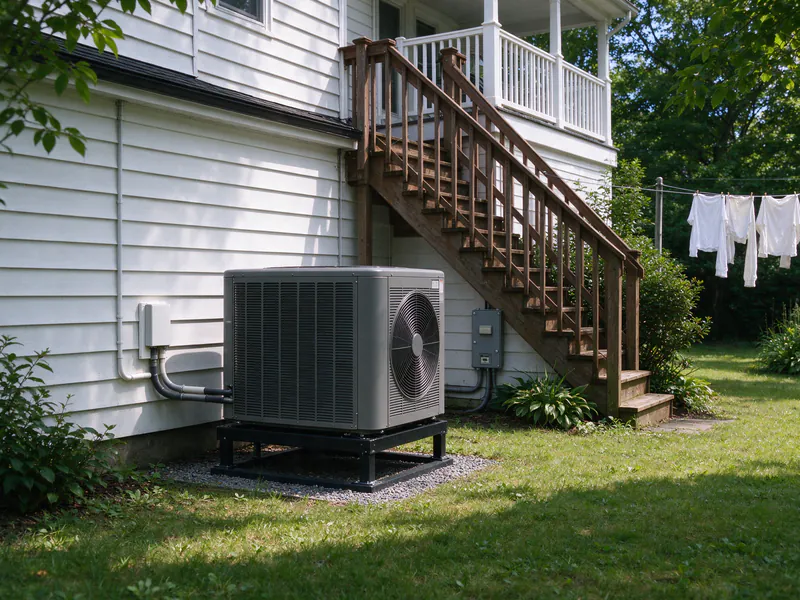
The first visit measures each room’s heat loss, finds the route for ducts or checks the ones you have, looks at the panel for each unit, and picks an outdoor spot clear of snow and the neighbor’s windows.
- Written estimate: equipment and its capacity at 5°F, ductwork, electrical, permits, and the Mass Save path for your fuel.
- OpenGov permits, and board approval for a condo, then three to seven working days on site.
- Old heat out: baseboard removed, or the boiler or furnace taken out and gas capped by a licensed gas fitter.
- Commissioning: pressure test, deep vacuum, charge by weight, airflow at the registers, backup lockout recorded.
Natick to the east has a similar mix of condos and houses, and Sudbury to the north is mostly detached houses on Eversource.