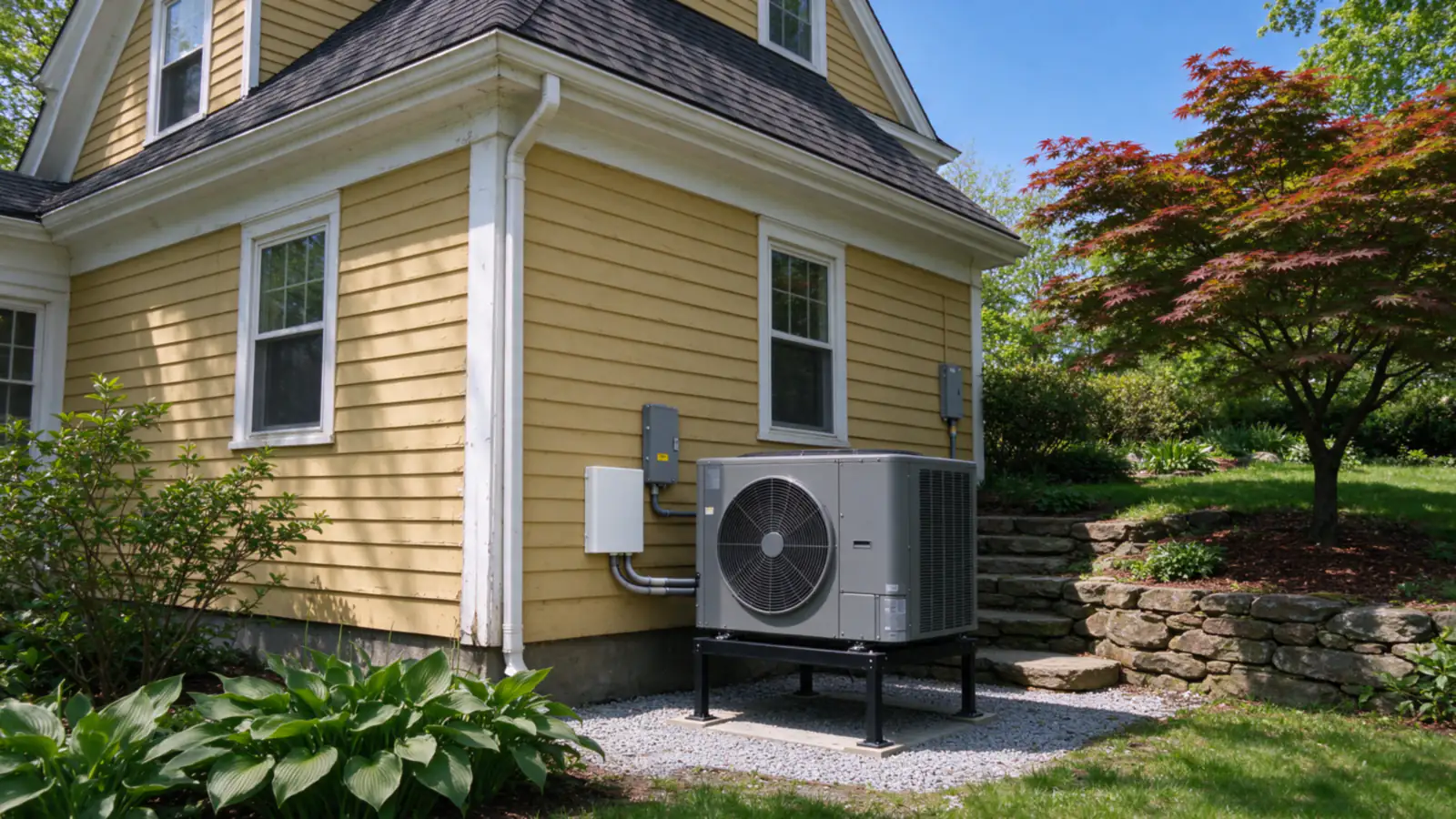
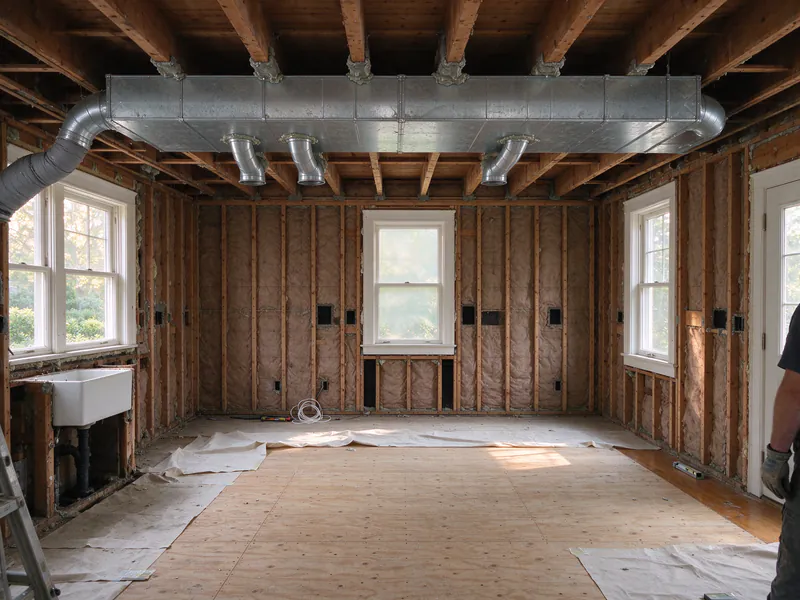
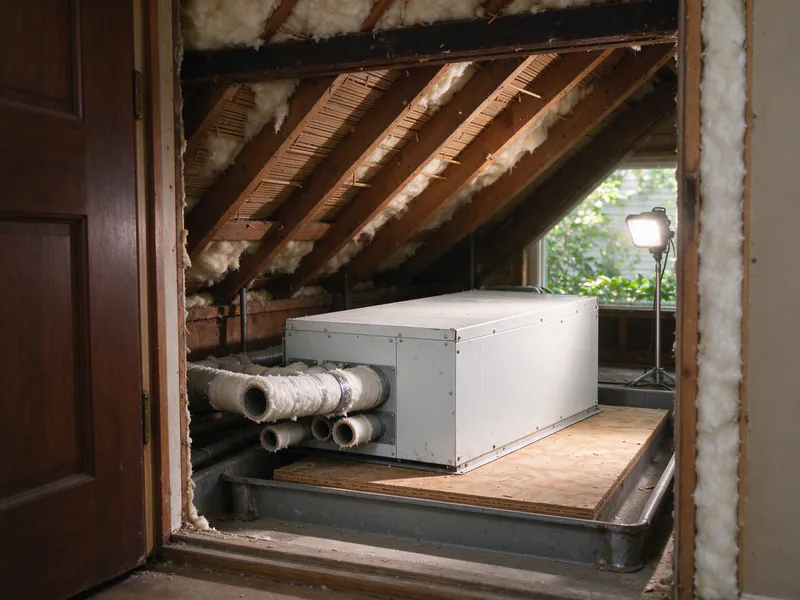
In Arlington, the fossil-fuel-free rule shows up mostly in renovations, not new houses. Clement Boston Heat Pumps plans heat pump installation in Arlington, MA around that fact, fitting ducts into kitchens, attics and additions while the walls are open.
Arlington and Cambridge are the two towns in the state program where most fossil-fuel-free projects are renovations. If you are planning one, the heating plan belongs in the design, not after it.
Arlington’s rules, and when they apply
Two rules shape an Arlington heating job: the fossil-fuel-free by-law, in effect since May 21, 2024, and the specialized energy code, in effect since January 1, 2024.
The fossil-fuel-free by-law
New buildings and major renovations can’t add new gas or oil equipment. A gut renovation of a floor, or a large addition, puts its heating on electricity. Gas backup isn’t an option inside that scope, so we size the heat pump to carry the house on the coldest night; see whole-home heat pumps.
The specialized code
Arlington adopted Massachusetts’ specialized code effective January 1, 2024. Its heavier requirements land on new homes and big additions. For a straight heating replacement in an existing house, the job is permitted as mechanical and electrical work.
What stays outside both
Replacing a failed boiler without a renovation is a separate case. We check which category your project falls into before quoting, because it decides whether a dual-fuel setup is even possible.
Renovations, and getting ducts in while the walls are open
A renovation is the cheapest moment to add ducts. Open framing gives free routes that, in a finished house, would mean cutting plaster.
Kitchens and rear additions
A first-floor kitchen gut opens the ceiling below the second floor. That ceiling cavity can carry a trunk to second-floor rooms, or a return path the house never had. We set register locations with the designer before drywall.
Attics and knee walls
Arlington’s bungalows and Colonial Revival houses often have finished upper floors with knee-wall attics. A compact air handler fits behind the knee wall, with short insulated runs to each room. See the attic air handler page.
When the plaster stays
Where finished rooms must stay closed, small-duct high-velocity systems run 2-inch tubes through joist bays and closets. Our old house guide shows where they fit.
The houses: bungalows, two-families and Heights colonials
Almost half of Arlington’s homes were built before 1940. About 38% are detached houses and nearly a quarter are two-families, concentrated in East Arlington near the Cambridge line.
- East Arlington two-families: one system per unit, each on its own panel. Our three-decker guide explains the per-floor method, which works the same for two units.
- Arlington Center and Morningside: bungalows and Colonial Revival houses on steam or hot-water radiators, usually needing new ducts; see boiler to heat pump conversion.
- Arlington Heights and Jason Heights: larger houses on hillside lots, some with oil and older central air in the attic.
Sizing for the hills
The Heights sit well above the Alewife and Spy Pond flats, and clear winter nights get colder inland.
Hanscom Field in Bedford, a few miles west, averages about five nights a year at or below 0°F, against fewer than one at Logan. We size at the design temperature for your address and record the backup heat setting; see our aux heat guide.
Gas, oil and electric heat in Arlington
About 59% of Arlington homes heat with gas, 18% with oil and 18% with electricity. Each group gets a different case for the switch.
Oil and electric homes
Oil and baseboard heat cost the most per delivered BTU. A heat pump on Eversource’s winter rate costs less to run than either, and Mass Save’s whole-home rebate covers replacing both.
Gas homes
Gas is cheaper per BTU, so savings are narrower. Gas owners usually switch for central cooling, a failing boiler, or because a renovation rules out new gas. Mass Save’s whole-home rebate also covers replacing gas when the old system comes out.
Upstairs comfort, summer and winter
Radiator houses in Arlington were built without cooling, and most second floors are the hottest rooms in July. A ducted heat pump fixes both seasons with the same air handler.
Why the top floor gets its own system
Heat rises and a sunny roof adds more, so a second floor needs more cooling per square foot than the first. A single basement unit pushing air up two floors can’t keep up. A separate attic or knee-wall unit gives the bedrooms their own thermostat and their own airflow.
Returns make the difference
Old houses rarely have return paths, and closed bedroom doors starve a ducted system. We add a return in each zone or transfer grilles above the doors, then measure static pressure at commissioning to prove the air is moving. Our ductwork page explains returns in more detail.
Mass Save money and Arlington paperwork
Arlington’s building department issues electrical and mechanical permits, and a building permit when the work is part of a renovation. Its online route is confirmed per address.
| What | The Arlington figure |
|---|---|
| Electric utility | Eversource |
| Gas utility | National Grid (Boston Gas) |
| Energy code | Specialized code since January 1, 2024 |
| Fossil-fuel-free by-law | In effect since May 21, 2024 |
| Heating fuel | Gas 59.2%, oil 18.2%, electricity 18.0% |
Eversource’s seasonal heat pump rate lowers both distribution and transmission charges from November 1 to April 30. Mass Save’s conditions, including cold-climate equipment and a network installer, are in our rebate guide.
What happens, step by step, in Arlington
On the first visit we work through the load, the routes the renovation opens, the panel and the outdoor spot.
- Design coordination: register and trunk locations go on the renovation drawings before framing closes.
- Written estimate: equipment, capacity at 5°F, ducts, electrical, permits and the rebate path.
- Rough-in with the framing, then outdoor units and line sets, then the old heat removed once the new system carries the house.
- Commissioning: pressure test, vacuum, weighed charge, airflow and static, controls and the backup lockout recorded.
Our installation process guide covers each step. Belmont next door runs its own light plant rebate, and Lexington has its own fossil-fuel-free by-law.