About one in six Brockton homes sits in a three- or four-unit building, and close to a quarter still burn oil. Clement Boston Heat Pumps handles heat pump installation in Brockton, MA for owners of two-families, three-deckers and single houses who want to move off the oil truck or an aging boiler.
The plan starts with how the building is split, then which utility pays the rebate. Brockton gets its electricity from National Grid and its gas from Eversource, and that split decides who sponsors your Mass Save rebate.
What makes a Brockton job different
Three things shape a Brockton plan before we pick equipment: how many units share the heat, which fuel you’re leaving, and how cold the nights get this far inland.
Shared heat in multi-family buildings
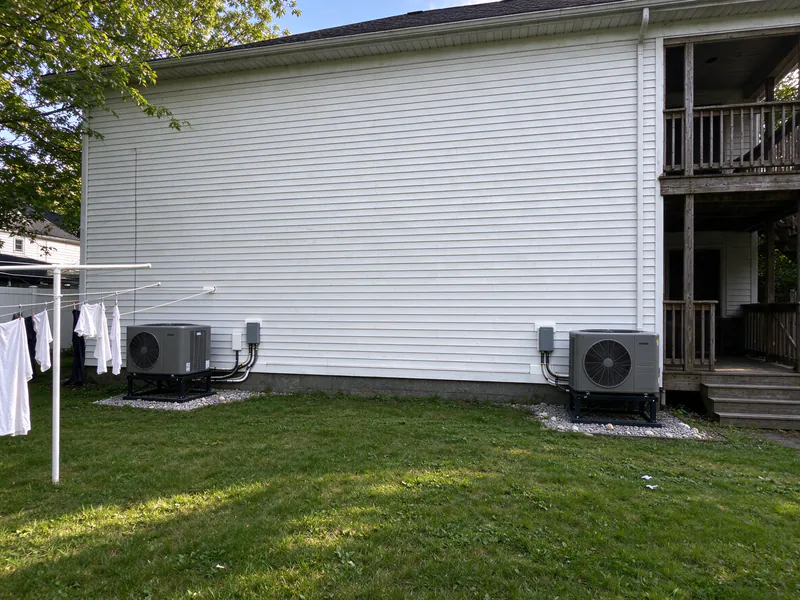
Many Brockton two-families and three-deckers run every floor off one boiler in the basement. Replacing it with one heat pump rarely works, because each floor loses heat differently and each owner or household wants its own thermostat.
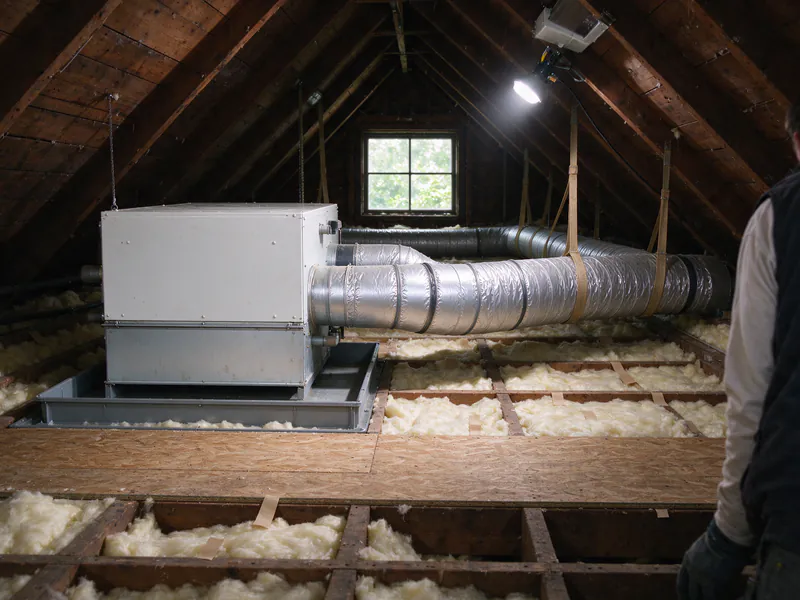
We plan one ducted system per unit, sized room by room for that floor. The three-decker guide explains where each air handler goes.
Two utilities, one rebate program
National Grid supplies the electricity and Eversource supplies the gas. If you heat with oil, propane or electric baseboard, your Mass Save rebate comes through National Grid. If you heat with gas, the gas sponsor handles it.
Either way, the whole-home tier needs cold-climate listed equipment and an installer in Mass Save’s network. We install as a participating contractor; the rebate guide lists every condition.
Colder nights than the coast
Brockton sits about 18 miles south of Boston, away from the harbor’s warming effect. Inland stations such as Norwood Memorial Airport average about five nights a year at or below 0°F, against well under one at Logan.
We run the load calculation at Brockton’s design temperature, not Boston’s, and pick equipment by its rated capacity at 5°F. The sizing guide shows the method.
Where the outdoor unit sits
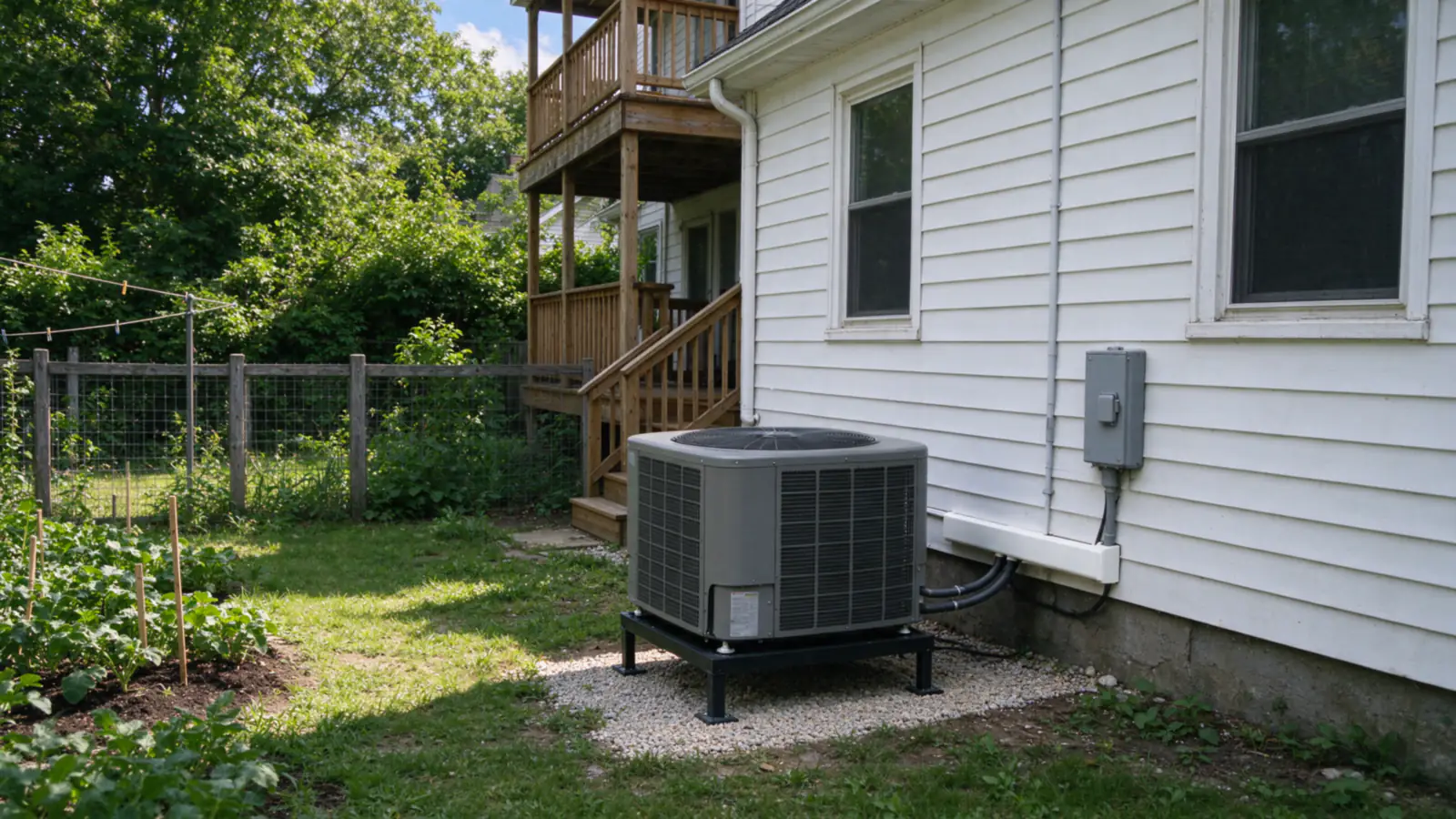
On a two-family lot, the driveway, the rear porch stairs and the neighbor’s windows all compete for the same strip of yard. Brockton’s own setback or sound limit for outdoor units is confirmed per address; the state noise policy treats a source more than 10 dB(A) above the background level as a problem.
So we keep units off the driveway where plows and cars push snow, raise them on a stand above the drift line, and point the fan away from the closest bedroom window. Our snow stand guide covers heights and clearances.
The buildings, and where the ducts fit
Brockton’s housing is more mixed than most cities near Boston. Just under half its homes are detached houses, about 11% are two-families and about 21% sit in buildings of five or more units.
| Brockton home type | Share of homes | Where a ducted system usually goes |
|---|---|---|
| Detached house | 47.4% | Existing ducts, or basement plus attic air handlers |
| Two-family | 11.1% | One system per floor, basement and attic |
| Three or four units | 16.3% | Attic, basement, and a closet or small-duct plan in the middle |
| Five or more units | 21.3% | Unit by unit, with the association’s approval |
Capes, ranches and colonials
A mid-century cape or ranch on Brockton’s west side may already have a furnace and ducts. If the ducts reach every room and the static pressure tests well, the heat pump reuses them; see whole-home heat pumps.
Older two-families and three-deckers
Closer to Campello, Montello and the downtown streets, more houses predate 1940 and still have radiators. The attic and basement carry the top and bottom floors. Our boiler conversion page covers the middle-floor options.
Leaving oil in Brockton
Oil heats about 23% of Brockton homes, a little above the state average. That group has the strongest case for a heat pump, because oil costs more per unit of heat than a heat pump on National Grid’s winter rate.
The running-cost math on National Grid
National Grid’s seasonal heat pump rate lowers the winter distribution charge on all your household kilowatt-hours from November through April. It doesn’t touch the transmission charge, so the discount is smaller than Eversource’s.
Even so, a cold-climate heat pump delivers heat for less than oil on a typical winter day. We put the comparison on your own bills in the estimate; the heat pump vs oil guide shows how.
The tank and the paperwork
Once the heat pump carries the house, the tank comes out. Our typical range for an accessible basement tank is $600 to $1,500; buried tanks are priced on the site. See oil tank removal.
Mass Save’s whole-home rebate needs the old system removed or disconnected and proof of weatherization, so the order of work matters. We keep the paperwork straight as we go.
Permits and the National Grid side in Brockton
The Brockton Building Department issues the electrical and sheet metal permits for a ducted job, plus gas permits where a gas line is capped. The filing route and fees are confirmed per address before the install.
| What | The Brockton picture |
|---|---|
| Electric utility | National Grid |
| Gas utility | Eversource |
| Energy code | Stretch code since January 1, 2017; not the specialized code |
| Heating fuel mix | Gas 53.4%, oil 23.1%, electricity 19.5% |
| Homes built before 1940 | 31.6% |
| Winter heat pump rate | National Grid, distribution discount only |
Because Brockton is a stretch-code city, a gut renovation can still keep gas backup, which the specialized code makes harder. The cost guide explains our ranges, and the panel upgrade page covers older 100-amp services.
How we run a Brockton install
The first visit covers each unit’s heat loss at Brockton’s design temperature, the ducts or the routes for new ones, the panel, and a spot for each outdoor unit clear of driveways and snow.
- Written estimate: equipment with its capacity at 5°F, duct work, electrical, permits, tank removal and the rebate path, line by line.
- Unit by unit: in a two-family, one floor at a time so someone always has heat.
- Permits first, then the install, usually three to eight working days depending on new ducts.
- Commissioning: nitrogen pressure test, vacuum below 500 microns, charge by weight, measured airflow and static, controls set and backup lockout recorded.
Neighboring Holbrook and Abington share National Grid electric service but follow their own codes, and Stoughton borders Brockton to the northwest.