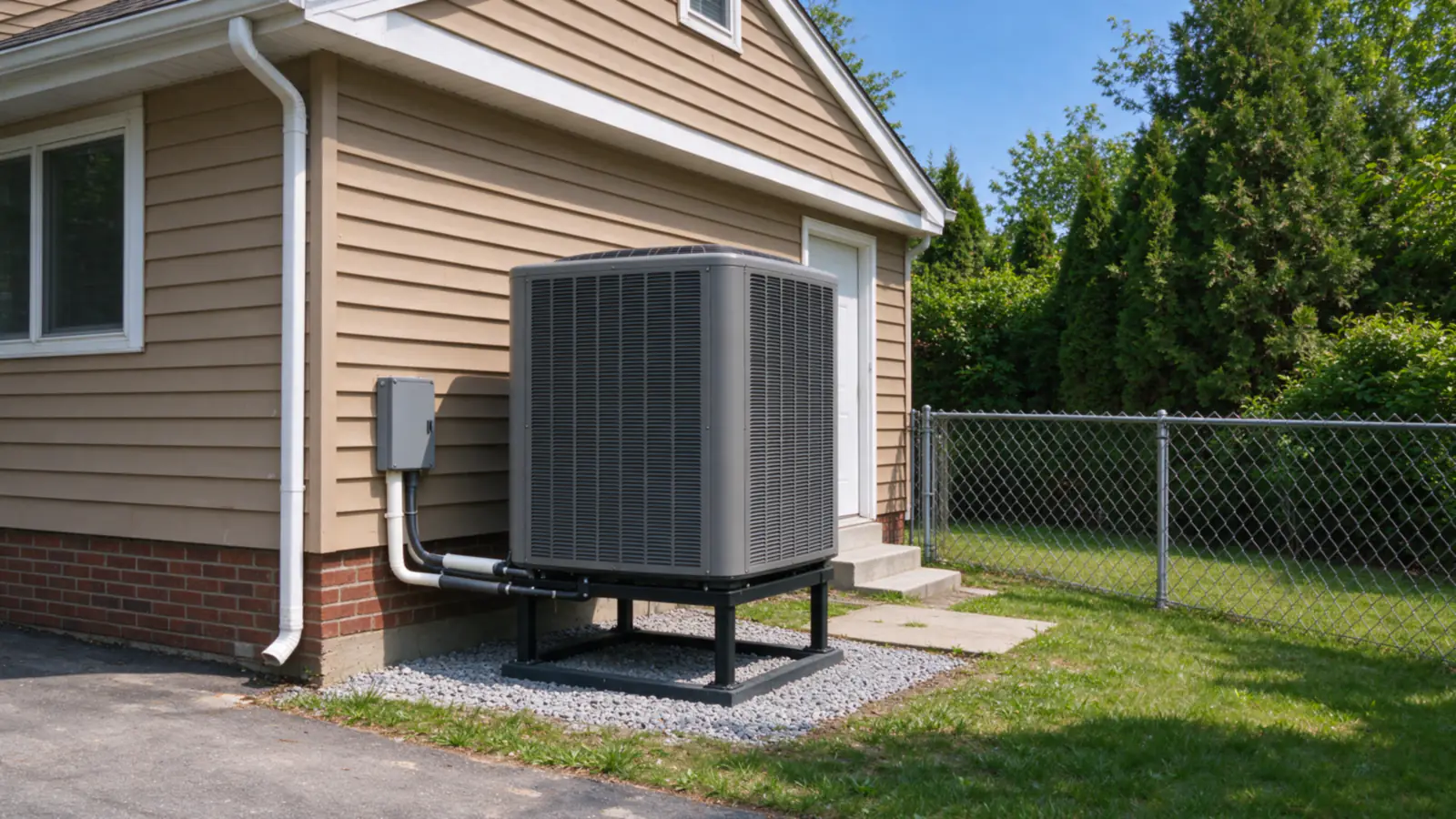
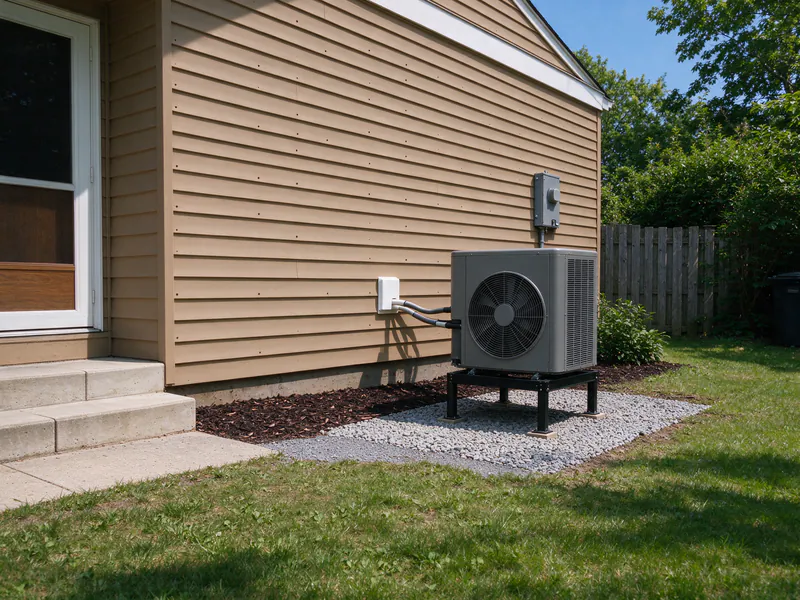
From November through April, National Grid charges Abington heat pump homes less to deliver every kilowatt-hour they use. Clement Boston Heat Pumps pairs each heat pump installation in Abington, MA with that winter rate and with Mass Save’s rebate, because both come through the same utility.
Most of the gain here goes to oil homes. About 35% of Abington houses still burn oil, well above the state’s 22%.
One utility for power and gas
National Grid supplies Abington’s electricity and its gas, and it sponsors Mass Save on both. Whatever heats your house today, there is a Mass Save route, which isn’t true in the light plant towns to the north.
Oil, propane and electric heat
These homes apply on the electric side. Mass Save’s whole-home tier pays $2,650 a ton up to $8,500 for installs through 2026, then $2,350 a ton up to $7,500 from January 1, 2027. The rebate guide lists the conditions.
Gas heat
Gas homes apply on the gas side. The whole-home tier still asks for cold-climate listed equipment, a contractor in Mass Save’s installer network, the old system out and weatherization first. Our contractors are in that network.
The winter rate
National Grid’s heat pump rate trims the distribution charge on the whole household’s usage, November 1 to April 30. It doesn’t touch supply. Homes that receive a Mass Save heat pump rebate are usually enrolled without a separate application, so the first winter on the new system already counts. See the electric rate guide.
Leaving oil behind in Abington
Oil is the most expensive common heating fuel per delivered BTU, and it’s the fuel of about a third of Abington. Whether the oil burner is a boiler or a furnace decides how much duct work the job needs.
Furnace houses
An oil furnace already has ducts. We test static pressure and the return, fix what’s tight, and set a heat pump air handler in the furnace’s place; see oil to heat pump conversion.
Boiler houses
In a cape, a basement air handler feeds the first floor through floor registers, and a second small unit or a closet riser reaches the dormers. In a colonial, an attic unit serves the bedrooms and a basement unit the main floor. See boiler to heat pump conversion and heat pump ductwork.
The boiler and the tank
Once the heat pump carries the house, the boiler comes out, and the basement tank goes under the fire department’s permit. Mass Save’s whole-home tier needs the old system removed or disconnected; see oil tank removal and heat pump vs oil heat.
Capes, raised ranches and condos
About 63% of Abington’s homes are detached houses and about 21% were built before 1940. Another 18% sit in buildings of five or more units. Each form gives the ducts a different path.
Older houses near the center
Houses around Abington Center and North Abington that predate 1940 were built for radiators, with plaster walls and few chases. Attic and basement units, joined through a closet, avoid opening finished rooms; see heat pumps in old houses.
Raised ranches
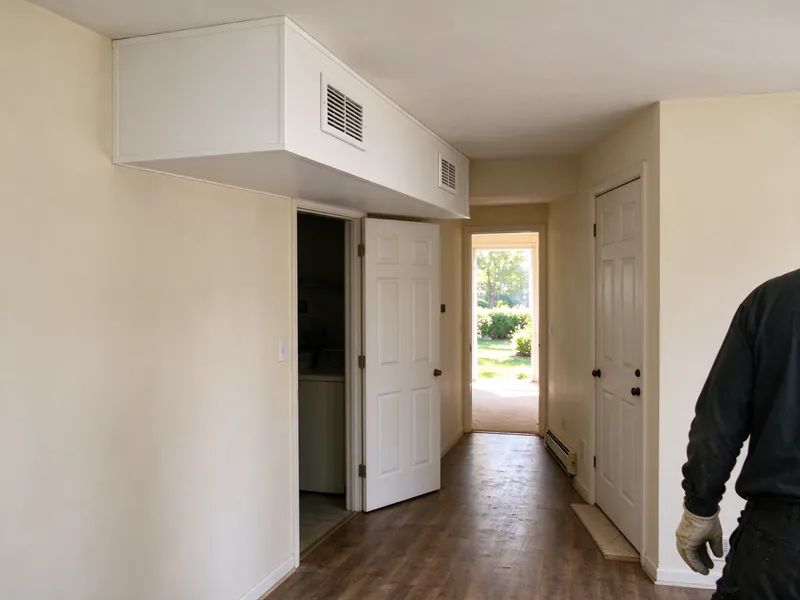
The lower level’s ceiling holds the upper floor’s joists. A single air handler on the lower level can run a trunk in a soffit and send short branches up through the floor to each room above.
Condos
The association decides where outdoor units sit and how line sets run. A closet air handler replaces baseboard with short duct runs; see baseboard heat to heat pump.
Electric heat, panels and the running cost
About 16% of Abington homes heat with electricity, mostly baseboard. Those homes see the fastest change on the bill, because a heat pump delivers two to three units of heat per kilowatt-hour where baseboard gives one.
- The panel: removing baseboard frees capacity, so we add up loads before calling for an upgrade.
- The comparison: we price running costs on your own National Grid bills, with and without the winter rate.
- Backup strips: set with an outdoor lockout so they only run on the rare night the heat pump needs help.
How big a system an Abington house needs
Size comes from the house, not from its square footage or the old boiler’s rating. Old boilers were often oversized, and copying their number buys a heat pump that short-cycles all spring.
The load calculation
We measure every room, its windows, walls and ceiling, and work out the heat loss at Abington’s design temperature. Then we pick equipment by what it delivers at 5°F. Sizing to the home’s full heating need also earns Mass Save’s $500 sizing bonus; see the sizing guide.
Weatherization first
Mass Save’s whole-home tier needs proof of weatherization, and air sealing lowers the load before we size. A tighter house can drop half a ton, which trims the price and the running cost together.
What Abington permits and National Grid rebates involve
The Town of Abington’s building department issues the permits. The exact set, the design temperature and any local sound or setback rule are confirmed per address before we file.
| What | The Abington figure |
|---|---|
| Electric utility | National Grid |
| Gas utility | National Grid |
| Rebate route | Mass Save, electric or gas side |
| Winter heat pump rate | Lower distribution charge, November 1 to April 30 |
| Energy code | Stretch code since July 1, 2017 |
| Heating fuel | Gas 45.8%, oil 34.7%, electricity 15.5% |
Our typical range for a whole-home system on ducts we can reuse is $15,000 to $28,000 and up before rebates. The cost guide explains the rest.
From first call to commissioning in Abington
The first visit looks at the framing as closely as the heating system, because in a boiler house the duct route decides the price.
- Visit: load calculation, a look at attic, basement and closets, the panel and the outdoor spot.
- Estimate: equipment with 5°F capacity, ducts, electrical, permits, rebate path and price, line by line.
- Install: four to eight working days with new ducts, then the boiler and tank come out.
- Commissioning: pressure and vacuum tests, weighed charge, measured airflow and the strip lockout recorded.
The installation process guide walks through each day. Nearby, see Rockland, Holbrook and Brockton.