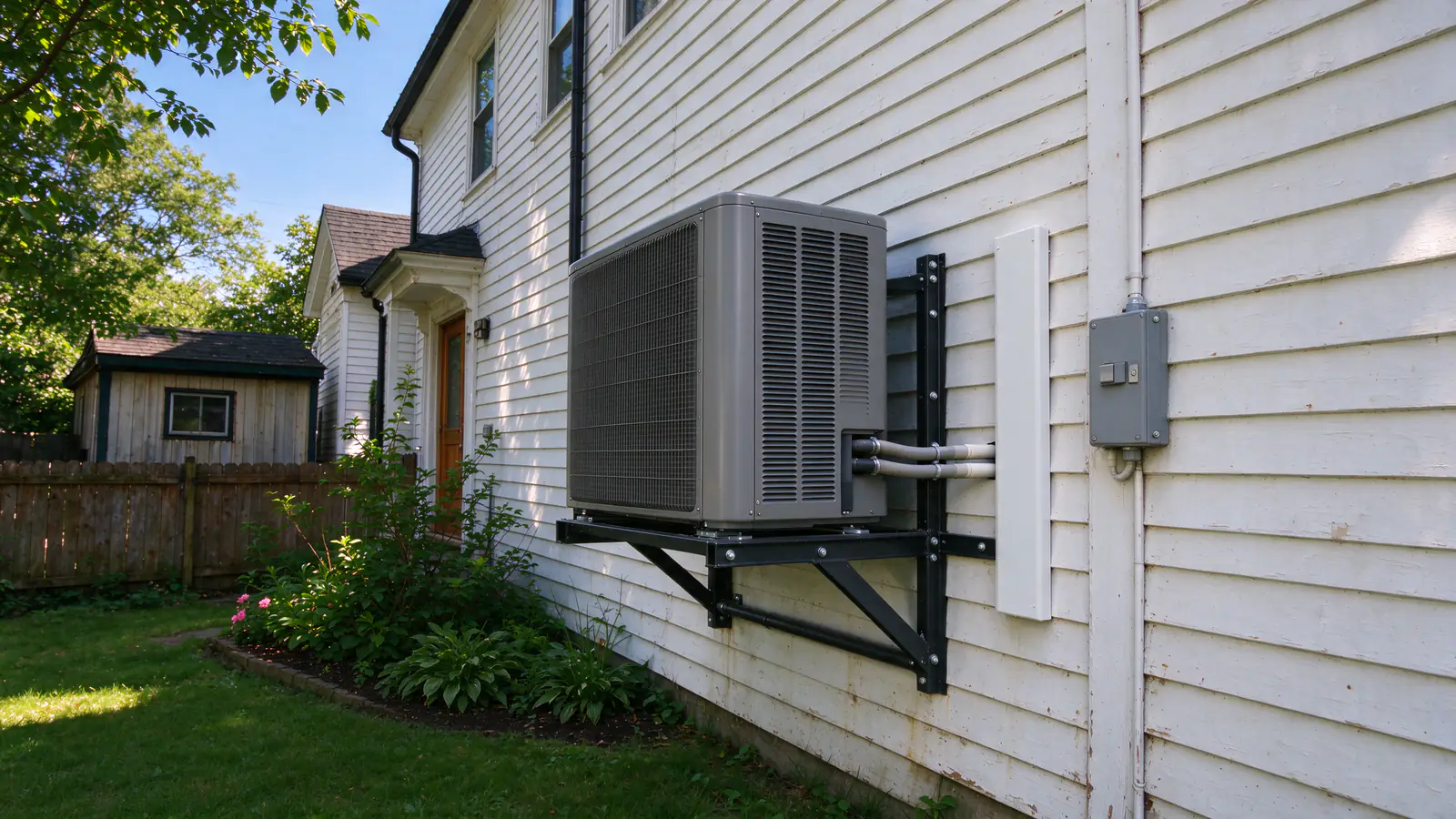
Rockland has more old houses and two-families than its neighbors Hanover, Norwell and Hingham. Close to 30% of its homes predate 1940, one in eight sits in a two-unit building, and 29% still burn oil. Clement Boston Heat Pumps plans heat pump installation in Rockland, MA around exactly that kind of house.
Those houses weren’t built for ducts. Getting ducted heat and cooling into them, without tearing out plaster, is most of the planning.
Older houses, and where the ducts can go
In a house built for radiators, there’s no duct system to reuse. The question is how to get air to every room without opening finished walls.
Attic and basement
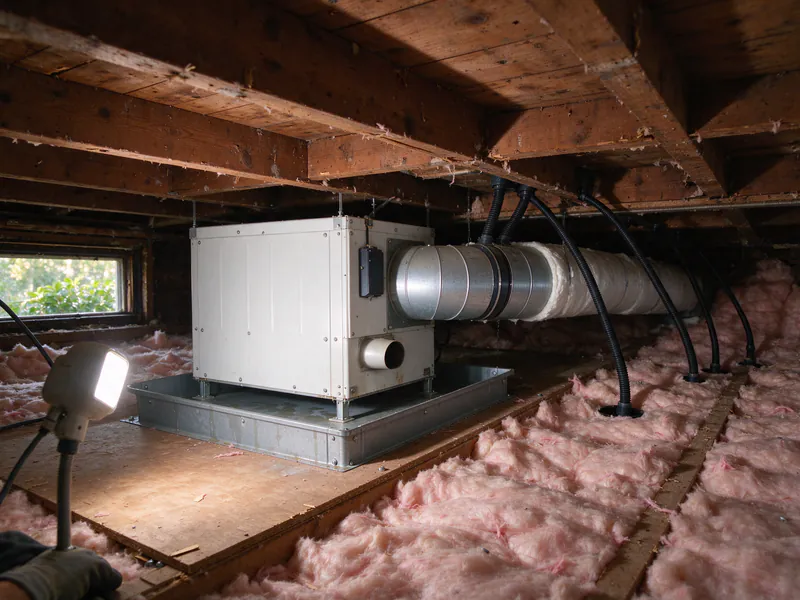
A two-story house can take an air handler in the attic for the upper floor and one in the basement for the first. Closets that stack between floors carry a trunk from one to the other. See attic air handlers and boiler to heat pump conversion.
When the closets don’t line up
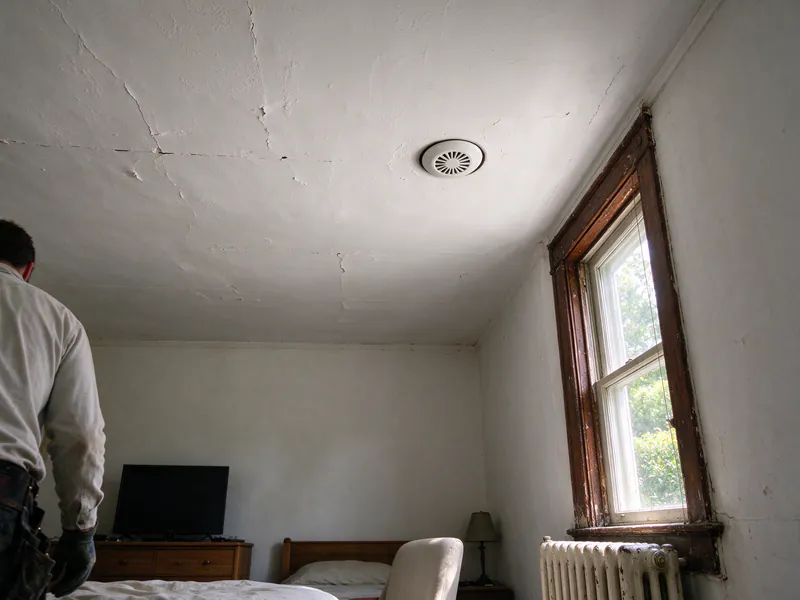
That’s where a small-duct system earns its place. Instead of rectangular trunks, it pushes air at higher speed through 2-inch flexible tubes that fit inside wall bays and floor cavities. Each room gets one or two small round outlets.
Small-duct systems for plaster walls
A small-duct system costs more than a conventional one, and it moves air faster. In a plaster house with no chases, it can still be the only route that avoids opening walls.
| Feature | Conventional ducts | Small-duct system |
|---|---|---|
| Duct size | Rectangular trunks, 6- to 8-inch branches | 2-inch flexible tubes |
| Room outlets | Standard registers | Small round outlets |
| Wall openings | Chases or soffits | Small holes, patched |
| Our typical range | $20,000 to $40,000 and up with new ducts | Same range |
We check outlet placement so the air mixes without drafts, and we measure airflow at each one at commissioning. See heat pump ductwork and our old-house guide.
Two-families: one system per floor
About one Rockland home in eight sits in a two-unit building, and another 8% in three- or four-unit buildings. Where one boiler still heats both floors, the switch is a chance to split them.
Why separate systems
The top floor loses more heat through the roof than the floor below, so one system sized for both overheats one floor or underheats the other. Separate systems, each with its own thermostat, fix that and let each household control its own heat.
Where the equipment goes
The upper floor’s air handler goes in the attic, the lower floor’s in the basement. Both outdoor units can share a pad or stand on a tight lot. Our three-decker guide covers the same layout floor by floor.
National Grid on both meters
Rockland gets its electricity and its gas from National Grid. That makes the rebate side simpler than in neighboring towns with a split.
One sponsor for every fuel
Whether you’re leaving oil, propane, baseboard or gas, National Grid sponsors your Mass Save rebate. A Rockland switch off oil this winter earns up to $8,500 at the whole-home tier ($2,650 per ton); from January 1, 2027 that becomes $2,350 per ton with a $7,500 cap. Our rebate guide covers the equipment, installer and weatherization conditions.
The winter rate
Once a heat pump heats the house, National Grid’s seasonal heat pump rate trims the distribution part of every kilowatt-hour you use between November and April. Supply and transmission stay the same.
Oil heat in Rockland
About 29% of Rockland homes burn oil, well above the state’s 22%. Those owners gain the most from a switch, because oil costs the most per unit of heat.
Furnace houses
In a postwar cape or ranch with an oil furnace, the ducts already reach the rooms. We measure static pressure and return size, then set the heat pump air handler on the existing plenum. See oil to heat pump conversion.
The tank
We pull the tank only once the new system is heating the house, so there’s never a gap. An accessible basement tank falls in our $600 to $1,500 range, fire department permit included. See oil tank removal.
Sizing an old, leaky house
A house built before 1940 often loses more heat through gaps than through its walls. Sizing has to account for that, or the heat pump comes up short on the coldest nights.
Measure, then tighten
We estimate air leakage as part of the heat-loss calculation, and Mass Save’s whole-home rebate already asks for weatherization. Air sealing the attic floor and basement rim first often drops the needed size by half a ton or more, which lowers the price.
Then choose the equipment
Equipment is picked by its rated output at 5°F, not its nameplate, with backup heat set to lock out above a chosen temperature. Our sizing guide shows the steps.
Ducted or wall units?
Some owners of older houses weigh wall-mounted units against a ducted system. We install ducted systems only, and in an old house they keep equipment out of every room.
A ducted system hides the indoor equipment in the attic, basement or a closet, and one thermostat runs each floor. Our ducted vs ductless guide compares the two honestly.
The paperwork in Rockland
Rockland’s own building department permits the work: electrical, sheet metal for the ducts, and gas if a line gets capped. How it takes filings, what it charges and any town noise limit are things we confirm for your address.
| Item | Rockland |
|---|---|
| Who permits it | Rockland’s building department |
| Code tier | Stretch, in force since January 1, 2013; no specialized code |
| Electricity | National Grid |
| Gas | National Grid |
| Rebates | Mass Save, sponsored by National Grid for every fuel |
| Seasonal rate | National Grid’s, on distribution only |
What happens, in order
The first visit maps the routes before anything is priced, because in an old house the routes decide the price.
- Walk-through: a Manual J heat-loss figure for each room, then the attic, the basement, which closets stack, the panel and a spot outside.
- Estimate in writing: each system’s output at 5°F, the duct or tube layout, electrical work, the tank, permits, which rebate applies, and one price.
- Install days: six to nine with new ducts, with plaster patched wherever a tube passes through.
- Start-up: nitrogen test, deep vacuum under 500 microns, refrigerant weighed in for the line length, airflow read at each outlet, and the backup heat cutoff written down.
Abington shares Rockland’s National Grid service on both meters; Hanover has newer houses and Eversource Gas.