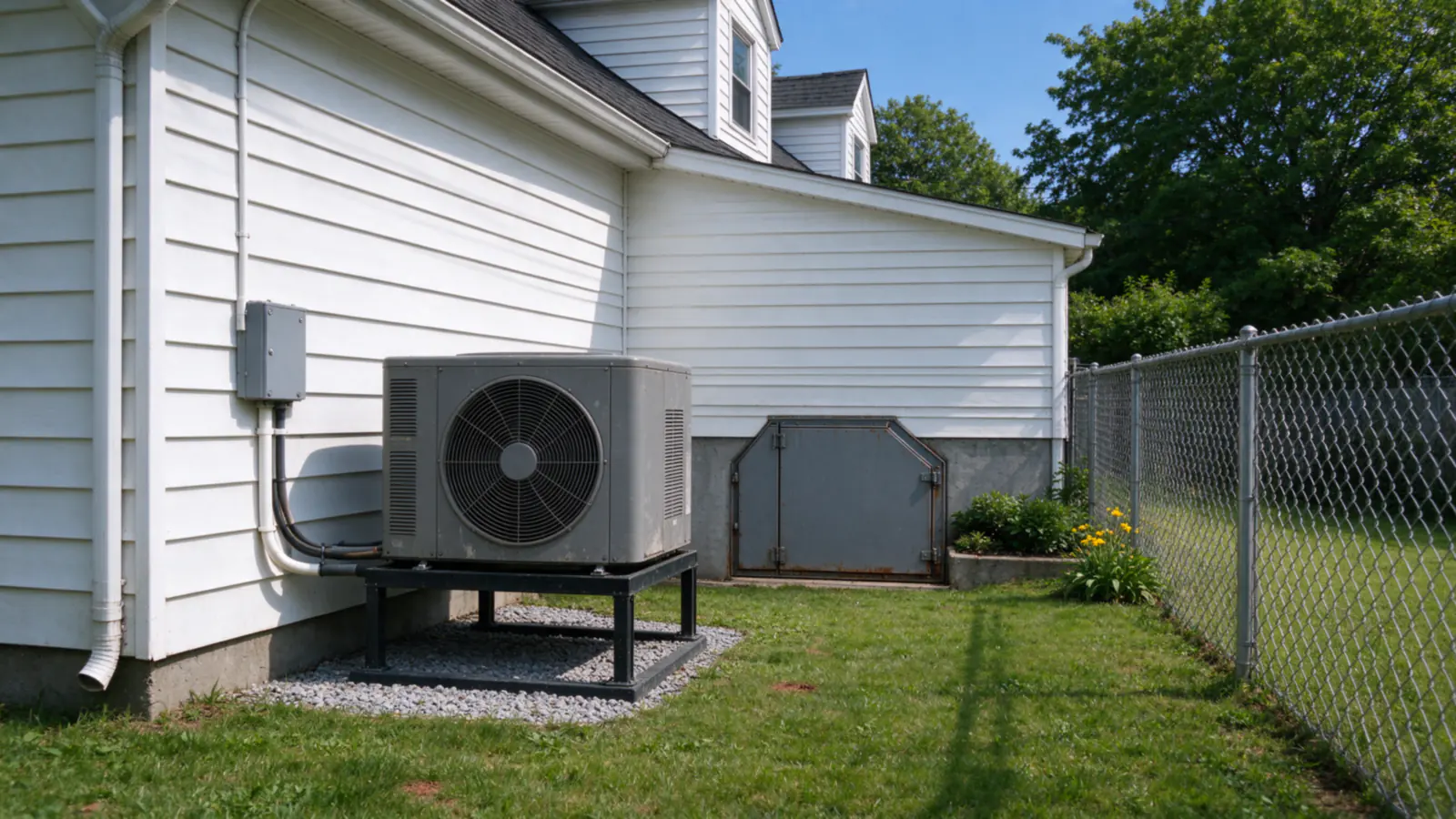
When the heat comes from baseboard, January’s electric bill carries the whole winter. For Clement Boston Heat Pumps, heat pump installation in Malden, MA mostly means swapping that resistance heat for a ducted system, the change that pays back fastest in this city.
About 23% of Malden homes heat with electricity, the largest group after gas and well above the state’s 19%. Many of those homes never had ducts at all.
Why Malden baseboard homes come first
A ducted heat pump moves heat from outside air instead of making it from wire. The bigger the share of resistance heat in a home, the bigger the change on the winter bill.
One unit of heat versus two or three
Resistance heaters are 100% efficient and no better: one kilowatt-hour in, one kilowatt-hour of heat out. A cold-climate heat pump delivers two to three times that on an ordinary January day, and less on the coldest nights, which the sizing accounts for.
That gap shows up on the first winter bill. Our baseboard conversion page shows the layouts.
National Grid’s winter rate
Malden is National Grid territory. Once your home heats with a heat pump, its whole electric use bills at a reduced distribution charge for the six winter months; rebate recipients are usually signed up without asking.
National Grid’s discount covers distribution only, not transmission, so it’s smaller than Eversource’s. The electric rate guide explains the difference.
Ducted or wall units
Wall-mounted ductless heads are the other common way to replace baseboard. We install ducted systems only: one quiet air handler, registers in each room, and no indoor units on the walls. Our ducted vs ductless guide weighs both honestly.
Malden’s buildings and where the ducts run
Malden’s housing is spread across detached houses, two-families and larger buildings, and 45% of it predates 1940.
| Building | Malden share | Where ducts usually run |
|---|---|---|
| Detached house | 23.8% | Basement trunk, kneewall or attic runs upstairs |
| Two-family | 21.5% | One system per unit, basement and attic |
| Three or four units | 12.1% | Per unit, with a closet air handler in the middle |
| Five or more units | 34.6% | Unit by unit, with the association |
Capes and small single-families
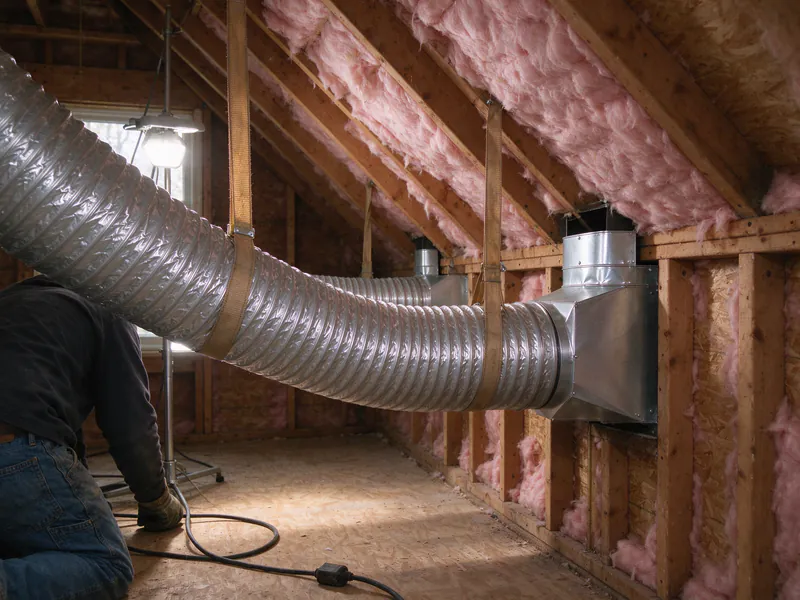
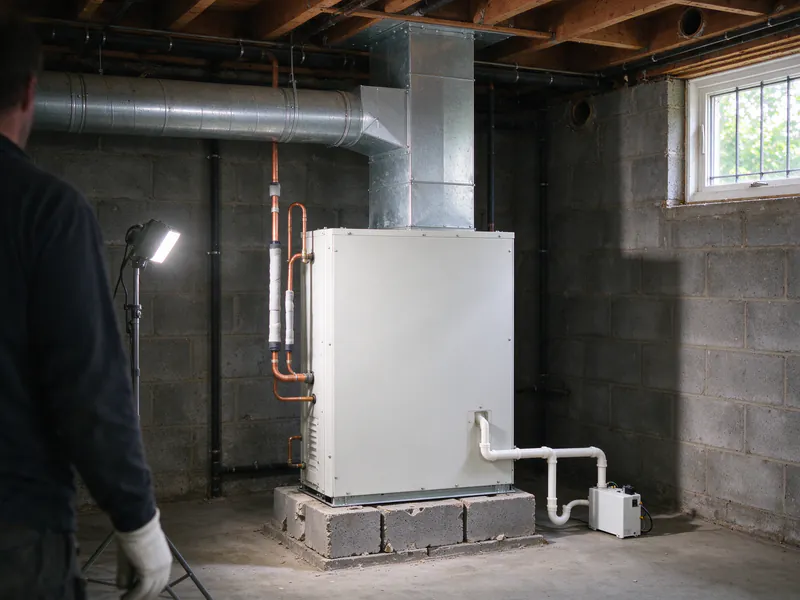
A Maplewood or Linden cape with an unfinished basement is the simplest baseboard conversion. The air handler sits in the basement, floor registers feed the first floor, and the half-story above takes short insulated runs through the kneewall space.
The kneewall runs sit outside the heated rooms, so we seal every joint and wrap them before the access panels close. See heat pump ductwork.
Two-families
In Edgeworth and around Malden Center, two-families get one system per floor. The first floor works from the basement; the second from the attic. Each owner keeps a separate thermostat and a separate electric bill. When only one owner is ready, the other floor keeps its baseboard until they decide, and nothing in the first system depends on the second.
Apartments and condos
In a larger building, the association decides where outdoor units can sit. Without an attic or basement to work from, the air handler goes in a closet and the branches run in a soffit along the hall.
Mid-century apartments with small rooms
In a post-war apartment or two-family, bedrooms are often small, with a heater under each window. Small rooms need small, carefully balanced airflows, so we size each register and branch to the room’s own heat loss rather than splitting the total evenly. That keeps the far bedroom from running cold while the living room overheats.
Gas, oil and Malden’s energy code
Gas heats about 62% of Malden homes and oil about 10%. Those owners have a decision baseboard owners don’t: whether to keep the old fuel as backup.
Gas backup is still allowed
Malden follows the stretch energy code, in place since January 1, 2017, and has not adopted the specialized code that neighboring Medford and Melrose use. A renovation here can still be designed with gas backup, subject to the stretch code’s paths.
A dual fuel system keeps the gas furnace or boiler for the coldest hours. Mass Save treats that as partial-home, with a smaller rebate than whole-home.
Oil homes
Heating oil is the priciest common fuel per delivered BTU, and a heat pump on National Grid’s winter rate undercuts it. After the conversion, the basement tank is removed; see whole-home heat pumps.
Sizing the system
Malden sits a few miles north of Boston, a little inland of the harbor. We run the room-by-room load at the local design temperature and pick equipment by its capacity at 5°F; our sizing guide shows the method.
The Malden permit and rebate picture
Malden’s Inspectional Services handles the electrical and sheet metal permits, and a gas permit when a line is capped. We confirm the city’s current filing route and fee for your address before work starts.
| Item | Malden |
|---|---|
| Utility for power and gas | National Grid |
| Code tier | Stretch since January 1, 2017 (Medford and Melrose went specialized) |
| How homes heat | Gas 61.5%, electric 23.3%, oil 9.8% |
| Homes built before 1940 | 45.1% |
| Winter heat pump rate | National Grid, distribution discount only |
Removing baseboard often frees panel capacity; our panel upgrade page covers when it doesn’t. The rebate guide lists every condition for the whole-home tier.
The order of work in a Malden house
At the home visit we calculate each room’s heat loss, trace duct routes through the basement, closets and kneewalls, size the panel with the baseboard load subtracted, and choose an outdoor spot clear of the driveway.
- The estimate in writing: the equipment and its output at 5°F, every new duct, the wiring, permits, which rebate applies, and the price.
- On site for roughly four to seven working days, since a baseboard home needs all-new ducts.
- Heaters removed when the new system is running, and the wall marks patched.
- Startup checks: nitrogen pressure test, vacuum below 500 microns, refrigerant weighed in for the line length, static pressure and airflow recorded, thermostat programmed.
Before signing with anyone, our quote checklist lists what an estimate should show. Melrose to the north and Medford to the west both follow the specialized code.