On a street that ends at the ocean, where the outdoor unit sits matters as much as how big it is. Clement Boston Heat Pumps handles heat pump installation in Swampscott, MA, from Phillips Beach and Beach Bluff to the streets around Vinnin Square.
Swampscott is a coastal community with old houses and a real share of propane and oil heat. All three facts shape a plan here.
Placing the outdoor unit near salt water
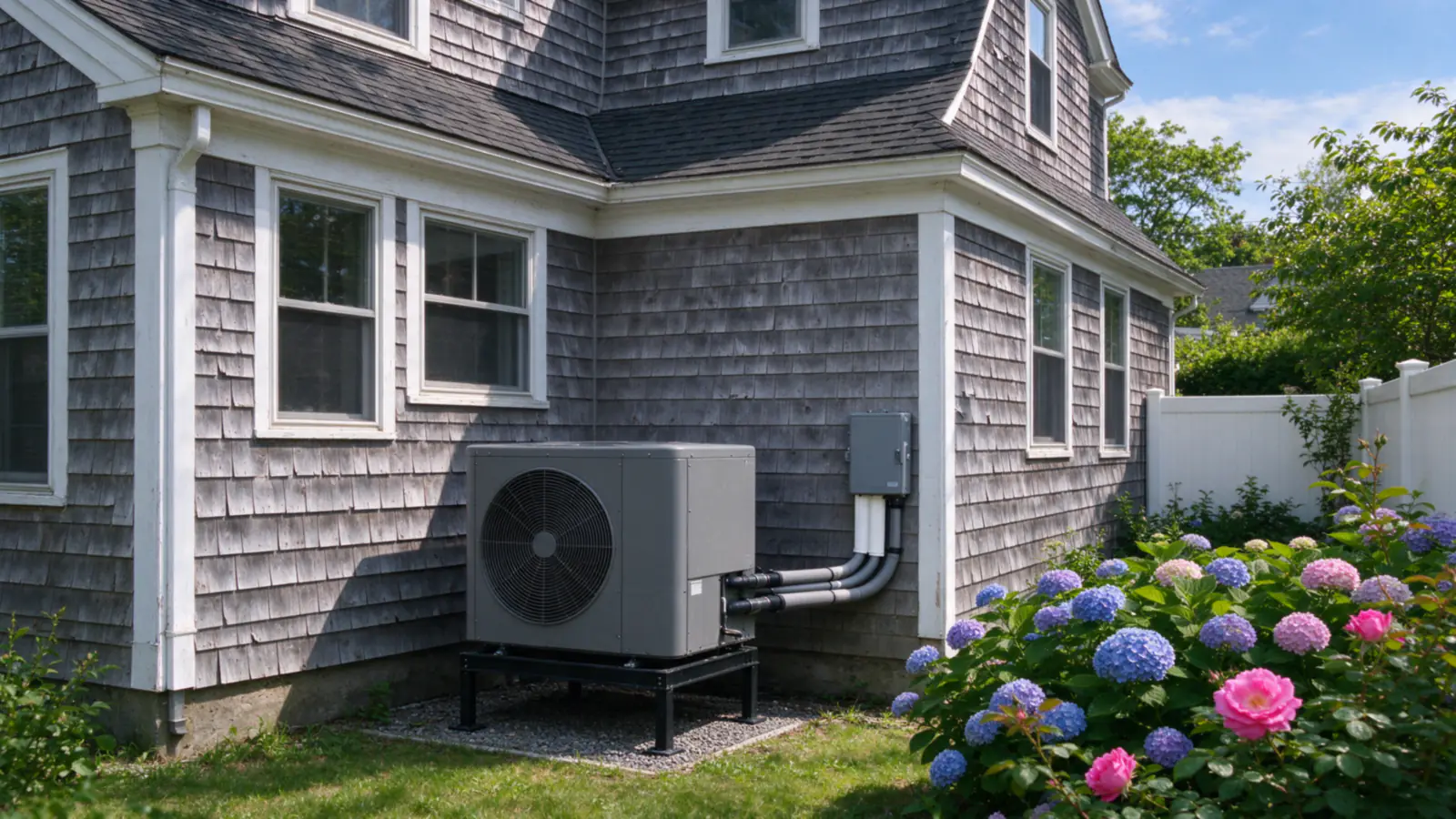
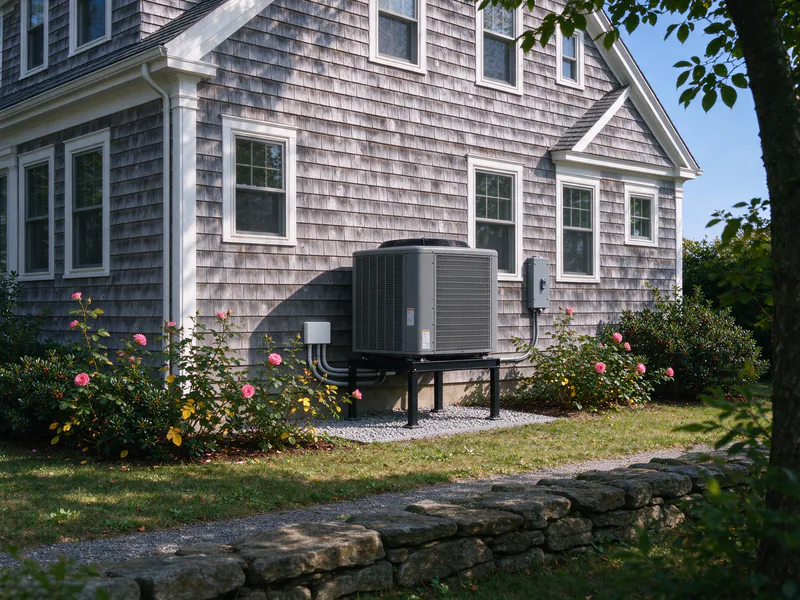
Salt air corrodes outdoor coils and fins faster than inland air, and Swampscott’s shoreline runs the length of town. The fix is placement: sheltered side, raised, rinsed by rain, out of direct spray.
No state rule sets heat pump distances from salt water, so we follow the maker’s guidance for coastal sites. Some makers offer a coastal-protection coating on the coil, which we price as an option when the house faces the water.
Wind, snow and flood zones
- Onshore wind drives spray and snow into an exposed unit, so we favor the lee side of the house or a spot screened by a wall or fence that still leaves the airflow clearance.
- Snow off the ocean is wet and heavy. A stand keeps the coil above drifts and lets defrost water drain; see the outdoor unit placement guide.
- Flood zones are checked per parcel. Where a FEMA zone applies, the unit sits above the required elevation.
Sound in tight side yards
Many Swampscott houses sit close together. Local noise limits are confirmed per address, and MassDEP’s statewide policy flags a source that raises a neighbor’s sound level more than 10 dB(A) above background. We compare the unit’s sound rating with the distance to the next house before choosing the spot.
Propane and oil homes gain the most
Gas heats about 61% of Swampscott homes. The rest burn oil, propane or electricity, and those owners pay the most per unit of heat. They also get Mass Save’s whole-home rebate through National Grid.
Propane
Propane costs more per delivered BTU than gas and only a little less than oil. A cold-climate heat pump on National Grid’s winter rate costs less to run. When the propane furnace or boiler goes, the supplier picks up its tank; we coordinate the timing so you’re never without heat.
Oil
About 17% of homes still burn oil. The burner comes out, the tank is removed, and the heat pump takes over. Accessible basement tank removal runs $600 to $1,500 plus the fire department’s permit; see oil to heat pump conversion and our heat pump vs oil guide.
Gas
Gas homes switch mainly for central cooling or because the boiler is near the end. National Grid sponsors Mass Save on the gas side too, so removing gas heat also qualifies for the whole-home rebate.
The houses: shingle, Victorian and two-family
About 41% of Swampscott homes date from before 1940, well above the state’s share. Half are detached houses and about one in six is a two-family, so many jobs start with radiators and no ducts.
Radiator houses
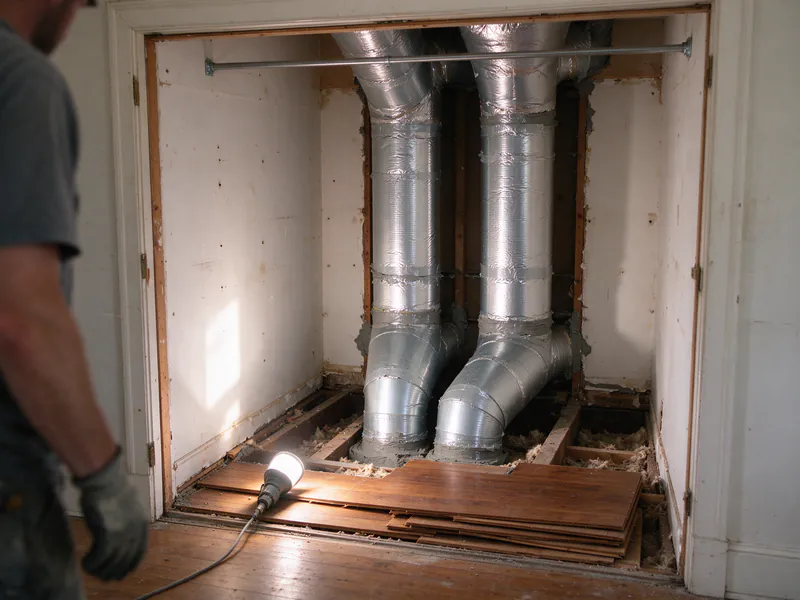
A boiler-to-heat-pump conversion here means a basement air handler for the first floor, an attic air handler for the bedrooms, and a stacked closet or chase between them. Our old houses guide covers plaster, balloon framing and where ducts can run.
Two-families
Each floor gets its own system sized for its own floor, because the top unit loses more heat through the roof. Two outdoor units on a small lot need careful placement for both sound and spray.
Condos and apartments
Close to one Swampscott home in five sits in a building of five or more units, and many of those heat with electric baseboard. A small ducted air handler in a closet or above a hall ceiling replaces the baseboard. The association decides where the outdoor unit can go; our condo guide covers that approval.
Renovations under the specialized code
Swampscott adopted the specialized stretch code effective July 1, 2024. It doesn’t touch a straight heating replacement, but a gut renovation or large addition has to follow an all-electric or pre-wired path. If you’re opening walls anyway, that is the cheapest time to run new ducts, so we plan the heat with the renovation drawings.
Sizing for a seaside winter
The ocean keeps Swampscott’s winter nights milder than towns a few miles inland, and Logan Airport’s 7°F design temperature is a fair starting point here. Wind is the bigger load: an exposed shingle house loses heat through every leaky window.
That is why we size room by room with a Manual J load calculation rather than by square footage. A north-facing bedroom over an open porch needs more air than an interior room the same size. Our sizing guide shows how the numbers come together.
Swampscott permits, National Grid and the rebate path
Swampscott’s building department takes permits through an online portal. National Grid supplies both electricity and gas, so every heating fuel has a Mass Save path.
| What | The Swampscott figure |
|---|---|
| Electric and gas company | National Grid |
| Energy code | Specialized stretch code since July 1, 2024 |
| Heating fuel | Gas 61%, oil 17%, electricity 15%, propane 7% |
| Homes built before 1940 | About 41% |
| Coastal community | Yes, North Shore region |
| Permits | Online portal: electrical, sheet metal, gas where touched |
The whole-home rebate is $2,650 per ton up to $8,500, becoming $2,350 per ton up to $7,500 from January 1, 2027. It requires cold-climate listed equipment, an installer in Mass Save’s network and proof of weatherization; the rebate guide lists the rest. The winter rate guide explains National Grid’s discount.
The order of work in a Swampscott house
The first visit adds a walk around the house to read the wind, the spray and the space to each neighbor before we size anything.
- Load calculation, room by room, plus duct or route checks, the panel, and the outdoor spot.
- Written estimate: equipment with its 5°F capacity, coastal options, ducts, electrical, permits, rebate path and price.
- Permits through the portal, then the install, three to nine working days depending on new ducts.
- Commissioning: nitrogen pressure test, vacuum below 500 microns, charge by weight, measured airflow, and the backup lockout recorded.
Our whole-home heat pump page explains the system itself. Marblehead next door buys power from its own light plant, while Lynn shares National Grid.