Lynn’s Inspectional Services Department aims to issue a sheet metal permit in two to three days, so paperwork rarely holds up a job here. At Clement Boston Heat Pumps, our heat pump installation in Lynn, MA puts the planning into the buildings instead: three-deckers, two-families and older houses near the shore.
About 17% of Lynn homes sit in three- or four-unit buildings, close to four times the national share. Most of them were built before 1940 for radiators, not ducts.
Permits move quickly; buildings take the planning
Because the permit side is predictable, a Lynn job’s schedule depends on the building: how many units share the heat, where the ducts can run and who owns the yard.
Lynn’s permit route
Lynn’s ISD takes applications and payments through an online portal. Its published goals are one to five days for an electrical permit and two to three days for sheet metal and mechanical permits.
A ducted heat pump job needs the electrical permit and the sheet metal permit for the ducts; a gas permit is added if a gas line gets capped. We file once the written estimate is signed, and the install date follows the permits. Our installation process guide lays out the steps.
Shared boilers in multi-family buildings
Many Lynn three-deckers still run all three floors off one boiler. Converting the whole building at once is a large job, so an owner can start with one floor, often the top one, where the roof makes winters coldest and summers hottest.
That floor’s radiators can stay connected as backup heat while the heat pump carries the load. Mass Save treats that as a partial-home system; see dual fuel heat pumps.
Three-deckers, floor by floor
Each floor of a three-decker loses heat differently, so each gets its own system and its own load calculation. The three-decker guide goes deeper.
| Floor | Where the air handler goes | Typical duct route |
|---|---|---|
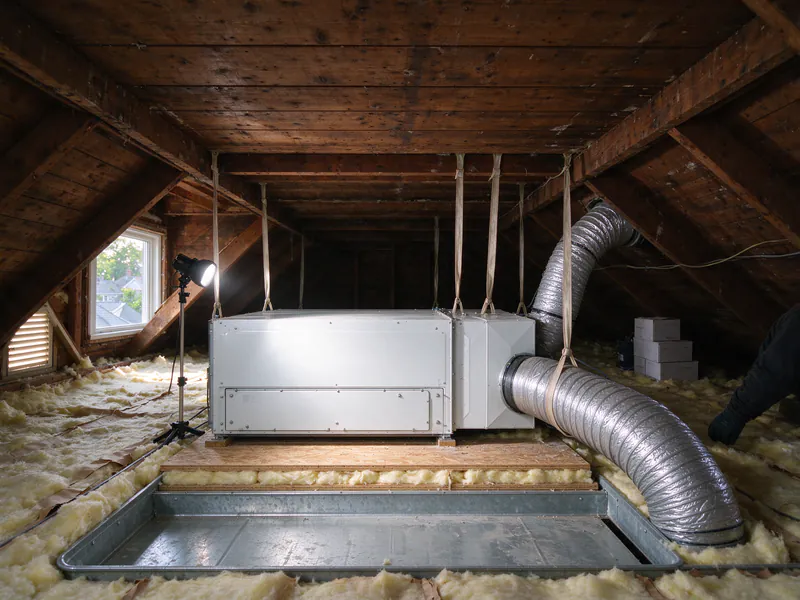
| Top | Attic, on a platform | Down through the ceilings |
| Middle | A closet, or a small-duct air handler | Short runs in a soffit or dropped hall ceiling |
| First | Basement | Up through floor registers |
The top floor
An attic air handler feeds each room from above through short insulated branches. Because the ducts sit in the attic, we seal and insulate them well; leaky attic ducts waste the heat before it reaches the room.
The middle floor
The middle unit has no attic or basement of its own. A closet air handler with runs above a dropped hallway ceiling, or a small-duct high-velocity system, reaches most rooms. See heat pump ductwork.
The first floor
The basement gives the first floor the easiest route: an air handler near the old boiler, a trunk along the joists and registers cut into the floor. If the boiler still serves the floors above, we plan the new equipment around it so both stay serviceable until the last unit converts.
Oil, gas and the shore
Gas heats about 57% of Lynn homes, electricity about 22% and oil about 17%. The fuel you’re leaving decides both the rebate path and how fast the savings show up.
Moving off oil
Oil costs more per unit of heat than a heat pump on National Grid’s winter rate. A single-family in Wyoma or Lynnhurst on an oil furnace with good ducts is a strong candidate for a full conversion, with the tank removed afterward. See oil to heat pump and oil tank removal.
Leaving a gas boiler
A gas boiler is cheaper to run than oil, so the case rests more on cooling, comfort and the boiler’s age. The heat pump vs boiler guide compares them, and the backup heat guide explains when radiators or strips take over.
Salt and wind near the water
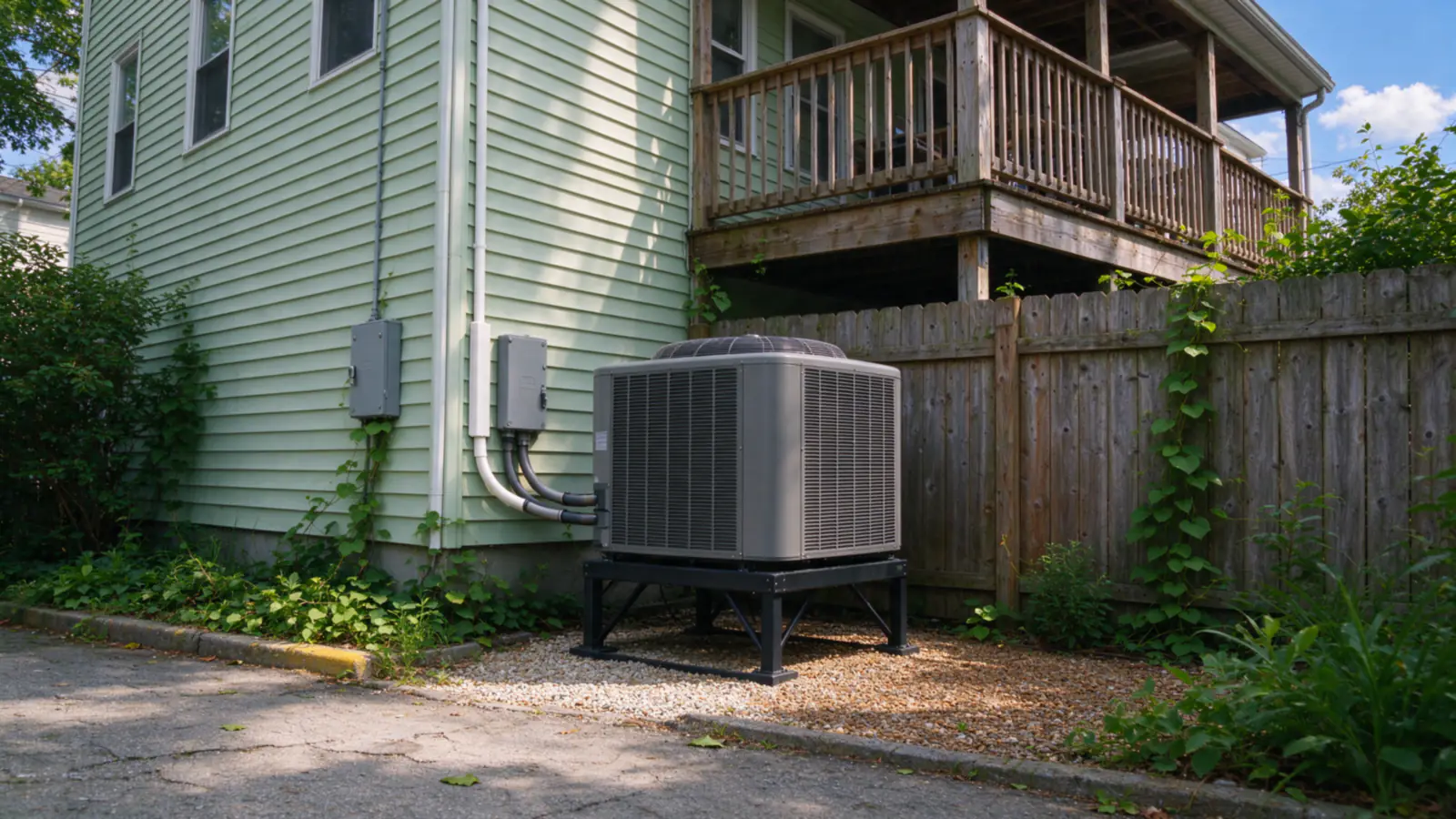
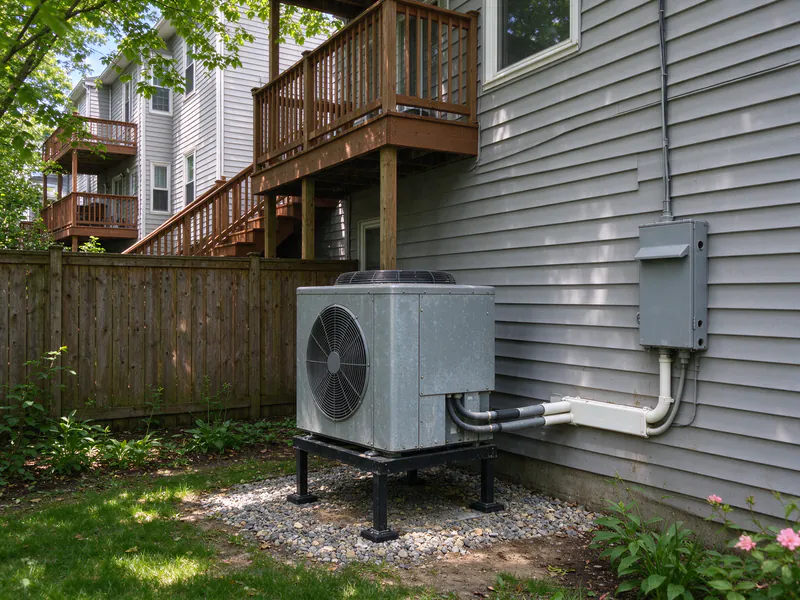
Lynn is a coastal community, and houses near Lynn Shore Drive, Red Rock Park and the Diamond District take onshore wind and salt. We keep units out of direct spray and set them where rain can rinse the coil, choosing a coastal-protected model where the maker offers one.
Single-family houses in Lynn
About 35% of Lynn homes are detached houses, from capes and ranches near Lynn Woods to older colonials in the Highlands. They follow the same method as the multi-family stock, with one system sized for the whole house.
Reusing the ducts you have
A house that already has a furnace and central air may be able to keep its ducts. We measure static pressure, check the return and look for leaks before deciding; undersized returns are a common reason a heat pump runs loud or short of heat. See whole-home heat pumps.
Sizing for a cold night
Lynn sits on the coast, so its coldest nights are milder than inland towns, but a load calculation still runs at the local design temperature. We size for the coldest expected night and choose equipment by its capacity at 5°F, not its nameplate rating.
Who pays what in Lynn: Mass Save and permits
National Grid supplies both electricity and gas in Lynn, so Mass Save rebates run through National Grid whichever fuel you’re replacing.
| What | The Lynn picture |
|---|---|
| Permit office | Lynn ISD, online portal |
| Sheet metal and mechanical permit goal | 2 to 3 days |
| Electrical permit goal | 1 to 5 days |
| Energy code | Stretch code since January 1, 2020; not the specialized code |
| Electric and gas utility | National Grid |
| Homes built before 1940 | 45.7% |
National Grid’s winter heat pump rate lowers distribution charges from November through April. Before you sign anything, our quote checklist lists what a written estimate should show.
From first call to commissioning in Lynn
The first visit measures each floor’s heat loss, checks the attic and basement for duct routes, looks at the panel and finds an outdoor spot out of the wind and clear of the porch stairs.
- Written estimate: equipment with capacity at 5°F, ducts, electrical, permits, rebate tier and price, floor by floor.
- Permits: filed through the ISD portal, typically issued within days.
- Install, usually three to eight working days per floor, depending on new ducts.
- Commissioning: nitrogen pressure test, vacuum below 500 microns, charge by weight, measured airflow, and the backup heat lockout set and recorded.
Saugus borders Lynn to the west, and Swampscott shares its shoreline to the east.