Salt spray off Revere Beach is hard on an outdoor coil, so a Revere heat pump plan starts with where the unit sits and how high. Clement Boston Heat Pumps builds that into every heat pump installation in Revere, MA, before we choose equipment.
Revere is one of the state’s coastal communities, with low ground in Beachmont, Point of Pines and along Revere Beach Boulevard. Mounting comes first; sizing and ducts follow.
Mounting for salt and water
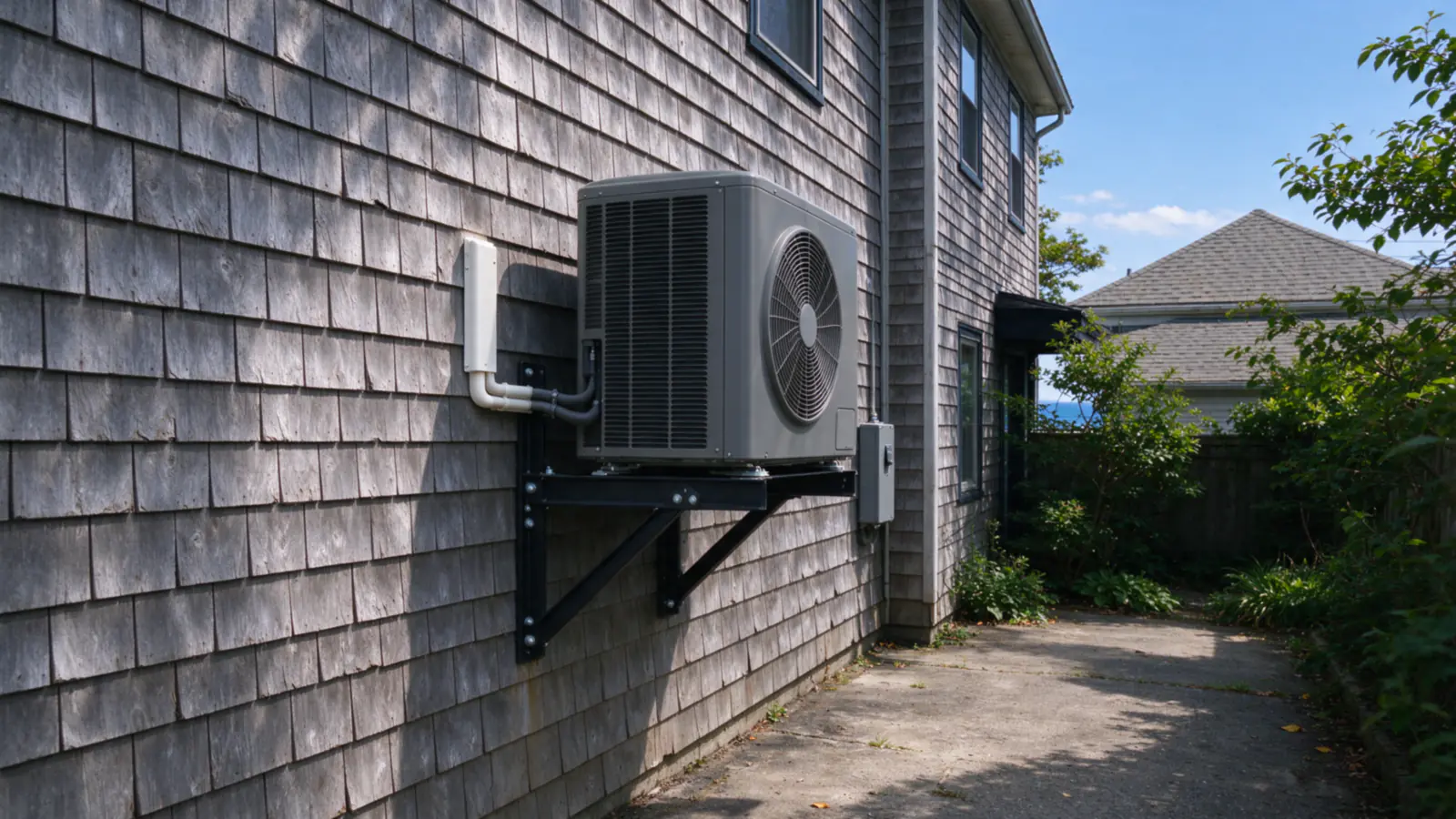
Massachusetts has no siting rule for heat pumps near salt water, so we follow the makers’ coastal guidance and the building code’s flood provisions. Both shape the mount before anything else.
Keeping salt off the coil
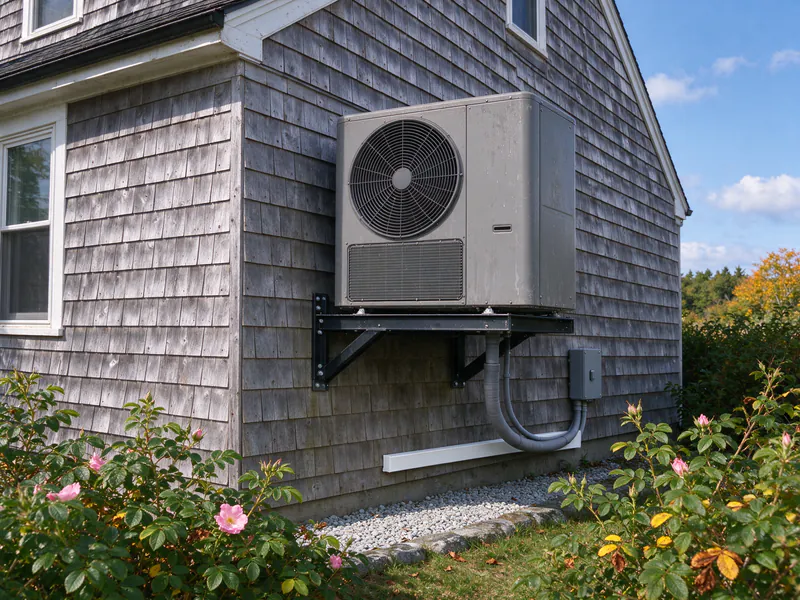
Onshore wind drives salt into an outdoor coil’s fins and fasteners. We put the unit on the side of the house away from the prevailing sea breeze, but in the open, where rain can wash it rather than under an eave that keeps salt on it.
Where the maker offers a coastal-protected version with treated coils and cabinet, we specify it for houses within sight of the water. Our maintenance page covers the yearly fresh-water rinse.
Flood zones
Low-lying Revere parcels may sit in a mapped flood zone, which is checked per address. Where a zone applies, the building code’s flood provisions call for equipment above the design flood level. A wall bracket or a raised, anchored platform does that, with the line set and power whip routed to match.
Snow and wind
Revere’s coastal location keeps winters milder than inland towns, but wind piles snow against walls. The mount clears the drift line as well as the flood line; see the snow stand guide.
Revere’s houses and how the ducts fit
Revere’s homes are newer on average than Boston’s inner suburbs: about a quarter predate 1940. A quarter are detached houses and nearly as many are two-families.
| Revere home type | Share | The ducted plan |
|---|---|---|
| Detached house | 25.4% | Reuse ducts, or basement plus attic air handlers |
| Two-family | 23.6% | One system per unit |
| Three or four units | 11.5% | Per unit, attic and basement first |
| Five or more units | 30.8% | Unit by unit, with the association |
Houses with a furnace and central air
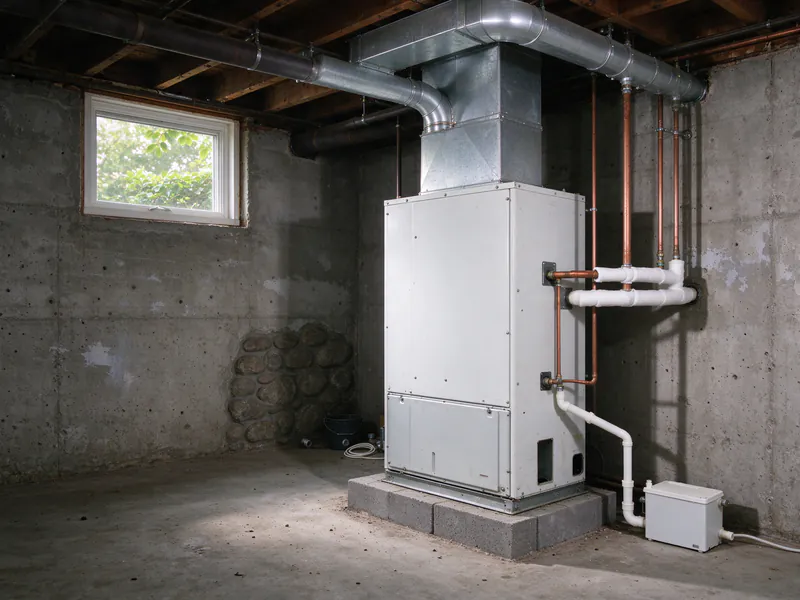
A Revere single-family with a gas furnace and aging central air is a straightforward conversion when the ducts test well. The heat pump replaces both, using the same ducts; see replacing AC with a heat pump and furnace to heat pump.
Two-families
In West Revere and around Revere Center, two-families get one system per floor, each with its own thermostat and electric bill. The first floor works from the basement, the second from the attic.
Each outdoor unit gets its own spot and its own mount, which on a narrow Revere lot often means one at the rear and one on a bracket along the side wall.
Condos along the beach
Where a condo near the beach heats with electricity, a ducted heat pump replaces it unit by unit. The association decides where outdoor units can sit; our condo guide lists what boards ask for.
Electric heat, gas and oil in Revere
Gas heats about 58% of Revere homes, electricity about 25% and oil about 13%. The fuel you’re leaving sets the rebate path and the savings.
Leaving electric resistance
Baseboard turns each kilowatt-hour into one unit of heat; a heat pump delivers two to three on a typical winter day. Mass Save counts electric resistance as an eligible system to replace. See baseboard to heat pump.
Leaving oil
Oil is the most expensive common fuel per unit of heat, and a heat pump on National Grid’s winter rate runs below it. The tank comes out after the conversion; see oil to heat pump.
Leaving gas, or keeping it as backup
Revere follows the stretch code and is not a fossil-fuel-free town, so a renovation can keep a gas furnace beside the heat pump. A whole-home system with the furnace removed earns the larger rebate.
When the power goes out
Coastal storms bring outages, and a heat pump needs electricity to run. So do a gas furnace’s blower and controls, so neither keeps heating through a blackout on its own.
Planning for outages
Our power outage guide explains what a generator or backup plan needs to carry a heat pump: the starting and running load of the outdoor unit, the air handler’s blower, and whether the backup strips stay off while on generator power.
Planning for the long run
Salt exposure is one of the factors that shortens equipment life near the water. The lifespan guide covers what wears out first and how maintenance stretches it, from coil rinsing to checking the mount’s fasteners for rust each spring.
Permits and the National Grid side in Revere
Revere Inspectional Services takes building permits through the CitizenServe portal linked from the city’s site. A ducted job needs electrical and sheet metal permits, plus gas where a line is capped.
| What | The Revere picture |
|---|---|
| Permit portal | CitizenServe |
| Electric and gas utility | National Grid |
| Energy code | Stretch code since January 1, 2012 |
| Coastal community | Yes, North Shore region |
| Heating fuel mix | Gas 57.6%, electricity 25.1%, oil 12.5% |
National Grid sponsors Mass Save rebates in Revere for electric and gas homes alike, and its seasonal heat pump rate trims winter distribution charges; see the electric rate guide.
Steps on a Revere install
The visit starts outside: wind direction, distance to the water, the flood map for your parcel and the drift line. Inside, we measure the heat loss room by room, test the ducts and check the panel.
- Written estimate: equipment and its 5°F capacity, the coastal mount, ducts, wiring, permits, rebate tier and price.
- Permits through CitizenServe, then three to seven working days on site.
- Mount first, so the line set and power reach the unit at its final height.
- Commissioning: pressure-tested lines, a deep vacuum, refrigerant charged by weight, airflow and static measured, controls programmed.
Winthrop shares Revere’s harbor exposure; Chelsea and Lynn are next door to the southwest and up the shore.