A ducted heat pump heats all winter and cools all summer, so it runs far more hours than the furnace or air conditioner it replaced. Clement Boston Heat Pumps handles heat pump maintenance in Boston and the towns around it: one visit a year that checks the parts that wear and compares the readings with the day the system started.
We price a visit per system, set before we come, with attic air handlers and second systems listed on their own. Anything that needs a part goes on the written report with its own price.
What a heat pump maintenance visit covers
Inside, the filter, blower, coil, drain and controls. Outside, the coil, clearance, stand and defrost. Then the readings that matter, compared with your commissioning sheet.
Inside, at the air handler
A loaded filter is the simplest way for a ducted heat pump to lose airflow. We replace it, check the blower wheel and the indoor coil for dust, and flush the condensate trap and line. Slime in the trap is what trips the float switch and shuts the system off on a humid July day.
Outside, at the unit
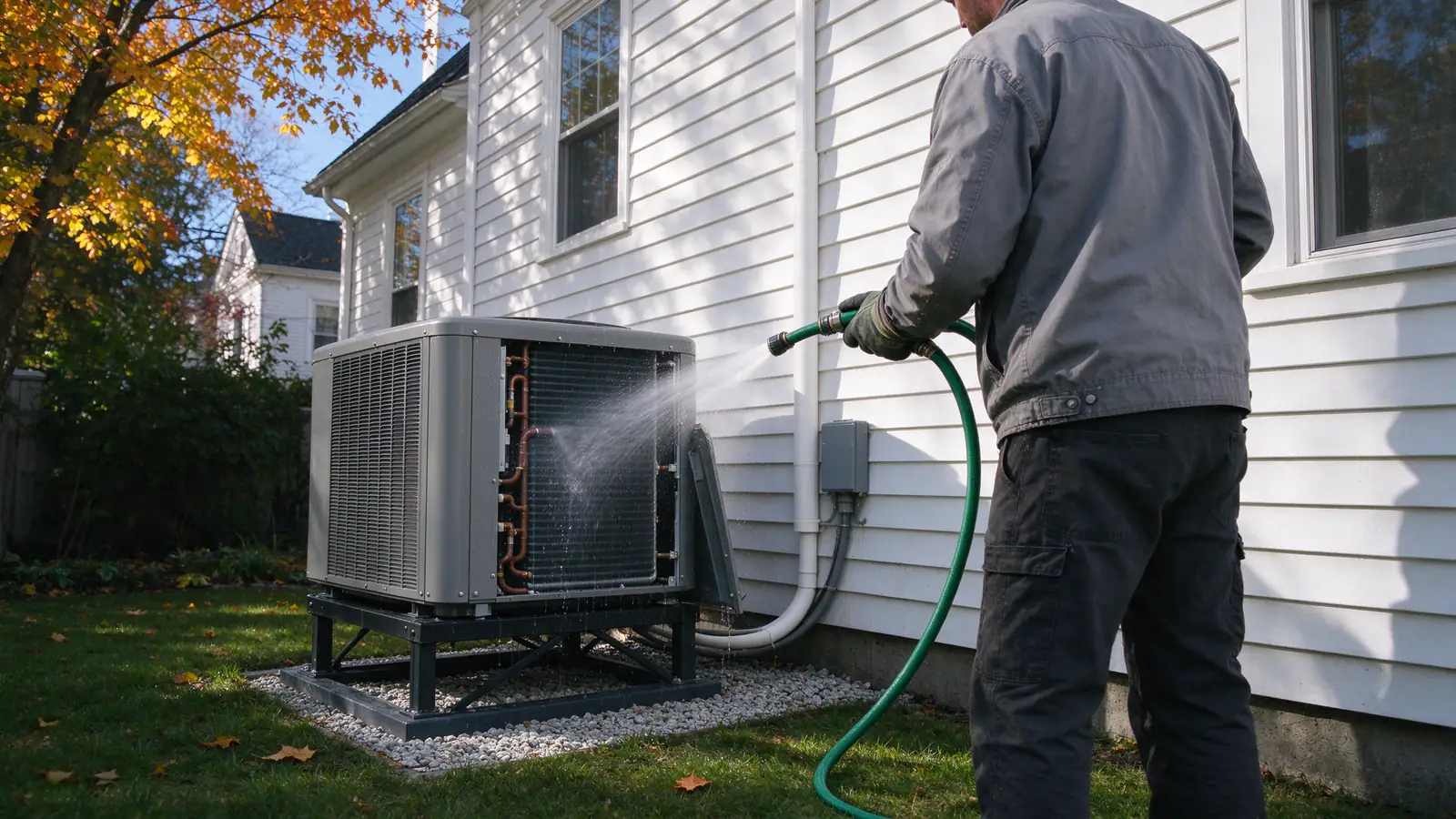
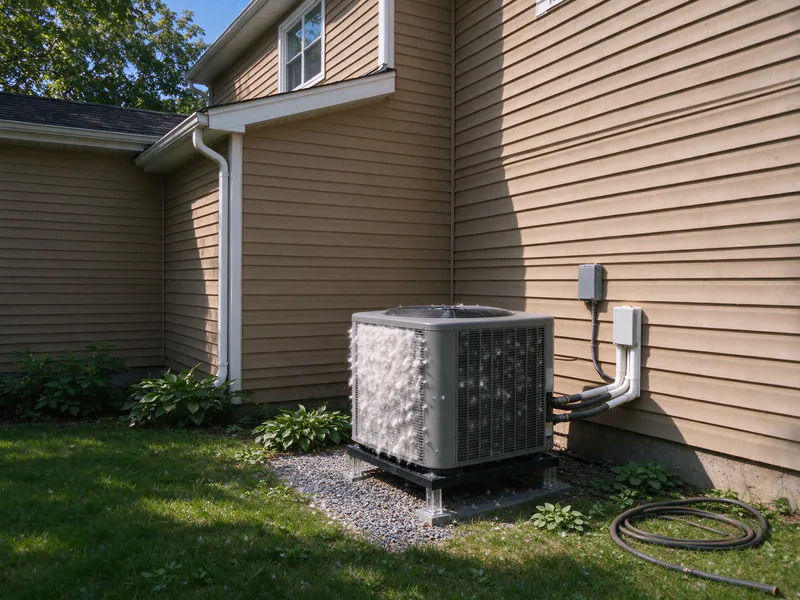
The outdoor coil collects leaves, cottonwood and road grit. We rinse it from the inside out at low pressure, straighten bent fins, and check that the stand is level and high enough to clear drifting snow. The snow stand guide covers heights.
The defrost cycle
In heating, the outdoor coil frosts in cold, damp air, and the unit reverses for a few minutes to melt it. We force a defrost and watch it start, clear the coil and end. Light frost and a puff of steam are normal; ice that grows into a block is not.
Why we measure instead of topping off
A heat pump is a sealed system. If it’s low on refrigerant, it has a leak, and adding refrigerant without finding it only delays the next call.
We read suction and liquid pressures and line temperatures, work out superheat and subcooling, and compare them with the maker’s chart. In range, nothing goes in or out. Out of range, the report says so, and finding the leak becomes a heat pump repair with its own price.
Airflow against the commissioning sheet
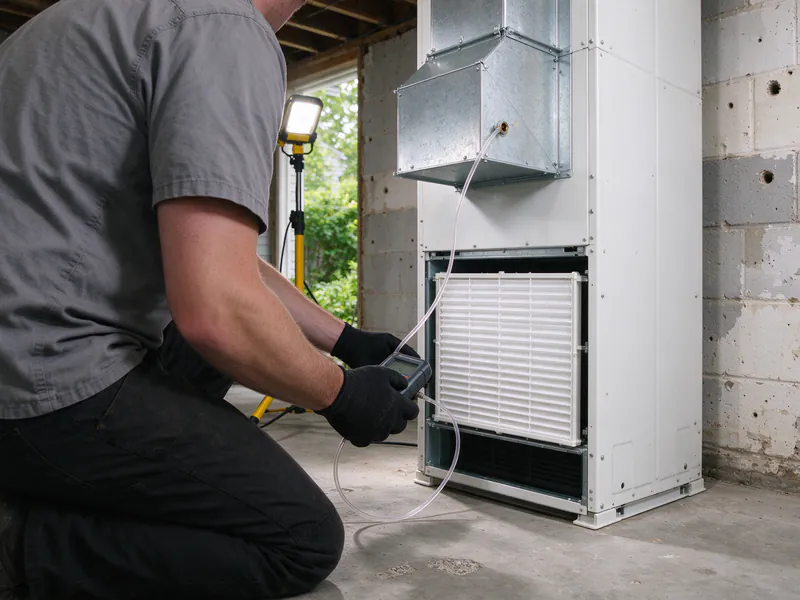
Every system we install leaves with its static pressure and airflow on record. At each maintenance visit we measure again. A rise in static points to the filter, a dirty coil or a closed damper, and it’s the early warning that the blower is working too hard. Our ductwork page covers the fixes when the ducts themselves are the problem.
Systems installed by others
We maintain ducted heat pumps someone else installed too. With no commissioning sheet, the first visit becomes the baseline we compare against next year.
When to schedule it in Boston
Once a year is enough for most ducted systems. Early fall works well: the summer debris comes off the coil and the defrost is tested before the first cold snap.
- Near the water. In East Boston, South Boston, Winthrop, Revere or along the Quincy shore, salt film builds on the outdoor coil. Makers of coastal units recommend a fresh-water rinse, so we add one in spring.
- Under trees. Cottonwood in June and leaves in October mat the coil, and a second rinse is worth it.
- Attic air handlers. The secondary pan and float switch matter most there, because a leak shows up in the ceiling below. See attic air handlers.
- Pets and renovation dust. Both load filters fast; check them monthly.
What the visit finds and what happens next
Most findings are fixed during the visit: a filter, a flushed drain, a rinsed coil. Anything that needs a part is written up with its reading and a price.
| Reading | What it tells us | What happens |
|---|---|---|
| Static pressure up since startup | Filter, coil or damper restricting air | Cleaned during the visit, or a duct fix priced |
| Superheat or subcooling out of range | A leak or a metering problem | Repair priced on the report |
| Capacitor below its rating | A part starting to fail | Replaced now or rechecked next year, depending on the reading |
| Aux heat running above the lockout | A setting or sensor problem | Lockout reset and recorded |
What the written report gives you
You leave the visit with numbers, not a checklist of ticks. Each reading sits beside last year’s, so a slow drift shows up before it becomes a no-heat call in January.
- Static pressure and airflow, next to the commissioning figures or last year’s baseline.
- Superheat and subcooling, with the outdoor temperature they were read at.
- Capacitor and amp readings for the compressor and the outdoor fan.
- Filter size and type, so you can buy the right one between visits.
- Lockout and thermostat settings, as found and as left.
- Anything that needs a part, with its own price, so you decide what happens next.
Dual-fuel systems
On a dual-fuel heat pump, the visit covers the heat pump, the coil on the furnace and the switchover setting. The furnace burner itself needs its own yearly service from a heating contractor.
What you can do between visits
Change the filter, keep the outdoor unit clear, and leave the settings alone. Those three cover most of what goes wrong between visits.
Check the filter monthly in deep winter and midsummer. Keep snow, leaves and shrubs clear around the outdoor unit, and never chip ice off the coil. If aux heat shows on a mild day, call rather than turning the thermostat up; our aux heat guide explains why.
Maintenance and how long a system lasts
Maintenance doesn’t guarantee a lifespan, but a clean coil, a clean filter and a correct charge keep the compressor out of the conditions that wear it fastest. Keep the reports: some manufacturer warranties ask for maintenance records. The lifespan guide covers what shortens a system’s life, and heat pump replacement covers the end of it.