When an oil furnace in Walpole gives out, the ductwork it leaves behind is often the most valuable thing in the basement. Those ducts can carry heat pump air, which keeps an oil switch to a few working days.
On every visit about heat pump installation in Walpole, MA, Clement Boston Heat Pumps measures whether your ducts are up to it before anything else. About 31% of Walpole homes still burn oil, well above the state’s 22%.
Why the old furnace’s ducts matter
Reusing ducts is what separates a few days of work from a week or more. But a duct system set up for an oil furnace isn’t automatically right for a heat pump.
What we measure
A heat pump delivers air at a lower temperature than an oil furnace, so it moves more of it. We measure static pressure, check return size against the new airflow, and look for leaks in the basement and attic.
The numbers decide whether the ducts stay as they are, get a second return, or need a section replaced.
The common fix
An undersized return is the usual problem. Adding a return in an upstairs hall or enlarging the main one brings static pressure down, quiets the system and lets it deliver full capacity. See heat pump ductwork.
Furnace, boiler or both: Walpole’s oil homes
Not every oil home in Walpole has ducts. Many have a boiler and baseboard radiators, and those need a different plan.
| What’s in the basement | The usual heat pump plan |
|---|---|
| Oil furnace and ducts | Air handler on the existing plenum after measuring |
| Oil furnace plus attic AC | Two heat pumps, one per floor, on the ducts each floor has |
| Oil boiler and baseboard | Attic and basement air handlers with new ducts, or small-duct |
In a Walpole Center house old enough to predate ducts, closets that stack between floors often carry the trunk, and the attic handles the rest.
For boiler homes, our boiler conversion page covers routing. For furnace homes, oil to heat pump conversion walks through the job.
Getting the panel ready
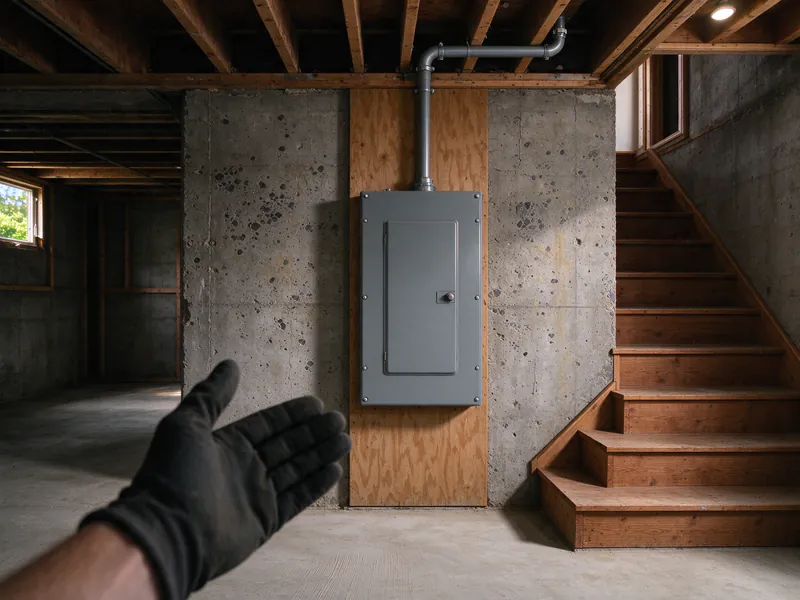
Older Walpole houses can have 100-amp electrical service. A whole-house heat pump with backup heat strips can be more than that service carries alongside everything else.
When a 100-amp service is enough
A variable-speed heat pump’s running draw is modest. If the backup strips are sized small, or the house keeps another heat source, the existing service can work. We run a load calculation on the panel before deciding.
When it isn’t
Our typical range for a 200-amp service upgrade is $3,000 to $6,500, with the utility’s own work separate. We schedule it ahead of the heat pump so you’re never without heat. See panel upgrades for heat pumps.
What Eversource territory adds
Walpole gets its electricity from Eversource and its gas from Eversource Gas. For an oil home, that means Mass Save’s rebate comes through Eversource as the electric sponsor.
The whole-home rebate is $2,650 a ton up to $8,500 for installs through 2026, then $2,350 a ton up to $7,500 from January 1, 2027. It needs cold-climate listed equipment, an installer in Mass Save’s network, the oil system removed or disconnected, and proof of weatherization. Our rebate guide lists each condition.
The winter rate
Once the heat pump is running, Eversource’s winter heat pump rate lowers distribution and transmission charges on every household kilowatt-hour from November through April.
Where the outdoor unit sits
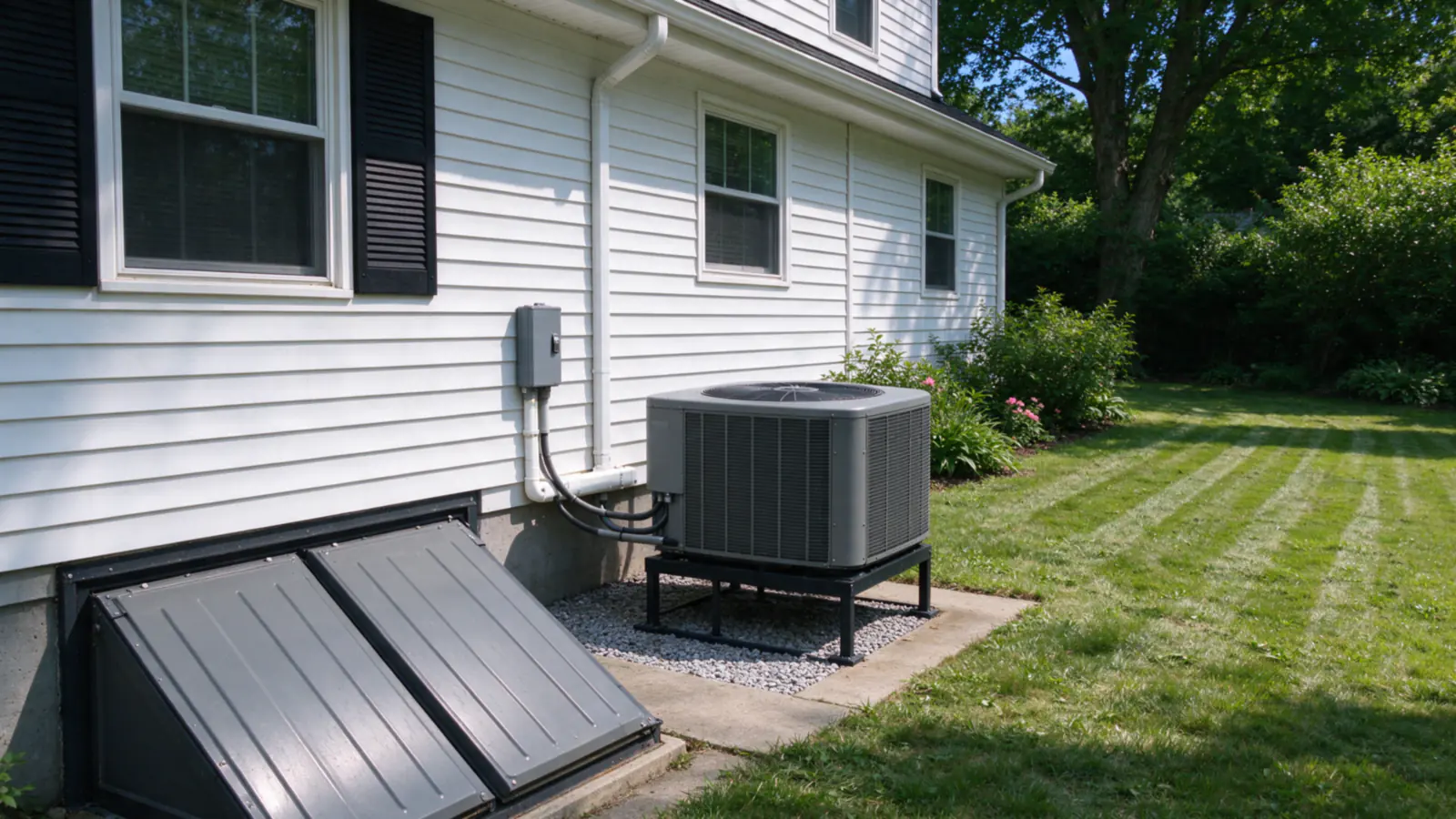
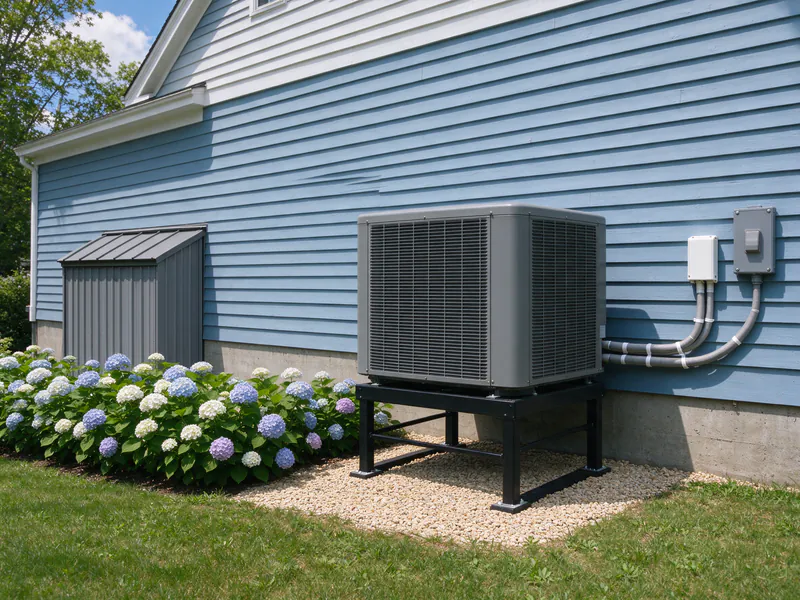
A Walpole lot usually has room, so the question is which side of the house. We look for a spot clear of roof drip lines, out of the prevailing wind, and away from bedroom windows on both sides of the line.
Snow and stands
The unit sits on a stand that keeps the coil above drifting snow and lets defrost water drain away. A short line set to the air handler keeps the refrigerant charge simple. Our placement guide covers stand heights.
Sound at the lot line
Walpole’s noise rules are confirmed per address. The state’s yardstick, from MassDEP, is whether the unit lifts sound at the neighbor’s house more than 10 dB(A) over the quiet background. We check the rated sound level of the unit at its low-noise setting against how far it sits from the line.
The tank in the basement
The oil tank comes out after the heat pump is carrying the house, not before. That way you’re never left without heat if a delivery or inspection slips.
Our typical range for an accessible basement tank is $600 to $1,500, including pumping out what’s left and the fire department’s removal permit. A buried tank is priced by what it takes to reach it, and any soil testing is scoped separately. See oil tank removal.
Permits and code in Walpole
Walpole’s building department takes permits through an online OpenGov portal. The town runs the stretch code and hasn’t adopted the specialized code.
| What | The Walpole answer |
|---|---|
| Permit route | Walpole Building Department, OpenGov portal |
| Energy code | Stretch code since January 1, 2021 |
| Electric utility | Eversource |
| Gas utility | Eversource Gas |
| Rebate program | Mass Save, Eversource as electric sponsor |
| Typical permits | Electrical, sheet metal, and gas where a line is capped |
Local noise rules and fees are confirmed per address when we file. The cost guide sets out how each part of the price is built.
The visit, the estimate and the install days
Walpole sits inland, where winter nights run colder than at Logan. The first visit starts with a room-by-room load calculation at your town’s design temperature.
- First visit: load calculation, duct static and leakage, panel, tank access and an outdoor spot on a stand above the snow line.
- Written estimate: equipment with its capacity at 5°F, duct changes, electrical, tank, permits, rebate path and price, line by line.
- Install: four to six working days on existing ducts, including the panel and tank.
- Before we leave: the line set holds a nitrogen test, the system is pulled under 500 microns and charged to the scale, airflow and static are read at the air handler, and the backup heat lockout is set and written on the start-up sheet.
Sharon shares Walpole’s Eversource service, while Norwood runs its own light plant and rebate.