Who pays toward a heat pump in Norwood? The answer turns on the fuel in your basement, because the town buys its power from its own light department rather than a Mass Save sponsor. At Clement Boston Heat Pumps, every heat pump installation in Norwood, MA starts by settling that question.
From there the plan follows the building: a cape on baseboard, a two-family on one boiler, or a condo off Route 1.
Norwood Light or Mass Save: it depends on your fuel
Your heating fuel today picks the rebate. Oil, propane and electric homes have Norwood Light’s program. Gas homes can use Mass Save’s gas side, because National Grid supplies Norwood’s gas.
Oil, propane and electric heat
Mass Save’s electric-side rebates need a sponsoring utility, and Norwood Light isn’t one. The light department offers its own rebates for heating and cooling upgrades, but the heat pump amounts aren’t printed on its official page. Check with Norwood Light for the current figure; we confirm it before ordering equipment.
Natural gas heat
If gas heats the house, National Grid is your Mass Save sponsor. Mass Save’s top tier asks for four things: equipment on the cold-climate list, a contractor in its installer network (ours are), the old furnace or boiler taken out, and weatherization done first. The rebate guide walks through each one.
Capes, two-families and condos
Fewer than half of Norwood’s homes are detached houses. About one in five sits in a two- to four-unit building and about a quarter in buildings of five or more, so the building often shapes the plan more than the equipment does.
Capes and ranches
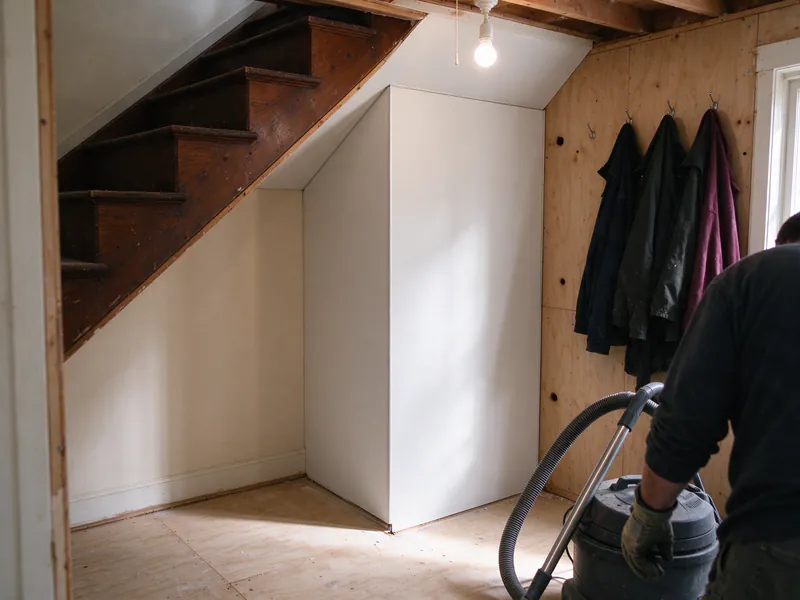
Postwar capes in South Norwood and around the Ellis neighborhood often have a basement, a short attic and knee walls upstairs. A basement air handler feeds the first floor through floor registers and the dormer rooms through a closet riser. See heat pump ductwork.
Two-families
One boiler often heats both floors through a single loop. We split it: a separate ducted system per floor, sized to that floor’s heat loss, with its own thermostat and outdoor unit, so each household sets its own comfort.
Condos
In larger buildings near Windsor Gardens and along Route 1, the condo association decides where outdoor units go and how line sets run. We bring the equipment spec, sound rating and a placement sketch to that discussion; see condo heat pump replacement.
Sizing for the airport’s cold nights
Norwood has its own weather record. The thermometer at Norwood Memorial Airport drops to 0°F or lower on roughly five nights in an average winter, while Logan sees that less than once. We size for those nights instead of borrowing a Boston number.
The heat loss is worked out for every room at Norwood’s design temperature, and the equipment is chosen by what it delivers at 5°F, not the capacity printed on the box. A unit that holds up there keeps the backup strips, which run at baseboard cost, mostly idle. Our sizing guide and backup heat guide explain both steps.
Electric heat and gas heat in Norwood
Gas heats about 62% of Norwood homes, oil about 17% and electricity about 17%. Each group has a different reason to switch, and a different rebate.
- Electric baseboard homes see the biggest change on the bill: baseboard turns each kilowatt-hour into one unit of heat, and a heat pump on a typical winter day delivers two or three. See baseboard heat to heat pump.
- Oil homes drop the costliest common fuel and the tank with it.
- Gas homes come to a heat pump for summer cooling or because the furnace is tired, and the existing ducts can often stay; see replacing a furnace.
The panel
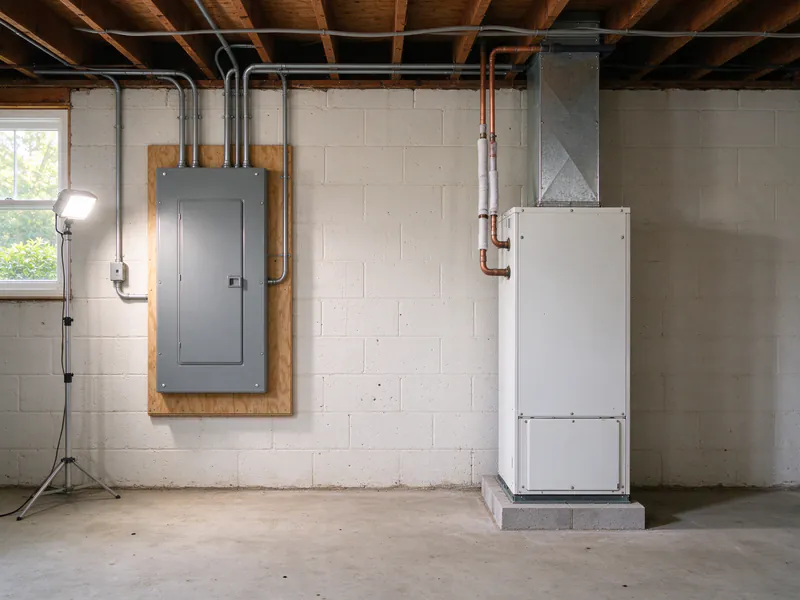
Many older capes still run on 100-amp service, already loaded with baseboard circuits. Removing the baseboard frees capacity, so a load calculation on the panel comes before any upgrade. When one is needed, it’s a separate line on the estimate; see electrical panel upgrades.
Where the outdoor unit goes on a Norwood lot
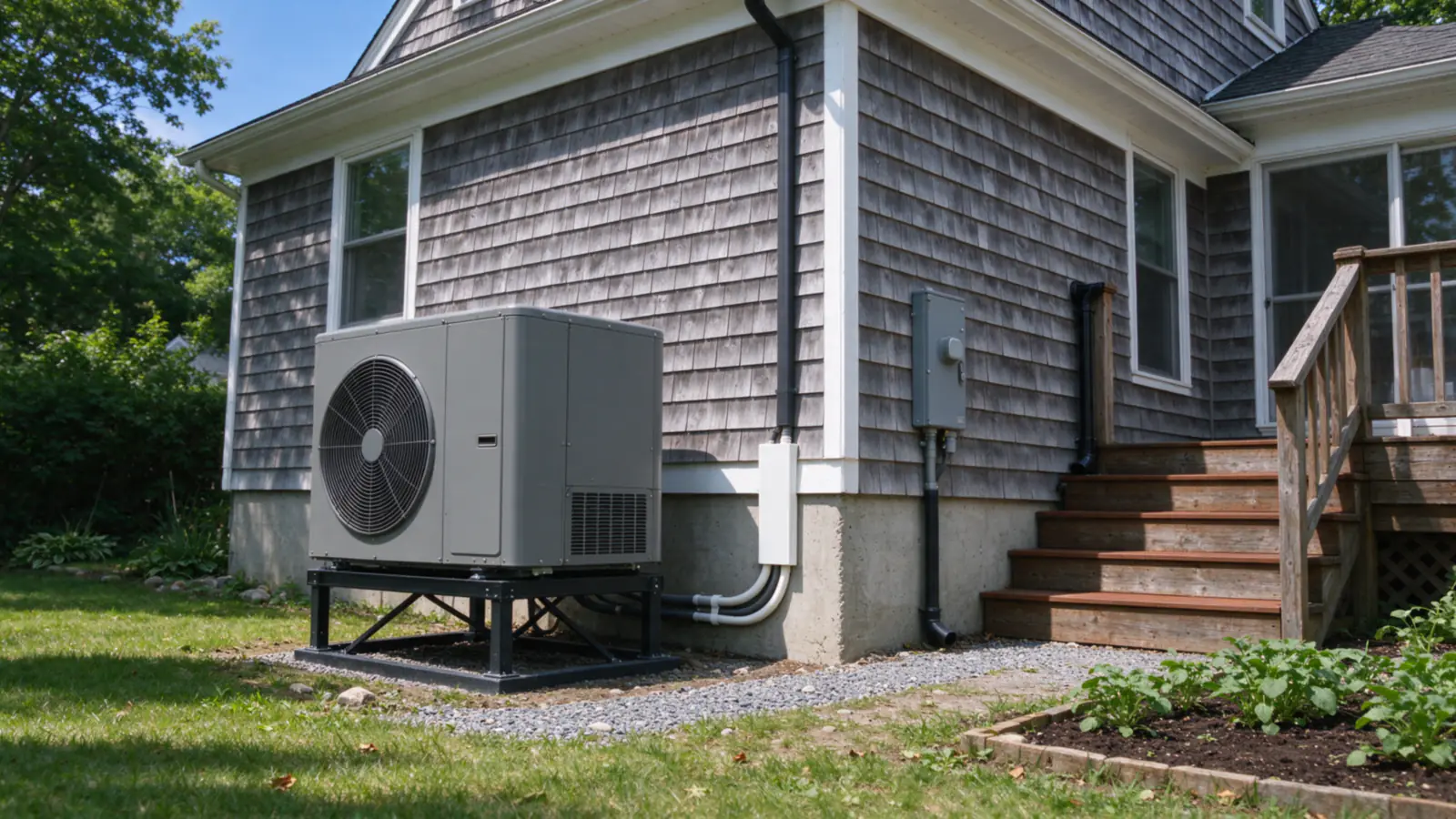
Norwood’s lots are mostly modest, and in two-families the yard is shared. The outdoor unit needs a level stand, a clear path for snow and meltwater, and a spot the neighbors won’t hear at night.
Snow and drainage
A heat pump defrosts several times on a cold, damp day and sheds water as it does. We set it on a stand high enough to clear drifting snow, away from the drip line of the roof, so ice doesn’t build under the coil. See the outdoor unit placement guide.
Noise and setbacks
Norwood’s local sound and setback rules are confirmed per address before we pick a spot. Statewide, MassDEP treats a source that raises sound more than 10 dB(A) above background at a neighbor’s home as a violation, so we compare the unit’s rating with the distance to the line.
Rebates and permits, Norwood edition
Norwood’s building department handles the permits. Which ones a job needs is confirmed per address; an electrical permit is standard, with ductwork and building permits added when the scope calls for them.
| What | The Norwood figure |
|---|---|
| Electric utility | Norwood Light (municipal) |
| Gas utility | National Grid |
| Rebate for oil, propane or electric homes | Norwood Light’s program, amount confirmed with Norwood Light |
| Rebate for gas homes | Mass Save, gas side |
| Energy code | Specialized stretch code since July 1, 2024 |
| Heating fuel | Gas 62.0%, oil 17.3%, electricity 17.3% |
When the existing ducts can be reused, Clement’s typical range for a whole-home system is $15,000 to $28,000 and up, before any rebate. The cost guide lists the other ranges and what moves them.
What happens, step by step, in Norwood
The first visit answers the rebate question and the duct question together, so the estimate shows the right program as well as the right equipment.
- Visit: load calculation, duct static pressure and return size, panel capacity and the outdoor spot.
- Rebate check: Norwood Light’s current terms, or Mass Save’s gas-side conditions.
- Permits, then the install: two to seven working days, depending on new ducts and the panel.
- Start-up: the refrigerant lines hold nitrogen pressure, pull down below 500 microns, and get charged by weight; then we measure airflow and set the controls.
Next door, Westwood, Canton and Walpole each have their own utility and rebate route.