Westwood sits right on Route 128, yet nearly four homes in ten here still heat with oil or propane delivered by truck. That’s well above the statewide figure, and those households pay the most for every degree of warmth.
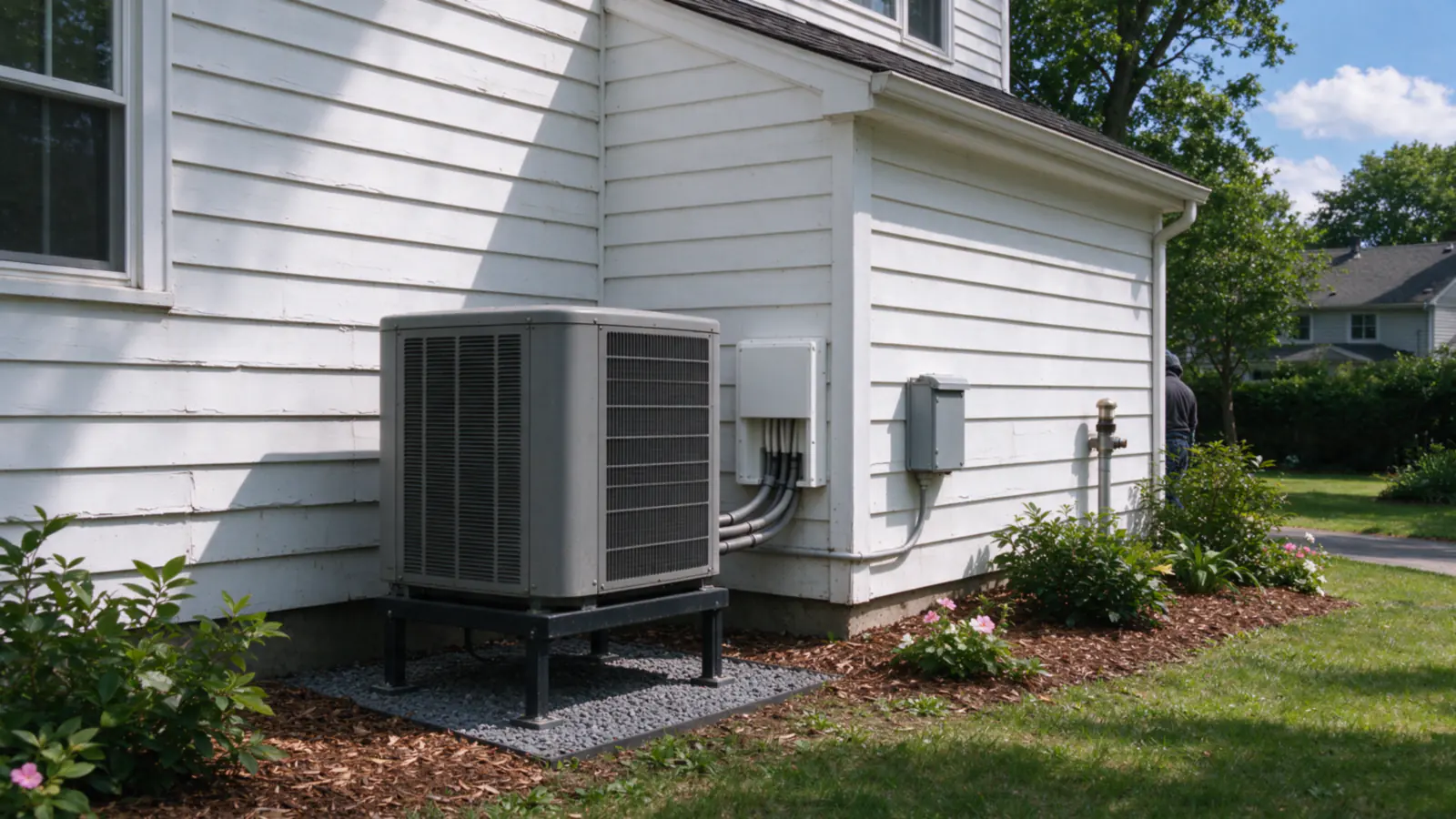
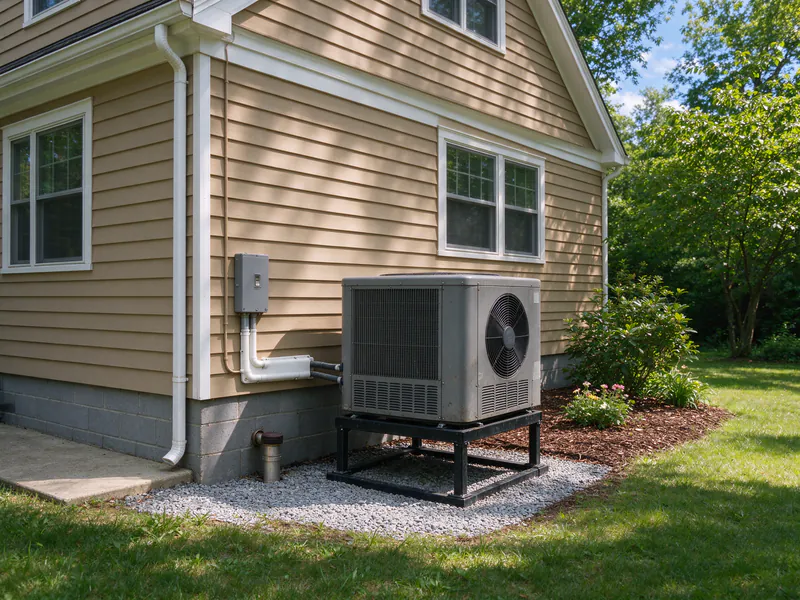
For heat pump installation in Westwood, MA, Clement Boston Heat Pumps starts with exactly those houses: taking out the oil or propane burner, putting a cold-climate ducted system in its place, hauling the tank away, and lining up Mass Save money through Eversource.
Oil and propane: ending the deliveries
Roughly 32% of Westwood households burn oil and another 7% burn propane. Both are fuels Mass Save will pay to replace, and both cost more per unit of delivered heat than a heat pump running on Eversource’s winter pricing.
Where the savings come from
Per million BTU delivered, an oil burner is the priciest way to heat short of resistance baseboard, with propane not far behind. A cold-climate heat pump on Eversource’s seasonal pricing lands under both, and nobody has to watch the tank gauge again. Heat pump vs oil walks through the arithmetic.
What happens to the tank
Pulling an accessible basement oil tank falls inside our typical $600 to $1,500 range, with the fire department’s removal permit, confirmed per address, added on. A buried tank gets priced once we’ve seen it. Propane tanks normally belong to the supplier, who collects one when no appliance still draws from it; see oil tank removal.
What the rebate asks for
Mass Save’s whole-home tier is worth $2,650 per ton, capped at $8,500, for systems installed by December 31, 2026; after that it’s $2,350 per ton with a $7,500 cap. The units must carry the cold-climate listing, the burner has to be removed or disconnected, and you’ll need proof the house has been weatherized. The rebate guide covers each step.
Furnace houses, boiler houses and condos
Close to 79% of Westwood homes are single detached houses, and roughly one in six went up before 1940. What’s in the basement, a furnace or a boiler, settles most of the plan.
An oil furnace that also runs the central air
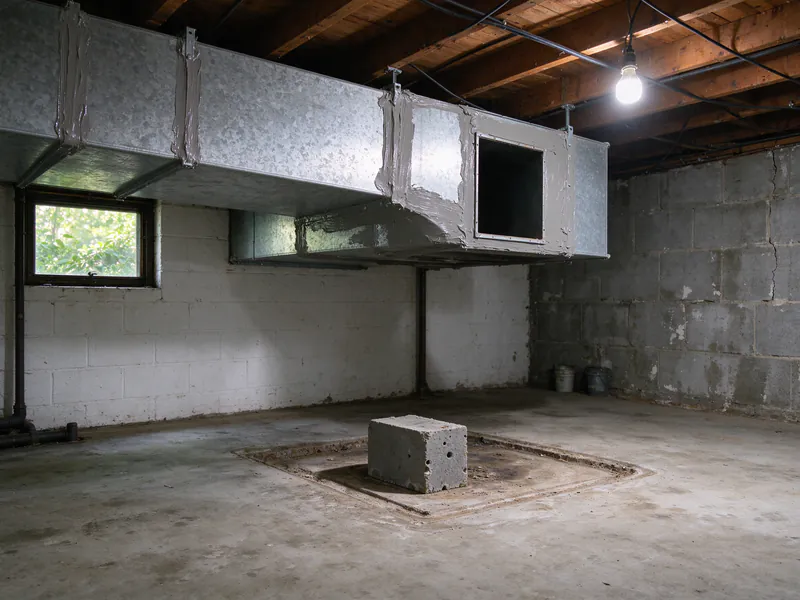
Forced-air heat plus central cooling means the supply trunk, branches and returns are already there.
Heat pump air comes off the coil at a gentler temperature, so the blower needs more volume; we take static pressure readings and count return area before deciding to keep the ductwork. When it checks out, the install is a matter of days. See oil to heat pump conversion.
An oil boiler feeding baseboard
Hot-water baseboard means copper loops and no sheet metal at all. Our usual layout is one air handler in the basement blowing up through floor grilles and a second in the attic serving the bedrooms from the ceiling, with a closet stack carrying lines between them.
Ceiling registers upstairs and floor grilles downstairs put the air where each floor loses heat, and the old boiler and its piping come out once the new system carries the house. Boiler to heat pump conversion explains the approach.
Condos and newer complexes
Close to 18% of homes are in buildings with five or more units. Some newer complexes already run ducted air handlers, which makes the swap simpler; either way, the board picks where outdoor equipment can sit, so a drawing and spec sheet go to them early.
Colder nights than the harbor
Westwood lies inland between Dedham and Norwood. Norwood Memorial Airport next door logs roughly five nights a year at zero or colder, while Logan sees less than one.
So what a unit can deliver in deep cold really matters here, more than the number printed on the box.
Size the house, not the old burner
An old oil furnace can be far larger than the rooms need, so its nameplate tells us little. We work from a Manual J calculated room by room at the design temperature for your street, then confirm what the outdoor unit actually puts out at 5°F; see heat pump sizing.
Strip heat and power cuts
Resistance backup strips are as expensive to run as baseboard, so the lockout is set to hold them back until the heat pump genuinely falls short; the aux heat guide explains the setting. If ice takes the lines down, the power outage guide covers your options.
Westwood at a glance: utility, code and permits
Permits come from the town’s building department: electrical on every job, plus sheet metal or gas when ducts change or a line is capped. How the town takes filings, and any setback or noise rule for the outdoor unit, we confirm for your address.
| What | The Westwood figure |
|---|---|
| Electricity | Eversource |
| Natural gas | Eversource Gas |
| Energy code tier | Stretch, effective January 1, 2013; no specialized code |
| Heating fuel mix | Gas 51.1%, oil 32.0%, electricity 8.4%, propane 6.9% |
| Single detached houses | About 79% |
Because Westwood stays on the stretch tier, replacing a burner in a lived-in house remains a mechanical permit. Eversource’s seasonal heat pump pricing then trims distribution and transmission on every kilowatt-hour from the start of November through April; the winter rate guide has the details.
From first call to commissioning in Westwood
We walk the whole house on the first visit: heat loss room by room, the burner and whatever ducts exist, the tank and its fill pipe outside, the panel, and a level outdoor spot that stays above drifting snow.
- An itemized estimate: each unit and its output at 5°F, return or duct work, electrical, tank removal, permits and the Eversource rebate route.
- Permits first, then three to five days on site for a furnace house, more when a boiler house needs ducts.
- The oil system leaves: burner out, tank pumped and hauled, fill and vent pipes sealed off.
- Start-up and checks: the line set is pressure-tested with nitrogen and pulled below 500 microns, refrigerant is weighed in, airflow is read, and the strip heat lockout is recorded.
Dedham to the north is also on Eversource, while Norwood to the south buys power from its own light department.