Roughly half of Weymouth’s homes don’t heat with gas: about 27% burn oil and about 24% run on electric heat. Clement Boston Heat Pumps handles heat pump installation in Weymouth, MA for both groups, replacing oil furnaces, boilers and baseboard with ducted cold-climate systems.
Both groups pay the most for heat today, and both qualify for Mass Save’s largest rebate, because National Grid is the town’s electric company. That makes Weymouth a strong place for the switch.
What decides the plan in a Weymouth house
Three local facts set the plan before we choose equipment: National Grid supplies both your electricity and gas, the town runs the stretch code, and much of Weymouth sits on salt water.
National Grid on both sides
Because National Grid is a Mass Save sponsor for electricity and for gas, every heating fuel in town has a path to Mass Save. Oil, propane and baseboard homes go through the electric side; gas homes go through the gas side. The rebate guide lists the conditions behind each tier.
Stretch code, not specialized
Weymouth adopted the stretch energy code in 2016 and has not moved to the specialized code. A heating replacement in an existing home stays a mechanical job: ducts sealed, lines insulated, permits pulled. New homes and large additions carry the heavier requirements.
Harbor and river exposure
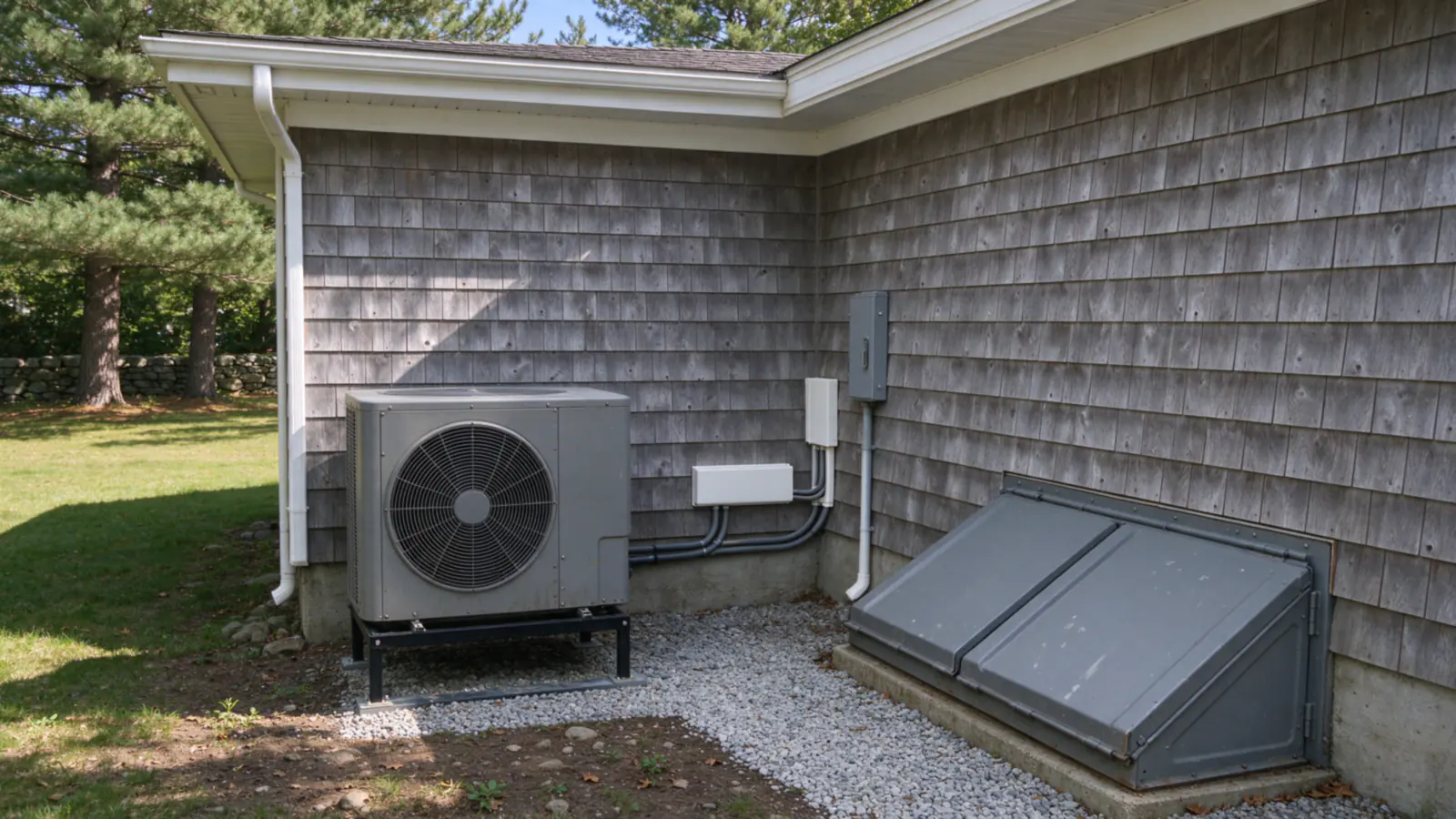
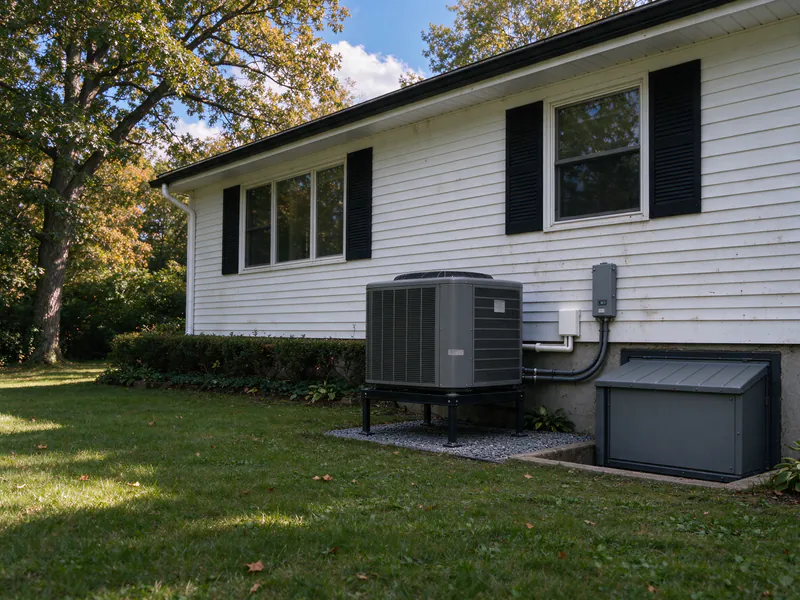
Weymouth is one of the state’s coastal communities, with shoreline on Boston Harbor, the Fore River and the Back River. No state rule governs heat pumps near salt water, so we follow the maker’s guidance: out of direct spray, not under a dripping eave, level for drainage. Our outdoor unit placement guide covers stands and clearances.
The houses, and what each one needs
Weymouth’s stock is mostly post-war. About 56% of homes are detached houses, a third sit in buildings of five or more units, and only about one in five dates from before 1940.
Capes, ranches and split-levels with a furnace
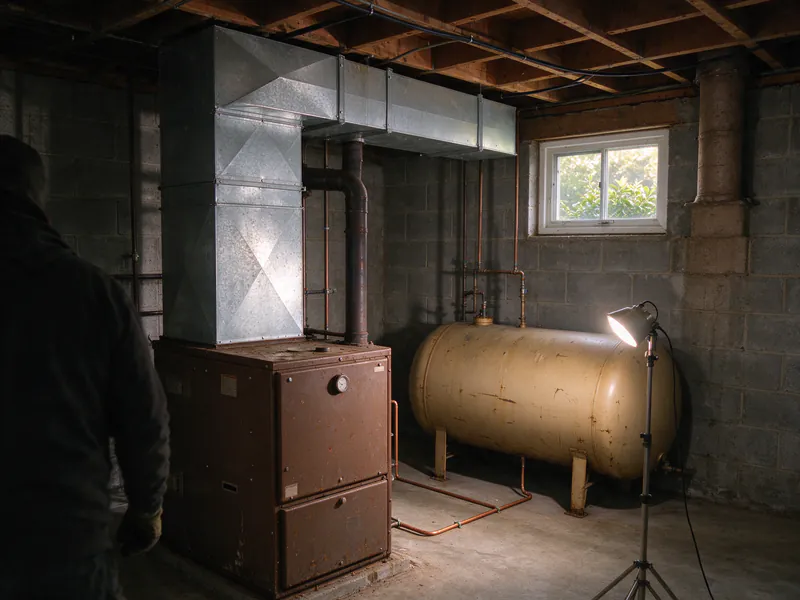
A warm-air oil furnace already has supply and return ducts. A heat pump moves more air at a milder temperature, so we measure static pressure and check the returns before reusing them. Often one return needs enlarging and the rest carries over; see oil to heat pump conversion.
Older houses on hot-water baseboard
In Weymouth Landing, Jackson Square and the older blocks of North Weymouth, many houses heat with an oil boiler and baseboard loops. There are no ducts, so we plan a basement air handler for the first floor and an attic unit for the bedrooms, with a closet chase between them.
Condos and apartments on electric heat
A condo heated by baseboard pays for every BTU at one kilowatt-hour per unit of heat. A small ducted air handler in a closet or above a hall ceiling changes that ratio. The master deed and the board decide where the outdoor unit can sit; our condo guide explains that approval.
Sizing for a South Shore winter
Logan Airport’s design temperature is 7°F, but Weymouth runs from the harbor edge to inland neighborhoods around Union Point and South Weymouth, where clear winter nights get colder. We size at the design temperature for your address, not the coast’s.
Why the coldest night matters
Norwood’s airport, inland to the southwest, averages about five nights a year at or below 0°F, against fewer than one at Logan. A system sized on the coastal number can run short on those nights and lean on electric backup strips, which cost as much to run as baseboard. Our sizing guide explains the load calculation.
Backup heat, planned rather than assumed
We list the unit’s capacity at 5°F on the estimate and set the strip heat lockout so backup only runs when the heat pump can’t keep up. That is what keeps an oil or baseboard switch from turning into a higher electric bill.
Oil, baseboard and the running cost
Oil is the most expensive common heating fuel per delivered BTU, and electric baseboard costs about as much as oil. A heat pump on National Grid’s winter rate costs less to run than either.
- If you heat with oil: a cold-climate heat pump on the winter rate costs less per delivered BTU than an oil burner, and you stop scheduling deliveries. Our heat pump vs oil guide runs the math.
- If you heat with baseboard: the same kilowatt-hours deliver two to three times the heat on a typical winter day, so the savings show on the first bill.
- If you heat with gas: the running-cost case is closer, and most gas owners switch for central cooling or because the furnace is at the end.
The National Grid winter rate
National Grid’s optional heat pump rate lowers the distribution charge on every household kilowatt-hour from November 1 to April 30. Unlike Eversource’s version, it doesn’t reduce transmission. Mass Save rebate recipients are usually enrolled automatically; see the winter rate guide.
The oil tank
When the oil burner goes, the tank goes too. Removal of an accessible basement tank runs $600 to $1,500, plus the fire department’s removal permit, which we confirm per address. See oil tank removal.
Mass Save money and Weymouth paperwork
The town’s building department issues the permits. Its online route is confirmed per address before we file, and the electrical permit is pulled for the heat pump circuit.
| What | The Weymouth figure |
|---|---|
| Electric and gas company | National Grid for both |
| Energy code | Stretch code since July 1, 2016; specialized code not adopted |
| Heating fuel | Gas 45.5%, oil 26.7%, electricity 24.1% |
| Coastal community | Yes, Boston Harbor region |
| Mass Save whole-home rebate | $2,650 per ton up to $8,500 for installs through December 31, 2026 |
From January 1, 2027, the whole-home rebate drops to $2,350 per ton up to $7,500. Mass Save’s 0% HEAT Loan covers up to $25,000 through participating lenders, applied for before work; see the HEAT Loan guide.
What happens, step by step, in Weymouth
The first visit is a room-by-room load calculation, a duct and return check, a look at the panel and a walk around the outside for a spot that is out of spray and clear of drifting snow.
- Written estimate: equipment with its capacity at 5°F, duct changes, electrical, tank removal, permits and the rebate path.
- Permits through the town, then the install, usually three to six working days.
- Old system out: the furnace or boiler is disconnected, which the whole-home rebate requires.
- Commissioning: nitrogen pressure test, vacuum below 500 microns, charge by weight, measured airflow, and the backup heat lockout set and recorded.
Our cost guide sets out our ranges. Next door, Braintree buys power from its own light plant and has a different rebate program, while Quincy shares the harbor shoreline.