Before you replace a Randolph oil boiler or furnace, two questions decide the plan: does the house have ducts, and is the work part of a renovation? Clement Boston Heat Pumps handles heat pump installation in Randolph, MA, and we answer both on the first visit.
The second question matters more than it used to, because Randolph’s stretch energy code took effect on January 1, 2026. Most of the town is post-war capes, ranches and split-levels, and about one home in five still burns oil.
What the new stretch code means for you
For a heating replacement in an existing house, almost nothing. The stretch code raises the bar for new homes and major renovations, so it matters if you’re adding a wing or gutting a floor.
Replacing the heat in a house you live in
Swapping a furnace, boiler or baseboard for a heat pump stays a mechanical job. The code shows up in sealed duct joints, insulated refrigerant lines and the permit inspections, not in which equipment you can choose.
Building an addition or gutting a floor
New construction and major renovations now carry a performance target, usually proven with a HERS rating. A cold-climate heat pump helps meet it. If you’re planning an addition, we size the heat with the whole house in mind; our whole-home heat pump page explains why one right-sized system beats a second small one.
Which company pays your rebate
It depends on what you burn now. National Grid sells Randolph its electricity and Eversource sells its gas, and each sponsors a different side of Mass Save.
- Oil, propane or electric baseboard: National Grid, as the electric sponsor, handles the whole-home rebate.
- Natural gas: Eversource, as the gas sponsor, handles it once the gas heat is taken out.
- Same rules on both sides: ENERGY STAR cold-climate listed equipment, a contractor in Mass Save’s Heat Pump Installer Network, the old system removed or disconnected, and proof of weatherization.
Whole-home pays $2,650 a ton with an $8,500 cap; installs from January 1, 2027 get $2,350 a ton, capped at $7,500. The rebate guide covers income-eligible amounts and the sizing bonus.
Capes, raised ranches and split-levels
Only about 14% of Randolph homes predate 1940. Most are detached houses built after the war, and their layout decides where the air handlers go more than their age does.
Raised ranches on hot-water baseboard
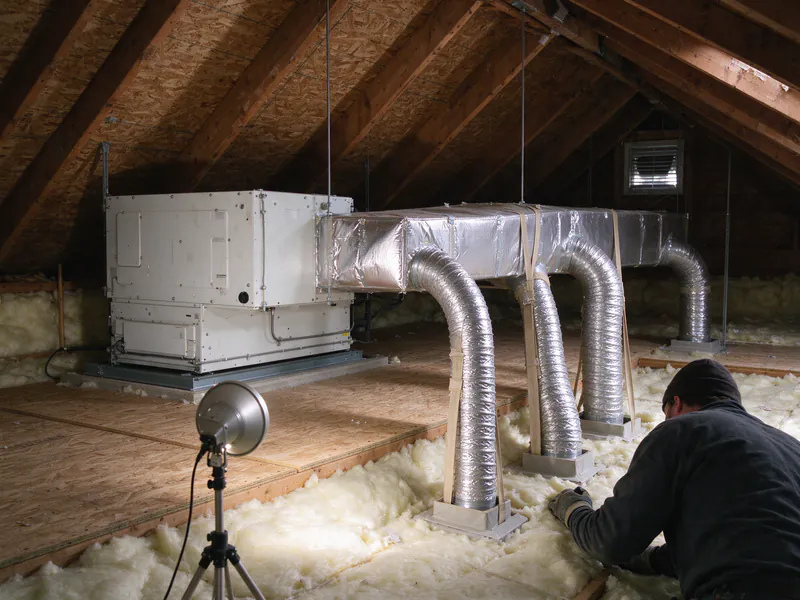
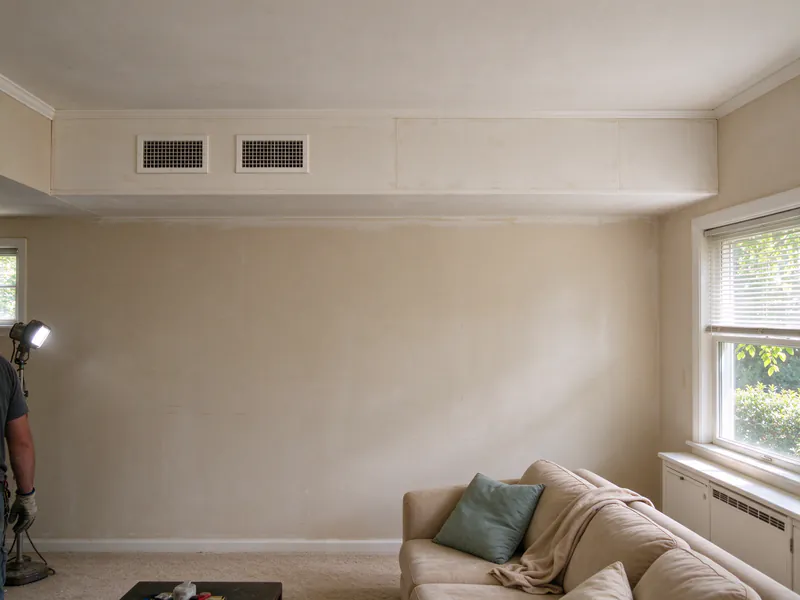
A raised ranch with an oil boiler has two levels and no ducts. The upper floor gets an attic air handler with ceiling registers, which is the shortest route in this house type. The lower level gets a small air handler in the utility room, and the two share one outdoor unit or get one each, depending on the load.
Split-levels and ranches with a furnace
Here the supply and return runs are already in place. Heat pumps push a larger volume of gentler air than a furnace, so the static pressure reading and the return’s free area tell us whether the existing runs can carry it. One undersized return is the common fix. See furnace to heat pump conversion.
Capes
A cape’s bedrooms sit under the roof, behind kneewalls. The kneewall space can hold an air handler and short duct runs, which keeps the second floor even without opening ceilings below.
The electrical panel
Plenty of post-war houses still run on a 100-amp service. A heat pump adds a large circuit, and an electric range or dryer may already be using the headroom. We do a load check on the panel first. If the service has to grow, our typical range for an electrical service upgrade is $3,000 to $6,500, coordinated with National Grid.
Condos and apartments
Nearly a fifth of Randolph’s homes are in complexes of five units or larger, where baseboard heat is common. A compact ducted unit tucked in a closet takes over from the baseboard, and the condo board signs off on the outdoor unit’s spot. See baseboard heat to heat pump.
Oil, baseboard and gas: what you save
Oil and electric baseboard cost the most per delivered BTU. A cold-climate heat pump, billed on National Grid’s heat pump rate, undercuts both on running cost; only against gas is the comparison close.
National Grid’s heat pump rate trims the distribution part of every winter kilowatt-hour on your bill, November through April. Transmission stays at the standard price; the winter rate guide shows how it works.
The oil tank comes out too
Once the boiler is gone, the tank has no job. Our typical range to take out a reachable basement tank is $600 to $1,500, and the local fire department issues the removal permit. The heat pump vs oil guide lays the two fuels side by side.
Paperwork, rebates and code in Randolph
The building department in Randolph handles the wiring permit and the ductwork permit. We confirm how it takes filings, and what it charges, for your address first.
| What | The Randolph figure |
|---|---|
| Electric company | National Grid |
| Gas company | Eversource |
| Energy code | Stretch code effective January 1, 2026; specialized code not adopted |
| Heating fuel | Gas 55%, oil 21%, electricity 19%, propane 4% |
| Detached houses | About 63% |
| Outdoor unit rules | Confirmed per address |
How the work runs on a Randolph job
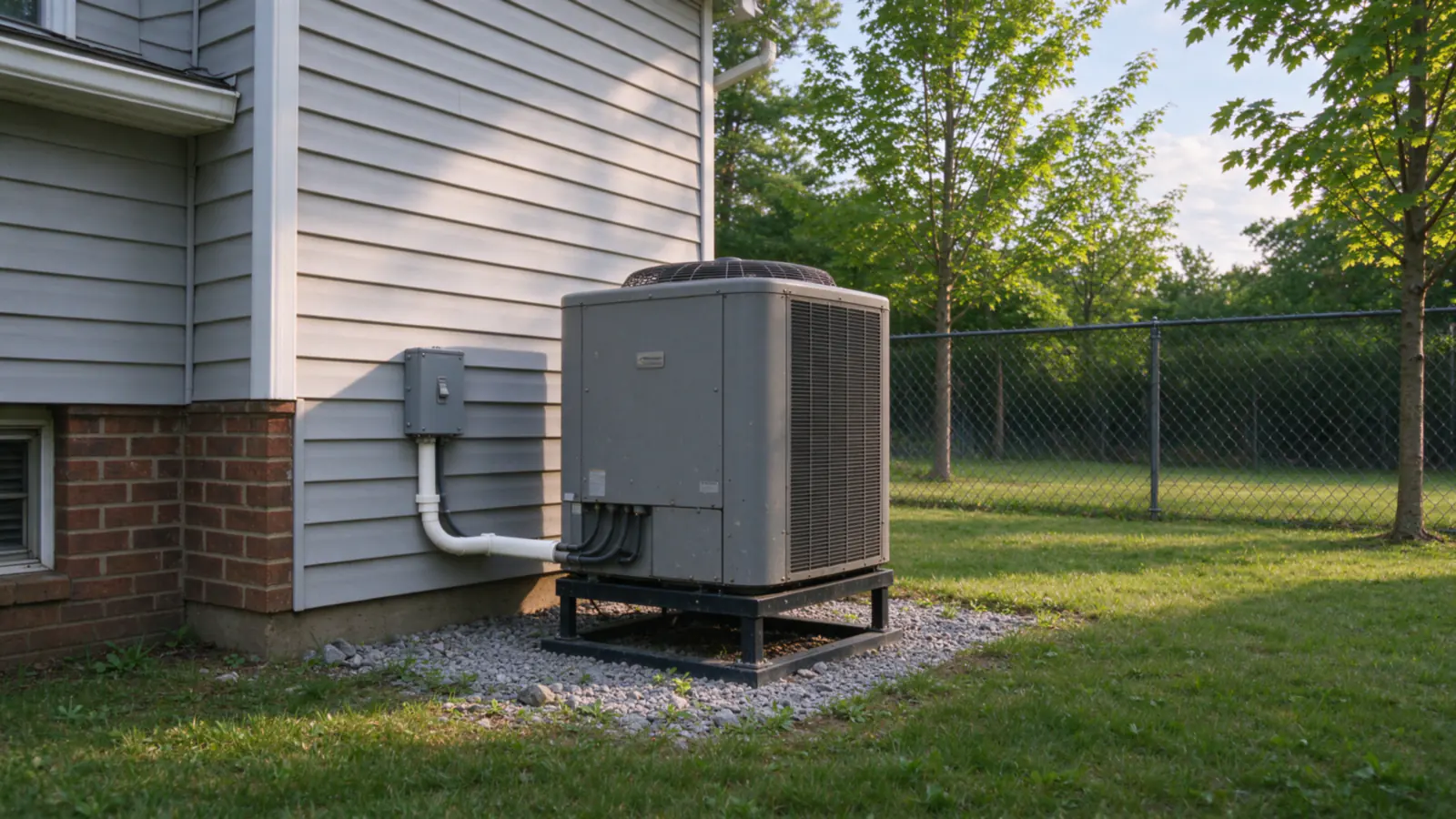
It starts at the house. We calculate the heat loss room by room, trace the ducts or plan new routes, open the electrical panel and pick the outdoor pad’s spot with you.
- Estimate in writing, listing what the outdoor unit delivers at 5°F, any new or changed ducts, the electrical work, the tank, the permits, which sponsor pays the rebate, and the total.
- Permits from the building department and the fire department. Work on existing ducts takes three to five days on site; a raised ranch needing new runs takes about seven.
- The boiler or furnace is disconnected, because Mass Save’s whole-home tier doesn’t pay while the old system can still run.
- Startup checks: a nitrogen hold test on the line set, evacuation to under 500 microns, refrigerant weighed in for the measured line length, airflow and static measured, and the strip-heat lockout temperature written down.
Our sizing guide explains the load calculation. Holbrook next door shares both utilities but stays on the base code, while Braintree has its own light plant.