Most West Roxbury houses already have ducts, a gas furnace and central air. The question is what replaces them, and in what order. Clement Boston Heat Pumps handles heat pump installation in West Roxbury, Boston by working from the system you have now, starting with one decision: does the furnace stay or go?
West Roxbury is the most single-family part of the city. In ZIP 02132, 59% of homes are detached houses, against 12% citywide.
Furnace, central air, or both?
Start with what’s failing. If the air conditioner is the old part, a heat pump can replace it now and share the heating with the furnace. If both are near the end, one heat pump can take over the whole job.
| Your situation | What fits | Rebate path |
|---|---|---|
| Central AC failing, furnace has years left | Heat pump in place of the AC, furnace kept as backup | Mass Save partial-home, with a listed switchover control |
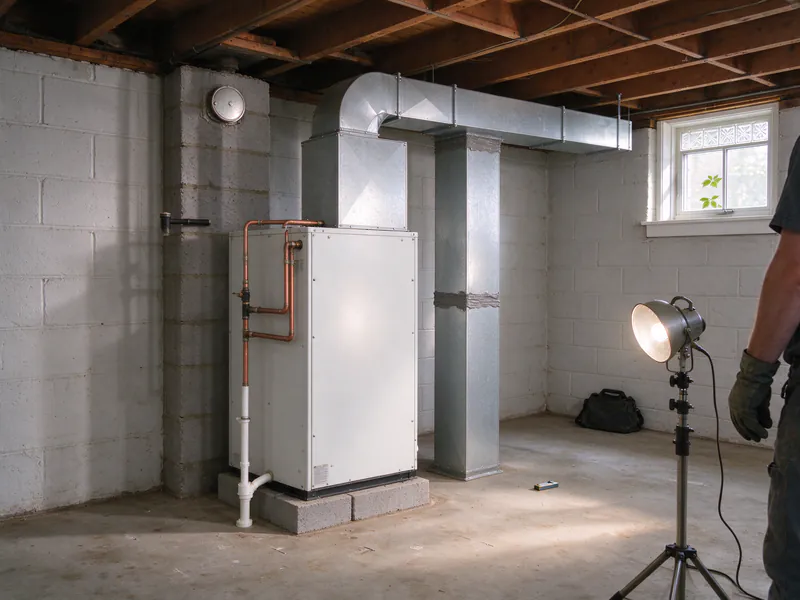
| Furnace and AC both aging | Heat pump and new air handler, furnace removed | Mass Save whole-home |
| AC only, no plan to change heat | Heat pump wired as a cooling-first upgrade | Basic, if any |
Each row runs on your existing ducts. Our pages on replacing central air with a heat pump and furnace to heat pump conversion cover each path in detail.
Should the gas furnace stay as backup?
You can keep it. Boston is not in the state’s fossil-fuel-free program, so dual fuel is allowed here, unlike in nearby Brookline and Newton. The choice comes down to rebates, running cost and how old the furnace is.
When dual fuel makes sense
A furnace with ten or more good years left is worth keeping. The heat pump carries most of the winter and the furnace takes over on the coldest nights, at a switchover point we set. Gas is still the cheapest fuel per BTU, so this setup trims costs without paying to rip out working equipment. See dual fuel heat pumps.
When the furnace should come out
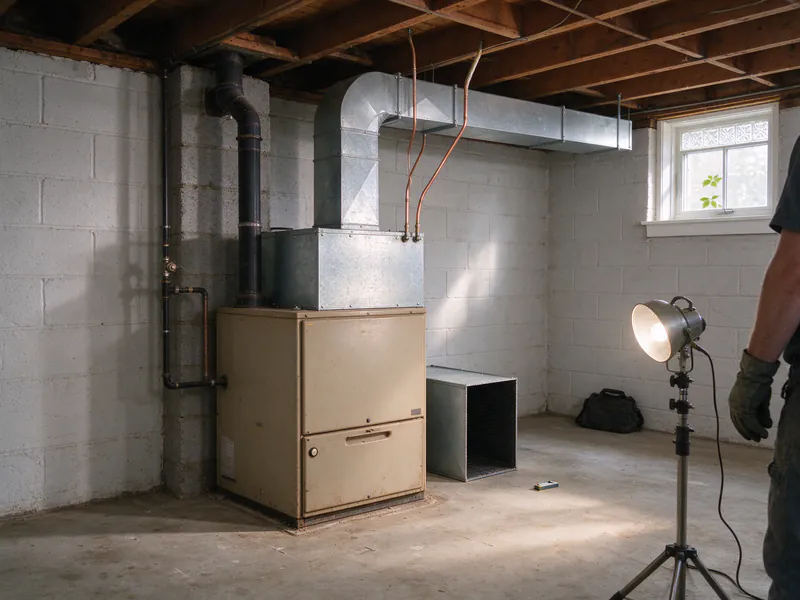
If the furnace is near the end, replacing it with another gas unit means paying for two systems. Removing it opens Mass Save’s whole-home rebate, which pays far more per ton than the partial-home rebate. The furnace’s gas branch is capped by a licensed gas fitter; your gas range and water heater can stay.
Sizing for an inland neighborhood
West Roxbury is colder than the waterfront. The Norwood airport weather station, a few miles southwest, averages five nights a year at or below zero, against fewer than one at Logan. We check each unit’s rated output at 5°F against your room-by-room load. Our sizing guide explains the method.
Will your existing ducts carry a heat pump?
Usually, with changes. Furnace ducts were often set up for short, hot blasts of air, while a heat pump runs longer at lower temperatures and moves more air. We measure static pressure on the first visit to see how much the ducts resist.
- Returns: Many houses here have one return in the hall. A second return, often at the base of the stairs, brings pressure down and quiets the system.
- Dormer and kneewall runs: In capes, the upstairs branches run through kneewalls and attic corners where flex duct gets crushed or loses heat. We replace those runs with sealed, insulated duct.
- Attic systems: Colonials with a separate attic air conditioner can take an attic air handler for the second floor, as one city permit here describes: a 3-ton heat pump at ground level feeding a 2-ton air handler in the attic.
Duct work is a separate line on the estimate; our ductwork page shows what it involves.
The houses here, and what they mean for the job
West Roxbury’s houses are bigger, mostly owner-occupied and built in two waves. That combination gives most jobs a basement, an attic or both to work with, and a homeowner making the call alone instead of a condo board.
Two building waves
About 44% of homes in 02132 were built before 1940, mostly Tudors, colonials and some Victorians. Another third went up between 1940 and 1969: capes, garrison colonials and a few ranches. Postwar houses often came with ducts; the older ones may have been converted from radiators.
Owners making their own decisions
About 70% of homes in 02132 are owner-occupied, twice the Boston rate of 36%, and the median home has six rooms against just over four citywide. More rooms mean longer duct runs and a real heat load to size for, but also room for equipment.
What the city’s permits show
Of about 110 permits filed with the city for heat pumps in 02132 between late 2021 and October 2026, 105, or 95%, were for one- and two-family houses. Across Boston the share is 56%. Three pair a heat pump with a gas furnace, the dual fuel setup described above.
Oil is still common
About 14% of West Roxbury homes heat with oil, roughly double the Boston rate. For those, an oil to heat pump conversion and tank removal usually belong in one plan.
Permits, power and where the unit goes
Three city-level items shape a West Roxbury install: the permit set from Boston’s Inspectional Services, your Eversource account, and a nighttime noise limit at the lot line. We settle all three before equipment is ordered.
| What | West Roxbury figure |
|---|---|
| Permits | Electrical, sheet metal for ducts, gas when a furnace stays or is capped |
| Energy code | Specialized stretch code since January 1, 2024 |
| Outdoor noise | 50 dBA at the lot line at night |
| Electric utility | Eversource, with a winter heat pump rate |
| Oil tank removal | Boston Fire Department permit, $110 |
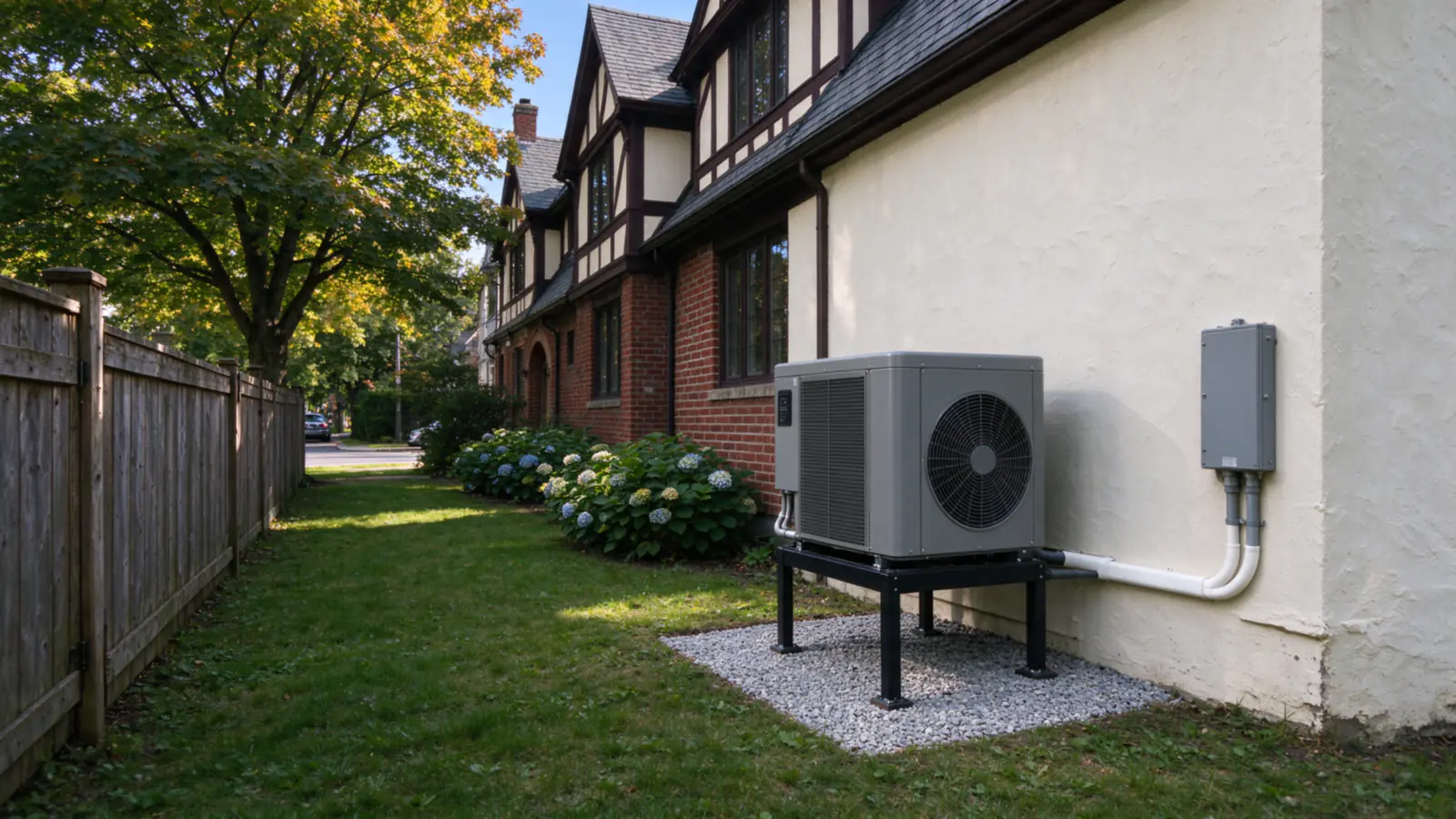
Wider lots make placement easier than in most of Boston. We favor the rear yard on an 18-inch stand, away from bedroom windows, and check the unit’s sound rating against the distance to the line. The winter rate guide explains the Eversource discount.
What a West Roxbury job costs
Our typical range for a whole-home heat pump on ducts we can reuse is $15,000 to $28,000 and up before rebates. Most houses here fall in that band, because the ducts are already in place.
- New ductwork or a small-duct system, for a house still on radiators: $20,000 to $40,000 and up.
- Electrical service upgrade, typically 100 to 200 amps: $3,000 to $6,500. About one in ten local heat pump permits included one.
- Dual fuel: priced on the estimate from the heat pump size and the control needed to work with your furnace.
The cost guide breaks down each part, and the heat pump vs gas furnace guide compares running costs.
The days the house is without heat
Most jobs here take two to four working days, because ducts already reach the rooms.
- First visit: a room-by-room load calculation, static pressure and return check, a look at the panel, and distances from the outdoor spot to each lot line.
- Written estimate: equipment with its output at 5°F, duct changes, electrical, permits, rebate path and price.
- Install: furnace and condenser removal or controls added, new air handler, line set and outdoor unit.
- Commissioning: pressure test, vacuum below 500 microns, charge by weight, airflow and static measured, and backup heat set to run only when it’s needed.
Neighboring Roslindale has more two-families; across the line, Dedham and Needham run their own permit offices.